

 In the contemporary construction sector, the optimization of building envelope materials is driven by the trifecta of structural integrity, environmental sustainability, and lifecycle cost efficiency. For decades, the industry has operated within the constraints of traditional ferrous metals and cementitious composites. However, advancements in material science have precipitated a paradigm shift towards high-performance polymeric building materials. The focus has now transitioned to the engineering of advanced roofing solutions capable of maintaining performance stability in the most rigorous environmental conditions globally.
This evolution represents a departure from monolithic thermoplastic materials towards sophisticated, composite matrix structures. We are witnessing a pivotal transition where roofing is re-conceptualized not merely as a covering, but as a scientifically engineered environmental shield.
Before explaining the tech details of our better stuff, it helps to describe our company setup and our making skills. We run not just as a making spot, but as a full-chain helper to the world building trade. Jieli has given over three decades to the study and making of plastic roof tiles. Our setup rests on 22 automated extrusion lines, a setup that promises stability and exact time plans for big projects.
Supply chain efficiency is vital in the development of large-scale infrastructure projects. Delays in the supply of materials often have a cascading effect that results in financial overruns. The framework of the logistics system under consideration is geared towards meeting the demands of large volumes of goods while ensuring that the quality is of the highest standard. A clear indication of the efficiency of the logistics system is the fact that we were assigned the Flat Roof Reconstruction projects related to the 2022 Winter Olympics in Beijing. The fact that we were assigned such a prestigious international infrastructure development project is a clear indication of our capacity to deliver efficient large-scale logistics with the required quality standards.
In the past, the roofing industry has been dominated by color-coated steel and conventional synthetic resin tiles, which, despite their inherent utility, possess remarkable performance limitations under adverse environmental conditions. While steel, with or without coatings, is prone to oxidation and chemical degradation, especially under saline environments and industrial environments with high corrosive fallout, conventional PVC sheets, despite their chemical inertness, often exhibit high linear expansion coefficients, leading to deformation and warping under extreme thermal conditions.
EPC contractors and facility owners have long sought a composite solution that synthesizes the rigidity and tensile strength of metallic elements with the corrosion resistance and longevity of polymeric resins.
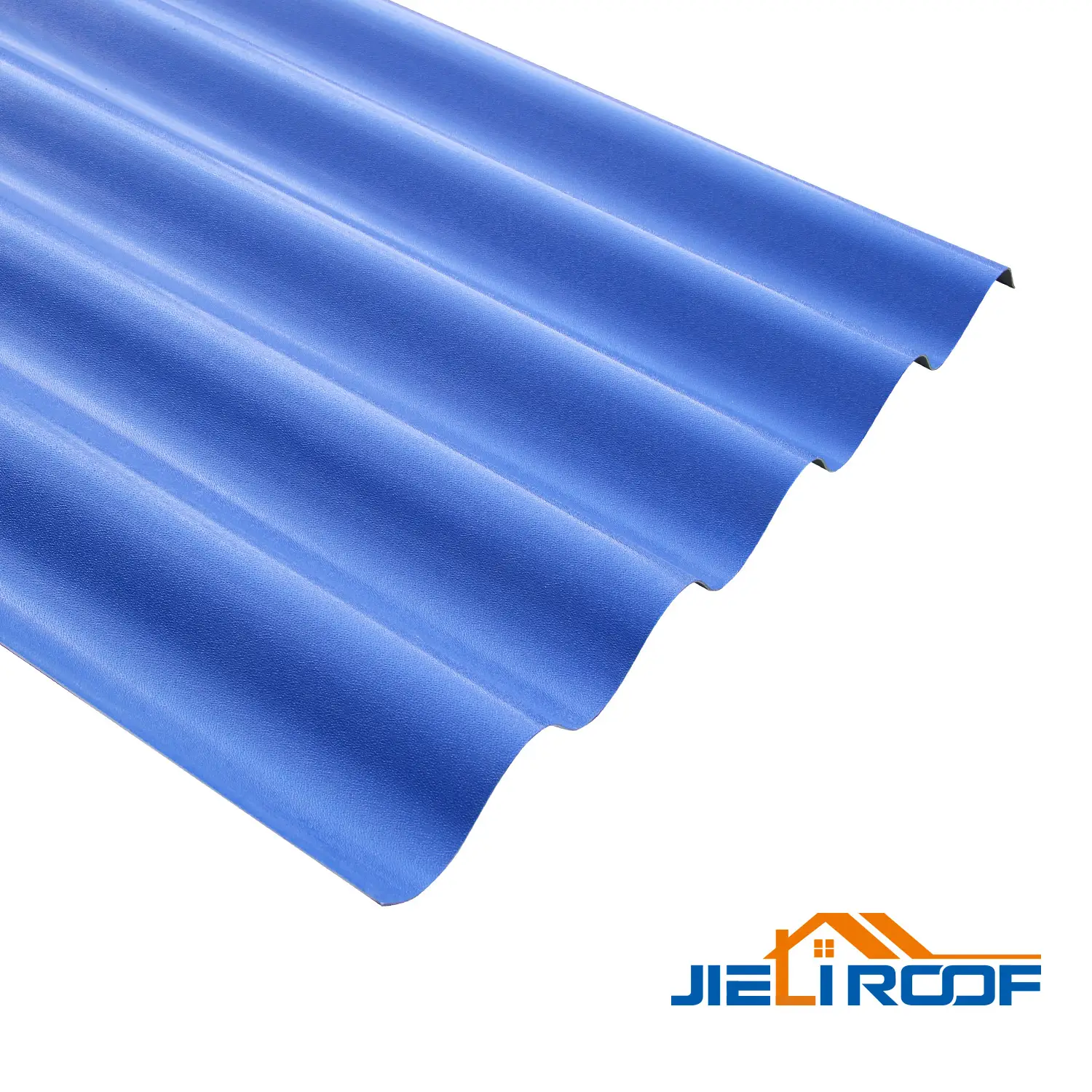
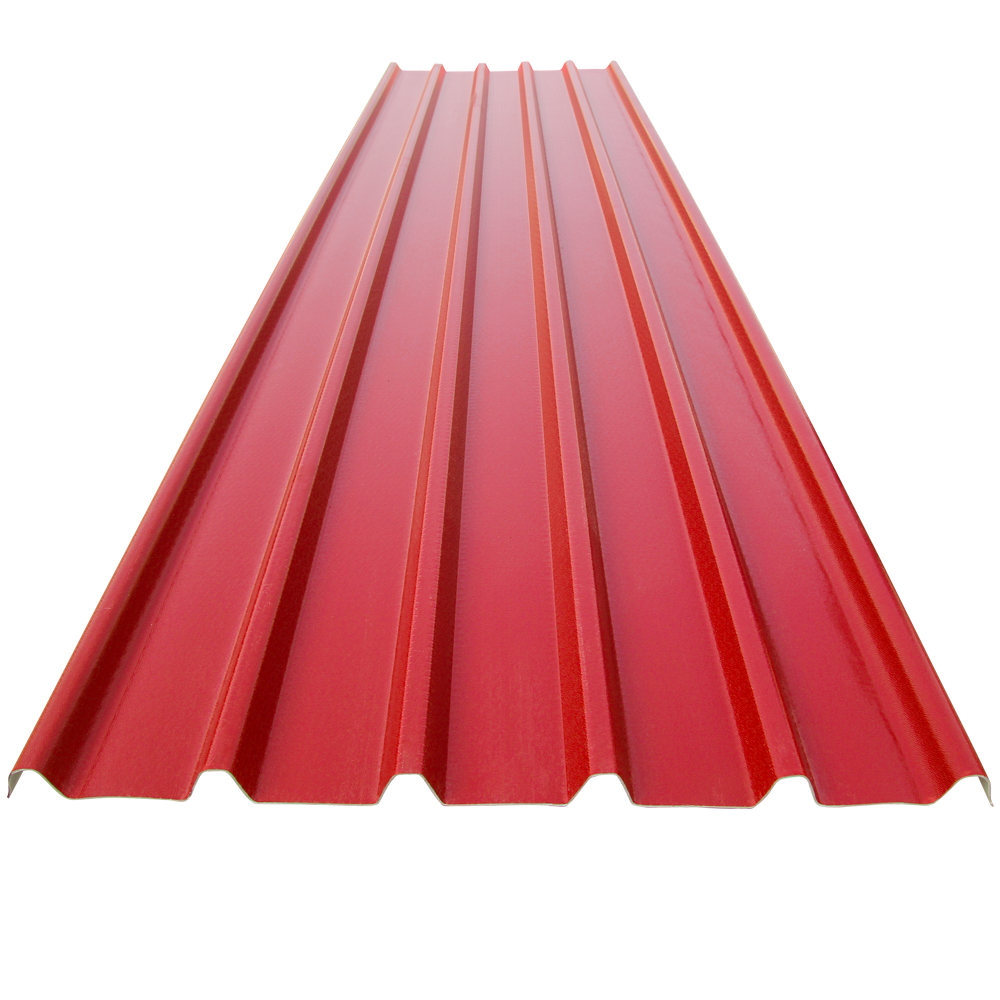
To mitigate these material limitations, we have engineered a proprietary, patent-protected technology that fundamentally alters the structural composition of the roof sheet: the Glass Fiber Reinforced UPVC Roof Sheet BW920.
Analogous to the structural principles of reinforced concrete—where steel reinforcement provides tensile strength to a compressive material—we have integrated a high-modulus glass fiber matrix into our UPVC sheets. This product represents a significant technological advancement over standard UPVC roofing by embedding a continuous layer of high-strength glass fiber within the polymer matrix.
This internal fiberglass mesh functions as a structural reinforcement lattice. It significantly enhances the material’s impact resistance, tensile modulus, load-bearing capacity, and dimensional stability against weathering. In the domestic manufacturing landscape of China, we are the sole entity possessing the proprietary technology to produce this specific reinforced composite, offering a differentiated solution that transcends the commoditized competition associated with standard UPVC roofing.
The material’s superior performance is derived from its composite architecture, utilizing Triple-Layer Co-extrusion Technology augmented by a Fiberglass Layer to create a functional quad-strata system:
This multi-layered engineering ensures that the roofing element functions as a cohesive, high-performance composite system.
In asset management, the service life of building components is a primary metric. Traditional color steel roofing frequently necessitates replacement or extensive maintenance due to corrosion cycles. In contrast, our Fiberglass Reinforced UPVC Roof Sheet offers a projected service life exceeding that of traditional color steel tiles by a factor of 3~5.
We are proposing a decade of quality assurance based on empirical data that shows the material has a useful lifespan of 25-30 years. The addition of the fiberglass matrix helps the material withstand thermal hysteresis and deformation of the sheet. The material has dimensional stability over a wide range of temperatures from -40°C to 80°C. The material remains structurally sound whether subjected to sub-zero temperatures or tropical temperatures.
A defining characteristic of this composite is its absolute chemical inertness. It is resistant to acidic, alkaline, and saline solutions, retaining its integrity after 168 hours of immersion testing in 10% concentrations of these agents. This makes it the optimal specification for chemical processing plants, electroplating facilities, and coastal infrastructure where salt spray accelerates metal fatigue. The material is non-corrosive, color-fast, and inherently waterproof.
Moreover, the product has been designed in a manner that prevents the formation of condensation, which is a common problem in agricultural and industrial environments. The thermal conductivity of the product is low, which reduces the rate of temperature transfer. Temperature transfer is the primary reason for the formation of condensation. Moreover, the product is classified as Fireproof Grade B1 and has superior impact resistance compared to hail.
The technical versatility of the Glass Fiber Reinforced UPVC Roof Sheet BW920 renders it suitable for a broad spectrum of critical applications:
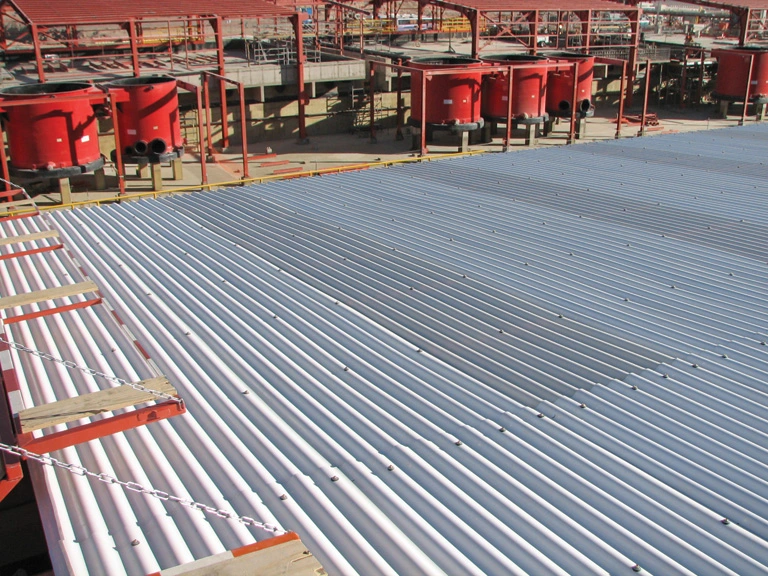
Industrial Infrastructure: Processing plants, smelters, and warehouses exposed to corrosive emissions or high humidity levels.
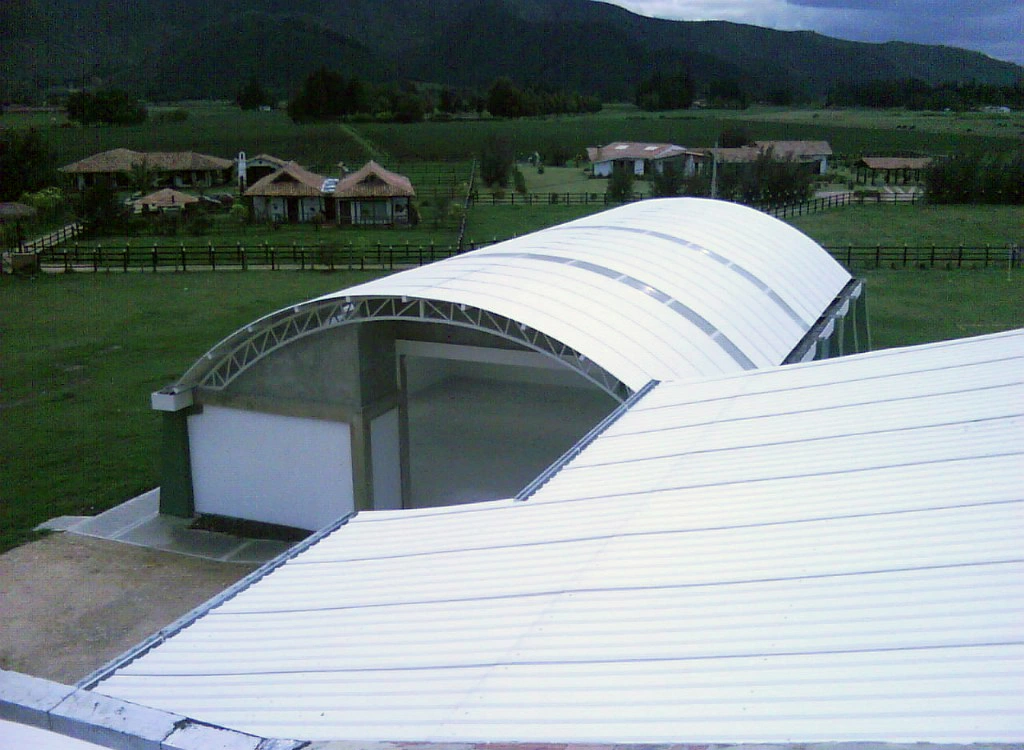
Agricultural Facilities: Livestock operations and fertilizer storage units, where high concentrations of ammonia gas rapidly corrode metallic roofing. This capability is exemplified by our supply to Agrosuper, the largest pig farming enterprise in Chile, proving our material’s resilience in harsh organic environments.
Commercial and Civic Projects: Educational institutions, large-scale housing developments, and infrastructure in high-UV indices (such as the Beijing Winter Olympics projects).
For Contractors, the adoption of this material represents a significant upgrade in installation efficiency. While the fiberglass layer enhances impact resistance by 50% and load-bearing capacity by 30%, the sheets remain lightweight, reducing the dead load on the structural frame.
We have optimized the extrusion process to utilize solid UPVC in the core layers, replacing traditional foam fillers to ensure maximum density and durability. The installation methodology is streamlined for professional execution. While we do not provide on-site supervision, the product design is intuitive for certified contractors familiar with standard roofing protocols.
From an empirical perspective, it is clear that the fiberglass mesh, which is uniformly distributed throughout the resin matrix, provides a product that possesses superior properties in terms of impact resistance, anti-aging, and overall reliability.
To aid in the technical evaluation of this product, complimentary samples are made available to stakeholders to test and inspect, thereby allowing them to confirm the specifications in terms of strength and finish. The organization is committed to improving construction standards through material innovation.
Elevate your construction standards. Engage with Jieli’s technical specialists today to initiate a comprehensive project analysis. Secure your complimentary high-performance sample kit and validate the structural superiority of our composite solutions firsthand.
Q: What is the particular structural role of the fiberglass mesh within the UPVC matrix?
A: The fiberglass mesh provides an internal lattice reinforcement, greatly enhancing the tensile modulus of the material. It controls the coefficient of thermal expansion, which would otherwise lead to sagging or warping at high thermal stress levels, and improves the overall load-bearing properties of the roofing material.
Q: What are the operating temperature parameters for the roof sheets?
A: The roof sheets have been designed to operate within a temperature range of -40 degrees Celsius to 80 degrees Celsius. This composite material does not become brittle in freezing conditions nor lose rigidity in high-temperature conditions.
Q: Is the material compatible with corrosive industrial or agricultural environments?
A: Yes. The material is chemically inert with high resistance to acids, alkalis, and salts. It is particularly suited to environments with high exposure to corrosive fumes or ammonia, such as livestock farms. It offers a better non-corrosive option compared to metal roofing.
Can Advanced Fiberglass Reinforced Composites Redefine Industrial Roofing Integrity?



 +86 0535 6278701 / +86 15653505862