

 Enter our overview of practical roofing selections tailored for the demanding conditions prevalent in African climates. Intense warmth places substantial strain on construction materials. Numerous locations experience temperatures that rise sharply. Consequently, this frequently results in complications with ordinary roofing systems. We shall examine the manner in which fiberglass contributes to the durability of UPVC sheets. At Jieli, we produce items designed for longevity. Our emphasis lies on effective remedies for constructors and their initiatives. This opening establishes the foundation for understanding why our panels perform reliably in warm environments. With that, let us proceed to explore the specifics of thermal difficulties and their resolutions.
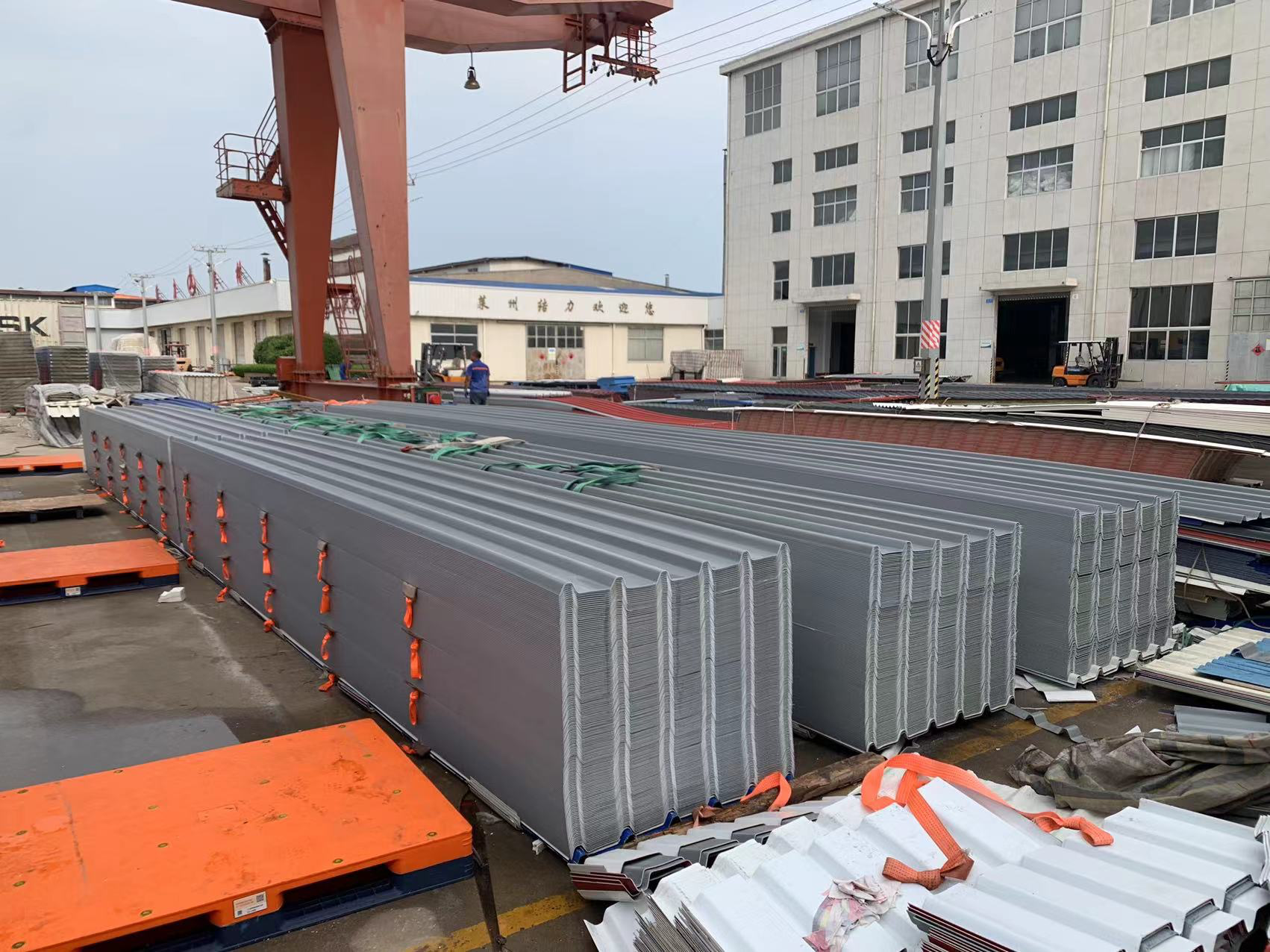
Across the expansive warmth of various regions on the African continent, conventional construction elements frequently reach the boundaries of their capabilities. Observers often note that numerous standard UPVC roofing panels begin to exhibit undulating distortions or sagging merely after a few years of exposure. Such occurrences extend beyond mere aesthetic concerns. They precipitate loosening of fasteners and inevitable water ingress. As specialists who have addressed these challenges for many years, we believe that your endeavors require an ally possessing genuine robustness. JIELI excels in this domain. We operate 22 contemporary manufacturing lines. These facilities guarantee consistent production volumes and punctual order fulfillment for every client. Even for substantial shipments involving multiple containers, we commit to swift dispatch. Our track record illustrates this capability effectively. We dispatched 220 containers containing roofing components for an extensive government-sponsored housing initiative in Venezuela. That undertaking demonstrates our proficiency in handling vast international requirements with precision and efficiency.
Initiatives in warm territories confront genuine hazards stemming from elevated temperatures. Ordinary panels yield to solar exposure. As a result, this necessitates remedial actions that demand both time and financial resources. However, by opting for the appropriate alternative, one can circumvent such troubles. Jieli’s methodology integrates advanced techniques with accumulated expertise. We subject our products to actual thermal evaluations. This fosters confidence among end-users. Constructors frequently recount experiences of how our panels endure season after season. It minimizes on-site labor. Moreover, it preserves the security and dryness of structures. As you continue reading, you will discern the pivotal role that fiberglass plays. It transforms vulnerabilities into assets of strength.
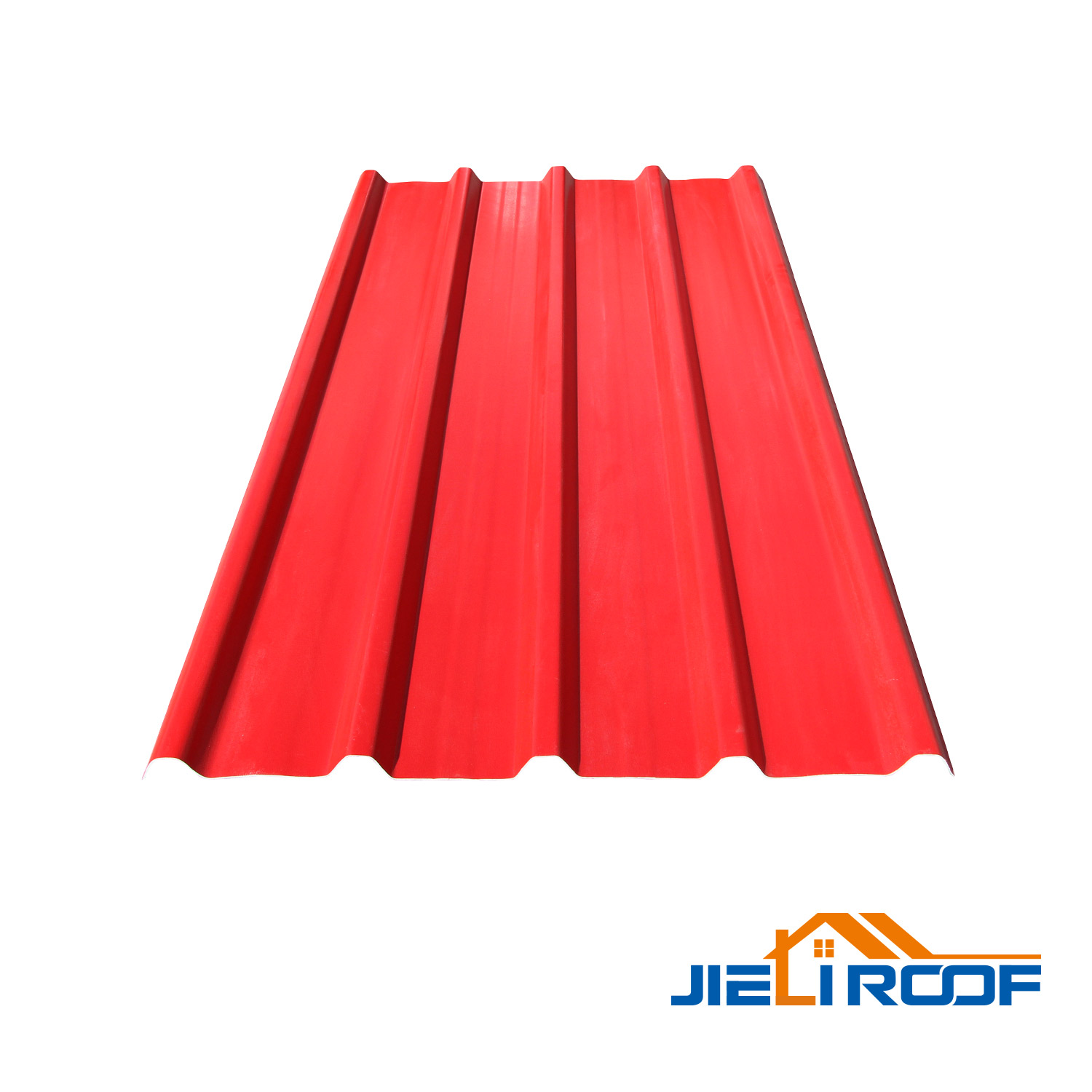
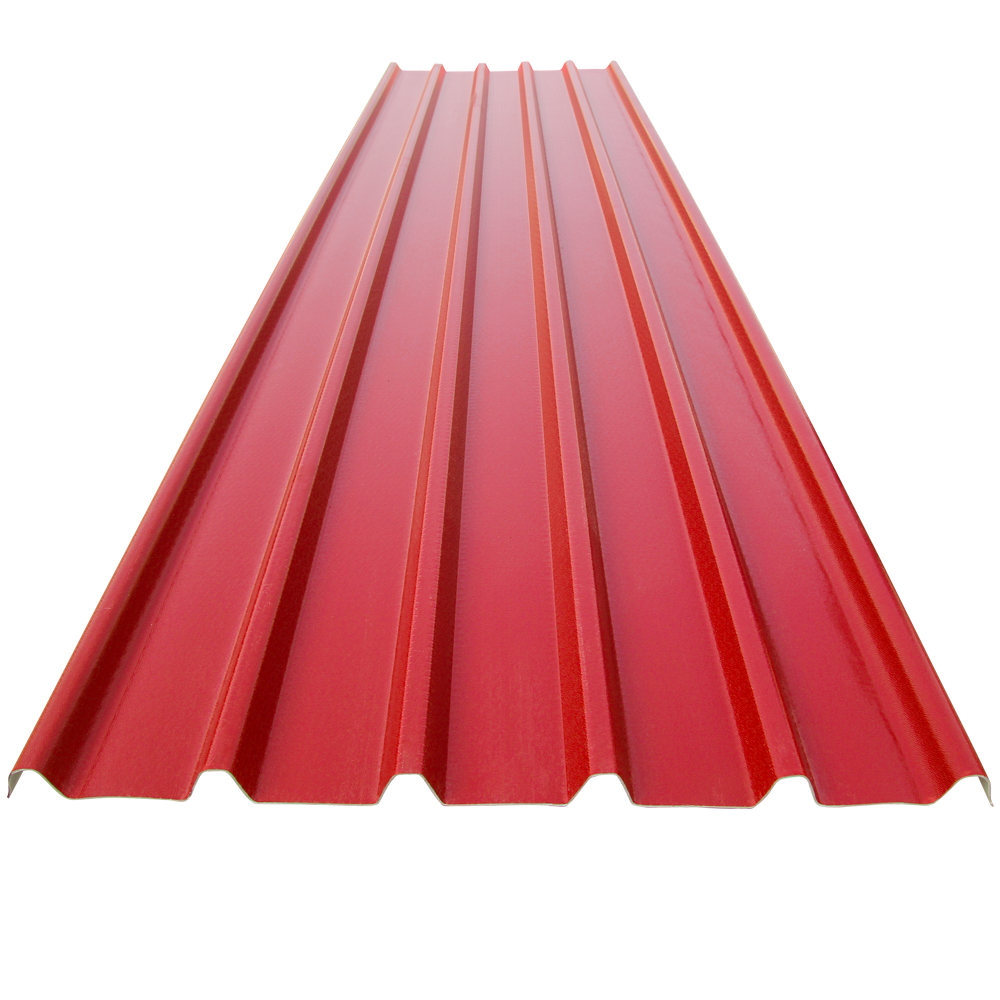
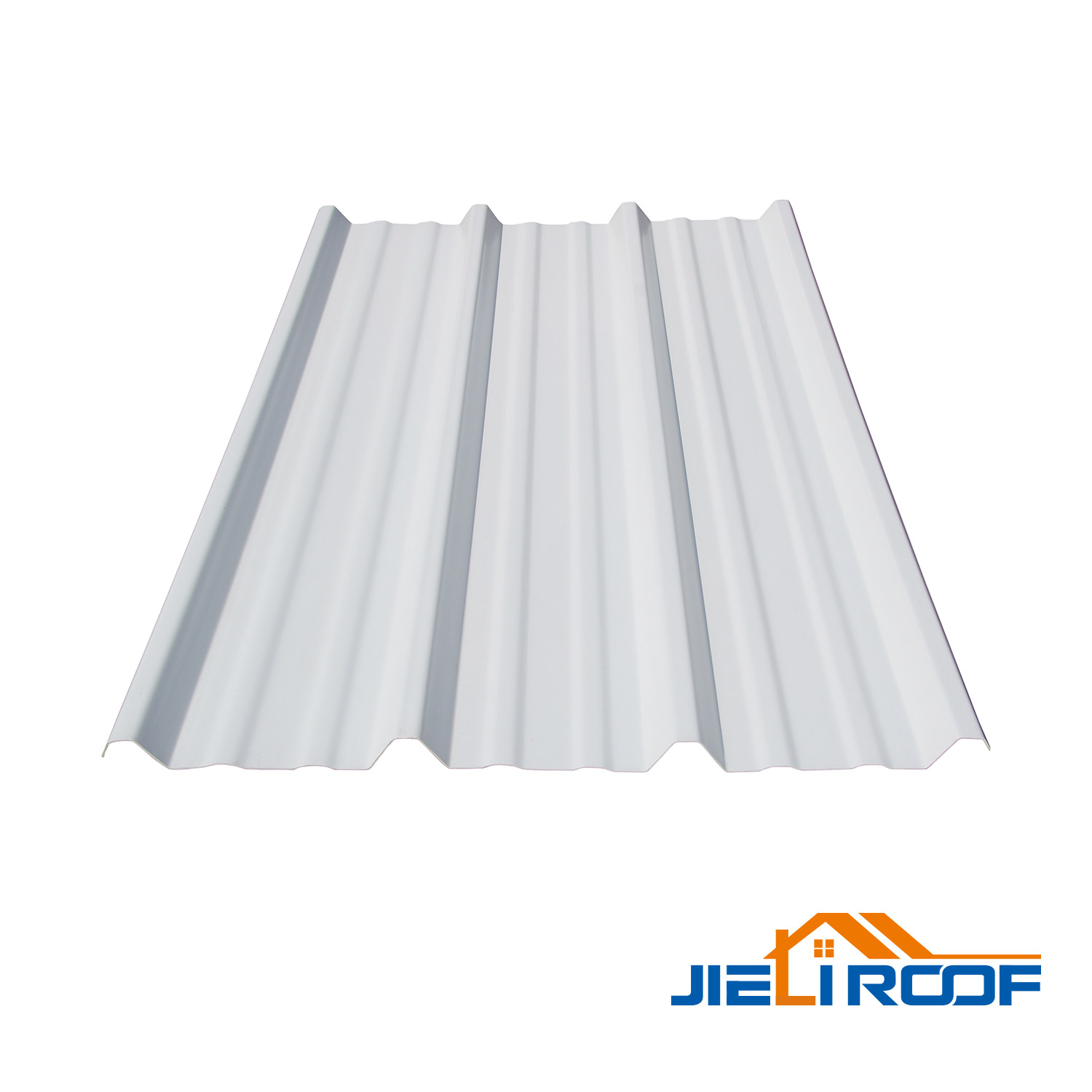
To see why this product changes things, we need to check what goes on inside the material. The fiberglass-reinforced UPVC Roofing Sheet T910 gets made with a smart Structural Composition: Triple-Layer Co-extrusion Technology + Fiberglass Layer. This setup fits well in temps from -40°C to 80°C. It fixes the “softening” that hits basic plastics.
These sheets include clear working layers in their middle:
The top layer gets treated with ASA to block UV damage and hold colors well. In Africa, sun rays rank high worldwide. So, this layer stops the roof from getting weak or losing shade.
The second layer is UPVC. It gives great power, hit resistance, heat block, and noise block. This part makes inside spaces cooler and less noisy.
The third layer is the Fiberglass reinforcing layer. It serves as the “strength” of the sheet. This significantly enhances the product’s strength, high-temperature resistance, impact resistance, tensile strength and load-bearing capacity.
The bottom layer is UPVC. It fights rust, blocks water, and adds to the full setup strength.
By using this exact co-extrusion way with the built-in Fiberglass Layer, we made a product that acts better under heat stress than any plain plastic sheet out there.
Each layer plays its role. The ASA top keeps the sun from breaking things down. UPVC in the middle handles daily wear. Fiberglass ties it all firm. The bottom seals against wet ground effects. Together, they create a team that lasts. Tests show this combo holds shape in lab heat trials. Real sites confirm it too. Builders in hot zones pick this for peace of mind. It cuts down on future fixes. You get a roof that works for the long haul.
You might wonder why a single glass fiber layer makes such a significant difference in performance. During the hot summers in Africa, temperatures on roofs can easily exceed 70°C. At those levels, standard UPVC material approaches its softening point. As a result, the material expands and loses its original form. This is precisely where most installations encounter major problems. Fasteners become loose over time. Consequently, the overall structural support fails.
The fiberglass layer serves as a crucial stabilizing element in the construction. Glass fiber features an extremely low rate of thermal expansion. Therefore, it prevents the UPVC from shifting or deforming under heat. In effect, it maintains the sheet’s dimensions in a stable condition. For practical applications, this ensures that the T910 trapezoidal shape remains level and secure. Such structural reinforcement allows workers to design installations with support spacing that reaches up to 1200mm. By increasing the distance between these supports, the amount of steel needed for the underlying framework decreases substantially. This leads to considerable reductions in the total costs of the project. At the same time, it preserves high levels of safety.
Consider the example of a warehouse roof, where thermal challenges are prominent. Without the inclusion of fiberglass, heat causes the panels to warp unevenly. Gaps then develop along the seams. Rain subsequently enters through these openings. However, when fiberglass is incorporated, the entire system remains firmly in place. Workers can move across it with confidence and safety. The greater spacing between supports reduces the amount of framing required. This, in turn, accelerates the overall installation process. Material expenses also decline noticeably. Building owners appreciate the resulting lower costs. Ultimately, it provides benefits to everyone involved in the project. In locations such as coastal towns, this reinforcement additionally combats the effects of salty air. There are no additional concerns about corrosion. Instead, it offers a dependable protective covering that endures for the long term.
For workers on site, easy setup and sure material matter most. Our strong sheets deliver enhanced pull resistance, ensuring that when you secure screws in place, the material remains stable and does not bend or break around the holes. This reliability endures even under direct sunlight, which helps prevent the typical “drill through” errors that occur with softer, basic materials.
The T910’s trapezoidal shape offers practical benefits beyond appearance, as its deep lines promote effective water runoff during intense tropical rains. Based on UPVC, it naturally resists rust without extra effort. In contrast, metal roofs often fail in humid coastal areas or highly moist environments. For warehouses located in coastal, salt-laden environments or factories operating in chemically aggressive or polluted conditions, this roofing material offers long-term, reliable performance.It withstands chemical wear effectively. Unlike metal, it avoids rusting, and unlike plain plastic, it does not bend easily.
Contractors report that setup requires less time overall. The sheets cut cleanly and fit securely without gaps. In rain zones, the ribs direct water away swiftly, so no pools form as a result. This leads to fewer leak checks in the future. Managers can plan budgets more effectively, knowing the roof will not require early replacements. Teams train quickly on it, while safety remains a priority with no slips from weak bends. It integrates smoothly into big projects.
When inspecting roofs, it is easy to focus solely on the initial purchase cost. However, in hot regions, the real expenses arise from ongoing repairs and eventual replacements. A roof that warps within three years demands constant maintenance, which eventually leads to a complete demolition. By selecting a material featuring Triple-Layer Co-extrusion Technology + Fiberglass Layer, you secure a solution that lasts for 30 years without major fixes.
The heat-blocking properties of UPVC ensure that the interior of your storehouse or plant remains significantly cooler. In numerous African industrial projects, this feature reduces the reliance on cooling equipment. As a result, electricity costs decrease noticeably. Furthermore, when considering the savings from reduced steel supports, minimized installation labor, and lower energy expenses, the T910 emerges as the most economical choice for the long term.
If you are currently managing a construction project or a large residential development in a hot climate, we invite you to contact us. We are equipped to assess the specific requirements of your site accurately. Moreover, we provide a roofing system designed to maintain a cool interior while ensuring structural stability for many years. Allow us to demonstrate why we excel in handling major government and private contracts across the globe.
Our support extends comprehensively beyond the basics. We offer detailed case studies drawn from previous projects, such as the Venezuela initiative, which highlight our capability to manage large-scale operations effectively. Our technical discussions address frequently asked questions, ranging from sheet cutting techniques to secure fastening methods. Additionally, we keep you informed about updates to relevant regulations. For builders, we provide practical advice on adapting to local conditions, which fosters enduring partnerships. As a result, you experience reliable backing throughout every phase of your work.
Q: How does the fiberglass layer affect the overall weight and installation process for Contractors?
A: While the fiberglass layer significantly increases strength and heat resistance, it does not make the sheet excessively heavy or difficult to handle. Contractors find it easy to manage on the roof, and because of its superior rigidity, it provides a much more stable surface for walking along the purlins compared to thinner, more flexible standard UPVC alternatives.
Q: Can this UPVC sheet really withstand temperatures up to 80°C without sagging?
A: Yes. The structural composition of our fiberglass-reinforced sheets is specifically tested for high-temperature stability. The fiberglass core acts as a rigid stabilizer that prevents the thermal expansion typical of standard UPVC. This ensures the T910 profile remains flat and the structural integrity is maintained even under the direct, intense African sun.
Q: Is the ASA top layer really necessary if the roof is already heat-resistant?
A: Absolutely. While the fiberglass provides structural heat resistance and prevents deformation, the ASA layer provides the necessary UV protection. Without it, the intense African UV rays would cause the UPVC to undergo photo-oxidation, leading to surface brittleness and fading.The ASA layer ensures your roof stays flexible and maintains its color for its entire 30-year design life.
Discover how fiberglass-reinforced UPVC roofing sheets, like JIELI's T910, resist warping in Africa's intense heat, ensuring long-term durability and stability.



 +86 0535 6278701 / +86 15653505862