

 As weather gets hotter across Europe, building choices evolve fast. Folks in construction seek tough materials. These must handle rising heat. This write-up digs into big shifts toward heat-proof UPVC roofs by 2026. It links to real-world fixes and green aims. What’s more, it spotlights how outfits like Jieli shine with their know-how in strong roofing options.
Europe’s buildings face growing challenges from climate change. Heatwaves are becoming more common and stronger, especially in southern and central areas. This has led to changes in how builders choose materials. Urban projects deal with urban heat islands. They need ways to cut down on heat buildup and improve comfort inside.
Builders prefer heat-resistant UPVC roofing because it works well in high heat. UPVC roof sheet uses PVC as its main material. The thermal conductivity of PVC is 0.325w/m.k. This is about 1/2000 of color steel sheet. So, UPVC roof sheet provides good heat insulation. Its low thermal conductivity cuts heat transfer into structures. As a result, buildings need less air conditioning.
Also, rules from the European Union push for buildings that can handle climate changes. New building codes focus on energy savings. They favor materials that last and support green goals. This makes UPVC roofing a smart pick for both city and country projects.
The EU Green Deal sets a path to zero carbon. It looks closely at building materials’ effects on the environment over their full life. Developers and government bodies now use lifecycle assessments (LCAs) when buying materials.
Materials like UPVC roofing are light and need little upkeep. They score well in LCAs. PVC roof sheet/UPVC roof sheet, ASA UPVC roof sheet and ASA synthetic resin roof tile use PVC as the main material. This PVC can be recycled. It fits with goals for a circular economy.
Moreover, rewards from governments are changing. In places like Germany, France, and the Netherlands, subsidies and tax breaks link to low-carbon products. UPVC fits this well. It has low emissions during making and good efficiency in use. This boosts its use in homes and factories.
UPVC roofing matches Europe’s green goals due to its strong features. It offers good thermal insulation, resistance to UV rays, and toughness against chemicals.
UPVC roof sheet blocks sound well. It can reduce noise by 25-30 dB. So, rain does not make much noise. This helps in busy city areas where rules on noise are getting stricter. Plus, UPVC roof sheet has an ASA film on top. ASA is a type of acrylic that resists UV. It keeps color fresh for 8-10 years. This means it stays good-looking with little color loss even in strong sun.
These sheets do not rust or corrode. They work great in areas near the sea or with factory chemicals. PVC roof sheet/UPVC roof sheet have traits like heat and sound insulation, no rust, and resistance to chemical corrosion. This strength cuts down on wear over time. It also means fewer needs to replace them.
UPVC roofing beats metal or fiber cement sheets in many ways. It is light, so moving and setting it up is simpler. This matters for sites that are hard to reach or limited in space.
On costs, UPVC roof sheet installs easily. You just use screws to fix it. This lowers worker expenses a lot. Upkeep is small because it fights rust and corrosion well. Steel sheets often need new paint or full swaps after a short time.
Besides, UPVC holds its shape in all sorts of weather. It lasts longer than many old options that bend or break in harsh conditions.
Founded in 1992, Jieli has become a leading maker of UPVC and composite roofing in China. The company runs 22 automatic production lines. It also has its own lab approved by the government for testing. This setup keeps product quality steady for markets around the world. Jieli’s products have gone into big projects overseas. Examples include Venezuela’s national housing program and fixes for Olympic Games sites. Such uses show trust from groups everywhere.
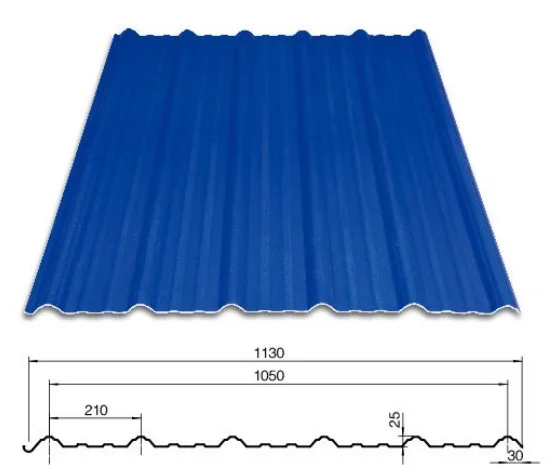
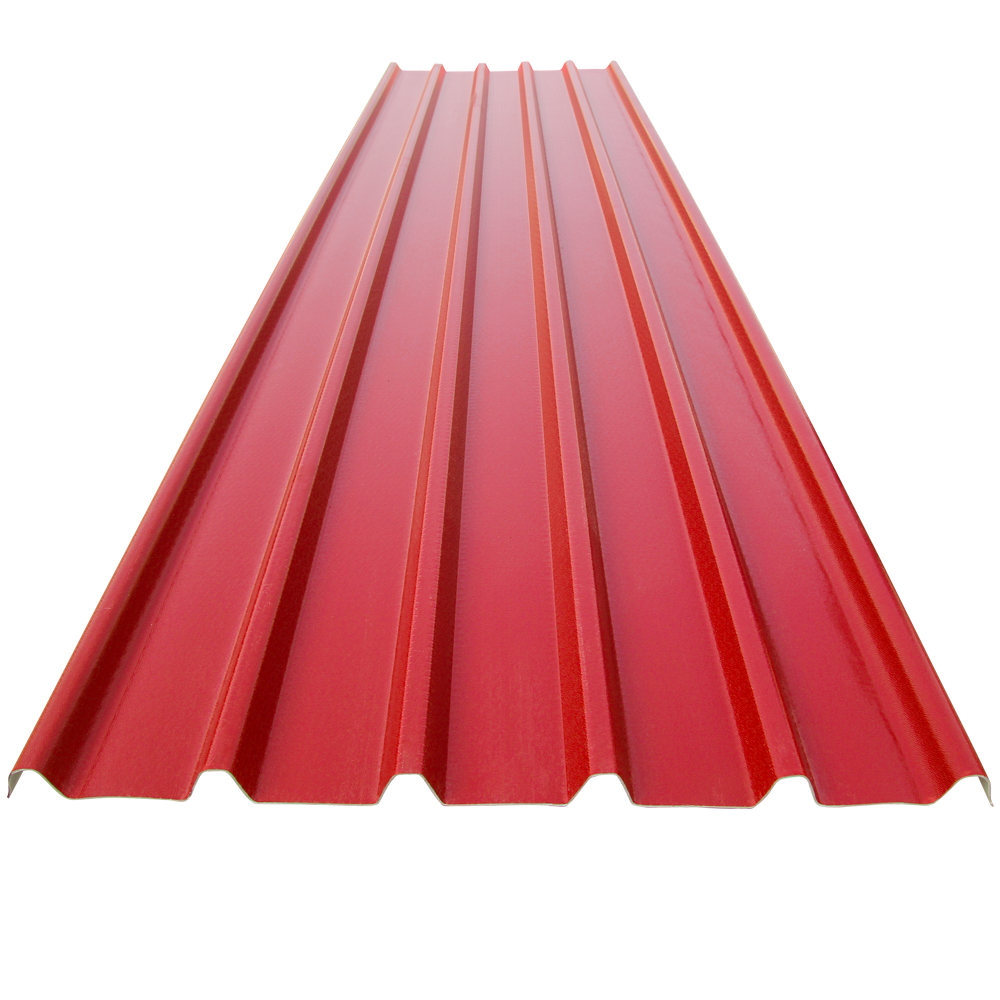
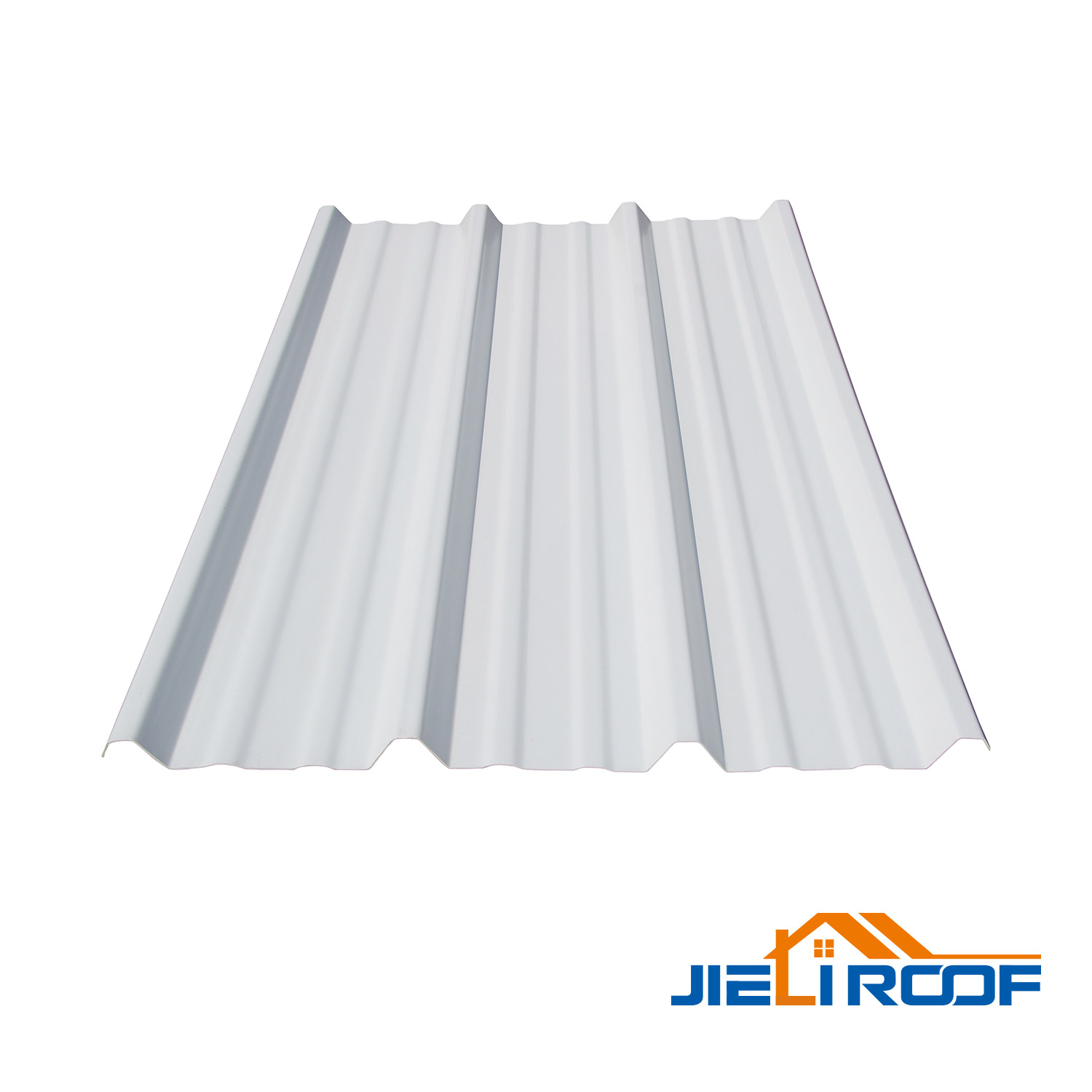
The T1130 model shows smart design for heat-resistant roofing. It uses a triple-layer co-extrusion build.
T1130 Hot: Width: 1130mm; Efficient width: 1050mm; Thickness: 2.0mm, 2.5mm, 3.0mm; Length: customized; Purlin distance: <1200mm. This setup aids in saving energy. At the same time, it holds up under different weather stresses.
Europe has varied weather, from hot Mediterranean summers to wet northern areas. Solutions must be tough. The T1130 sheet reflects heat well. It lowers roof temperatures a lot during hot spells.
Its sound-blocking skills suit city uses like apartment buildings or schools. Also, PVC/UPVC resist chemical corrosion. They stand up to acids, bases, and salts. This makes T1130 great for factories or farms with chemical risks.
The T1130’s heat control fits passive home designs that European rules promote. In areas with Nearly Zero Energy Buildings (NZEB) standards, materials like T1130 help hit energy targets. They do this without full dependence on machines for cooling or heating.
Large storage buildings or farm setups need materials that handle fumes like ammonia or salty air. The T1130 provides solid support here. It works well for greenhouses, animal barns, or places storing chemicals. In these spots, steady structure and control of inside air matter most.
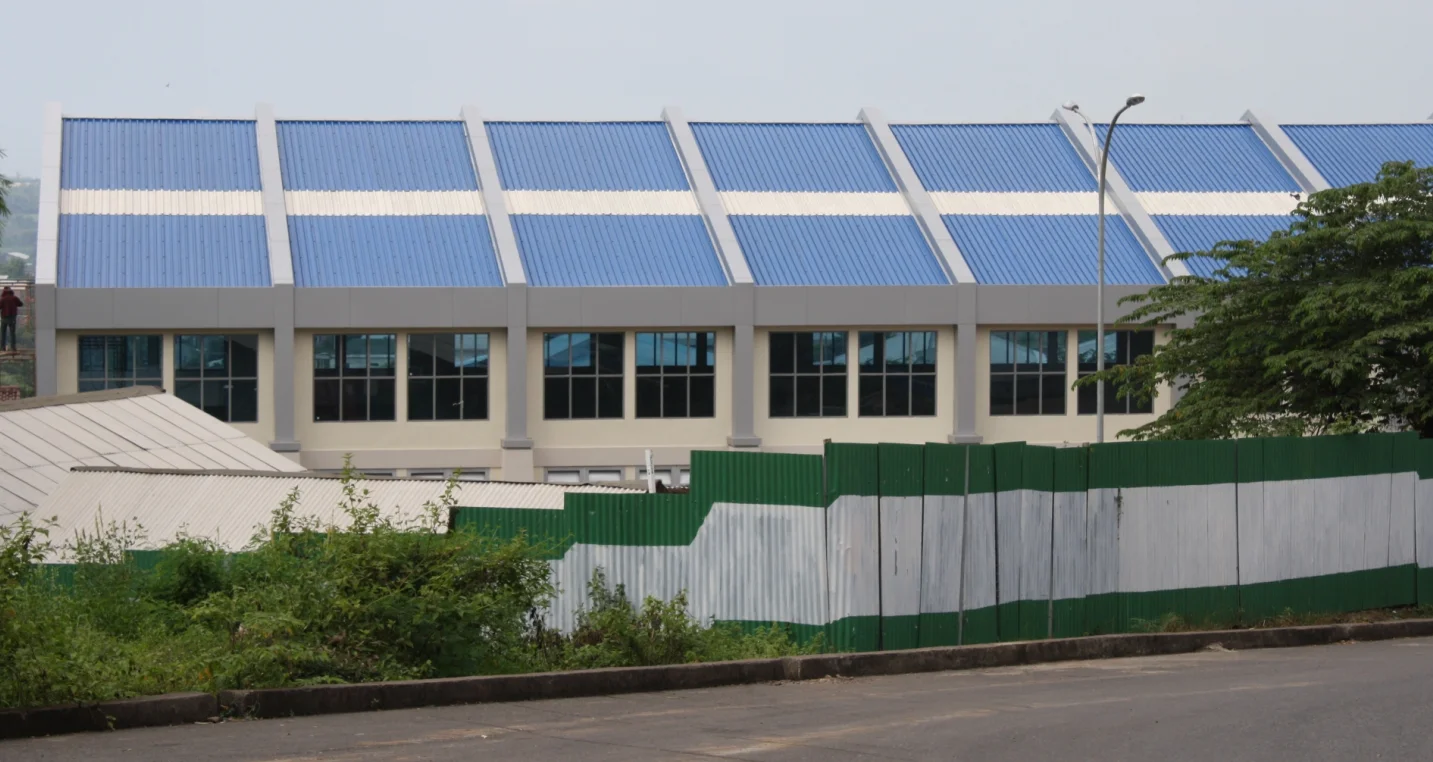
Today’s buildings care about how they look as much as how they work. The T1130 offers various colors to match local styles. Think soft shades for homes in Scandinavia or natural tones for villas near the Mediterranean.
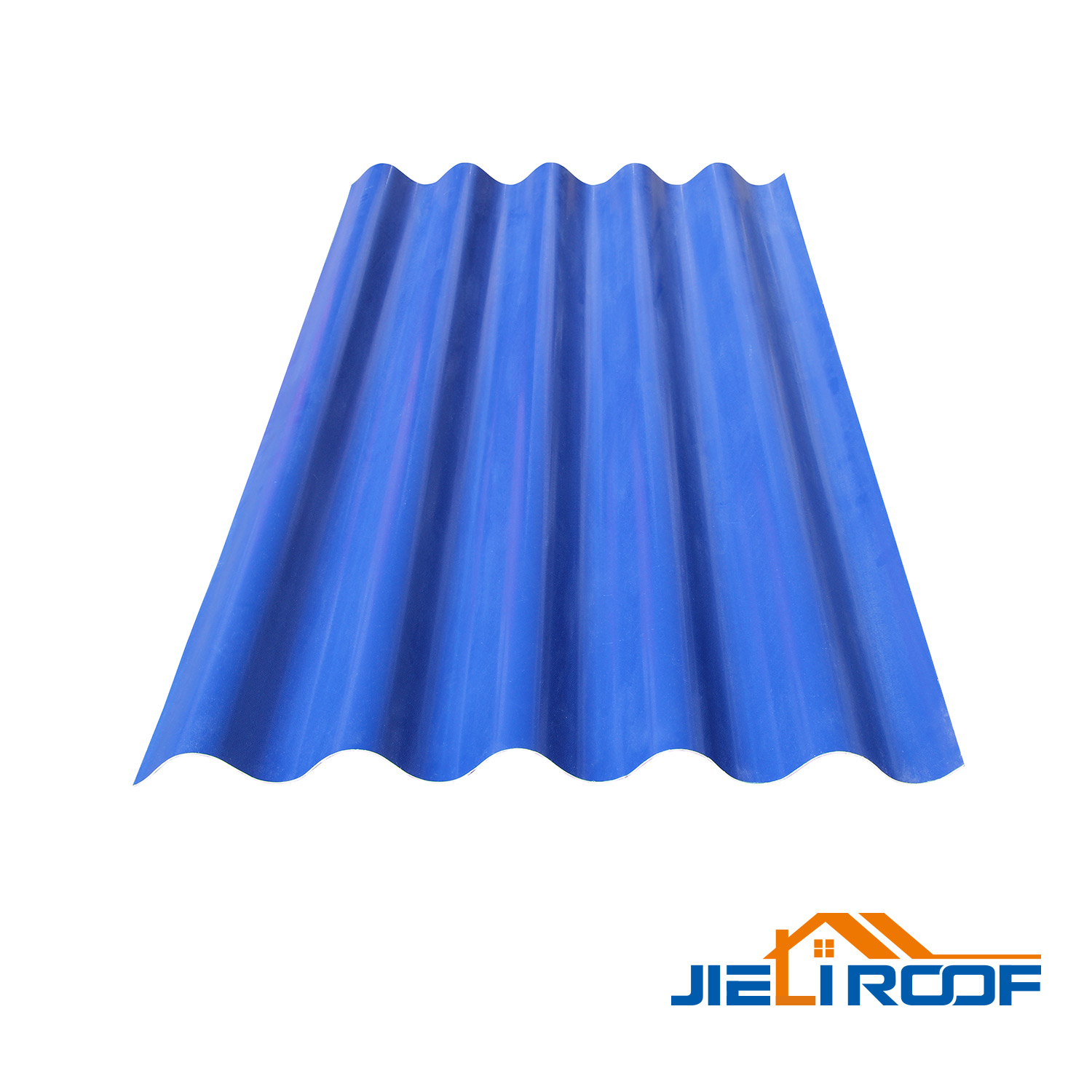
Its wavy surface blends with modern builds of steel and glass. It also fits older homes with tile roofs. Architects can keep their design plans while using a material that performs well.
Projects vary from wood frames in the countryside to strong concrete in city offices. The T1130 fits all. It works with steel, wood, or concrete bases common in Europe. You can shape it for curves or slopes without breaks or bends.
This ease cuts limits on designs. It also helps follow local building rules.
Savings on energy start right away. Less heat comes through the roof. Over time, these gains add up, mainly in warm areas where cooling uses a lot of power.
Costs for fixes stay low over the years. Steel sheets get rusty or lose paint quickly. But T1130 keeps its shape and look strong for longer.
In Europe, building values often tie to energy performance certificates (EPC). Structures with top roofing like T1130 get higher scores from better heat control.
UPVC roof sheet resists fire well. It is self-extinguishing with a B1 fire rating. This meets EU safety rules, key for public spots or homes with many units.
Each project differs based on local weather and build details. Jieli gives custom help, from picking materials to improving plans. This keeps everything on track with what the project aims for.
They also provide installation guidance. This ensures work meets standards and skips problems from wrong setup.
Jieli knows how to ship to Europe. They follow all EU customs rules fully. Every order includes test reports for batches. These cover strength against hits, aging checks, and load tests. Quality stays high even in shipping.
Warranties come with each delivery. They build trust for the long run in your choice.
If you design energy-saving homes or update factory roofs as an architect or builder, check Jieli’s full range. This includes the advanced T1130 Heat-Resistant UPVC Roofing Sheet. You can ask for expert advice on their site.
Their staff stands ready to give exact tips for Europe’s weather and rules.
Q: Is the T1130 model suitable for coastal environments?
A: Yes. It resists all types of chemical corrosion including salt exposure common in marine climates due to its PVC base material reinforced by ASA surface protection.
Q: How does T1130 compare in weight to metal roofing?
A: It’s significantly lighter than color steel sheets, reducing transportation costs and making installation faster without requiring heavy lifting equipment.
Q: Can I customize the color of my order?
A: Absolutely. Both color and length can be customized according to your project needs to ensure visual harmony with surrounding architecture.



 +86 0535 6278701 / +86 15653505862