

 As we all think ahead to the growing needs for buildings that will shape 2026, making sure you have a steady source of materials matters a lot. With a strong set of 22 making lines, Jieli makes sure production stays even and deliveries happen on time for each customer. Even for big orders that fill many shipping boxes, we can promise quick sends to keep your work on track. For example, we sent 220 full boxes of good roofing items for a huge government home project in Venezuela, and that shows clearly how we manage large jobs well.
The weather around the world is changing in big ways, and by 2026, builders in places like Central Asia will face even clearer and tougher weather ups and downs. This applies to big factory sites or home areas, and the room for wrong choices in building stuff is getting smaller fast. Hot, steady summers along with cold, rough winters need more than a basic top cover; they call for a smart, built-in shield. So, when you look for a solid UPVC roof sheet supply, you must turn your attention from just having it on hand to checking its tech strengths and lasting power.
Old metal tops are still common, but they often fail to handle the ongoing risks of rust and heat pass-through, and that is exactly where new plastic options are becoming popular. The move to strong materials is not just a short fad but a needed change to fit the new weather facts. Right now, there is a big rise in the need for better stuff that can take wild heat changes, from -40°C to 80°C, while keeping its main build solid.
Finding a partner who truly comprehends these specific, rigorous challenges is absolutely crucial for the success of your project. A top-tier UPVC roofing sheets manufacturer does not merely sell a product; rather, they provide a comprehensive defense system for your building. Whether you are in the process of constructing an acid pickling workshop or a large-scale logistics warehouse, the material choice you make today will dictate the maintenance budget for the next decade. Our primary focus is to guide you through the essential qualities—specifically thermal stability, chemical resistance, and structural efficiency—that define the absolute best roofing choices for the coming years.
In regions that are characterized by continental climates, the temperature difference experienced between day and night, as well as the extremes between summer and winter, can be drastically severe. This intense thermal stress acts as the primary enemy of standard roofing materials, often leading to premature failure.
Energy efficiency is set to be a dominant theme for 2026, making thermal conductivity a key factor to consider. Our advanced UPVC materials boast a remarkably low thermal conductivity of roughly 0.325w/m.k. To put this into a clearer perspective, this figure is approximately 1/2000th of the thermal conductivity found in standard color steel sheets. This advantageous physical property means that during the height of summer, the roof acts as an effective barrier, significantly preventing external heat from penetrating the building envelope.
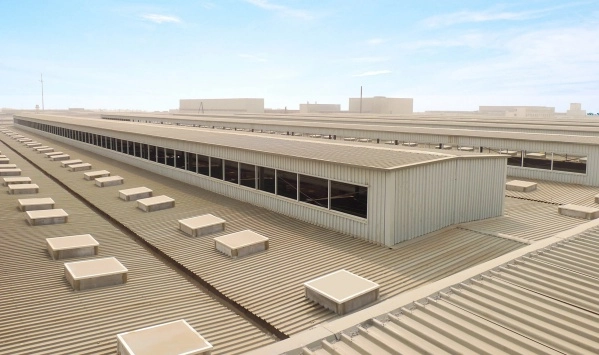
For industrial workshops, this technical advantage translates into a tangible benefit: a noticeably cooler interior workspace. We have consistently observed that facilities utilizing these sheets do not require additional, expensive insulation layers to maintain a comfortable working environment. This natural, inherent insulation capability significantly lowers the energy consumption required for cooling systems, representing a critical cost-saving factor for any large-scale operation.
Cold times bring other issues, since stuff that takes in water can split when that water freezes and grows. A good Wholesale UPVC roof panels seller must promise work even in ice-cold spots. Our items go through tough test steps, like the freeze-thaw check. After 50 rounds of heat shifts from -40°C to 80°C, fine UPVC shows no splits, empty spots, or bubbles at all. This stronghold means that when snow melts and freezes again, the roof stays whole, giving you calm through the worst cold seasons.
Rust works quietly to wreck factory setups, especially in fields with chem work, metal making, or spots hit by salt rain, where metal tops will rust for sure.
As we walk into 2026, the bar for factory roofs is full chem non-react. We suggest stuff that fights off harm from acids, bases, and salts completely. Unlike paint-covered steel, which counts on a thin coat that scratches easily and stops working, our picks have built-in, deep fight-back. In changing spots like acid pickling workshops or chem food plants, this gap is clear. Metal tops may need full swaps every few years from rust leaks, but top UPVC stays untouched, keeping work and looks for a long time.
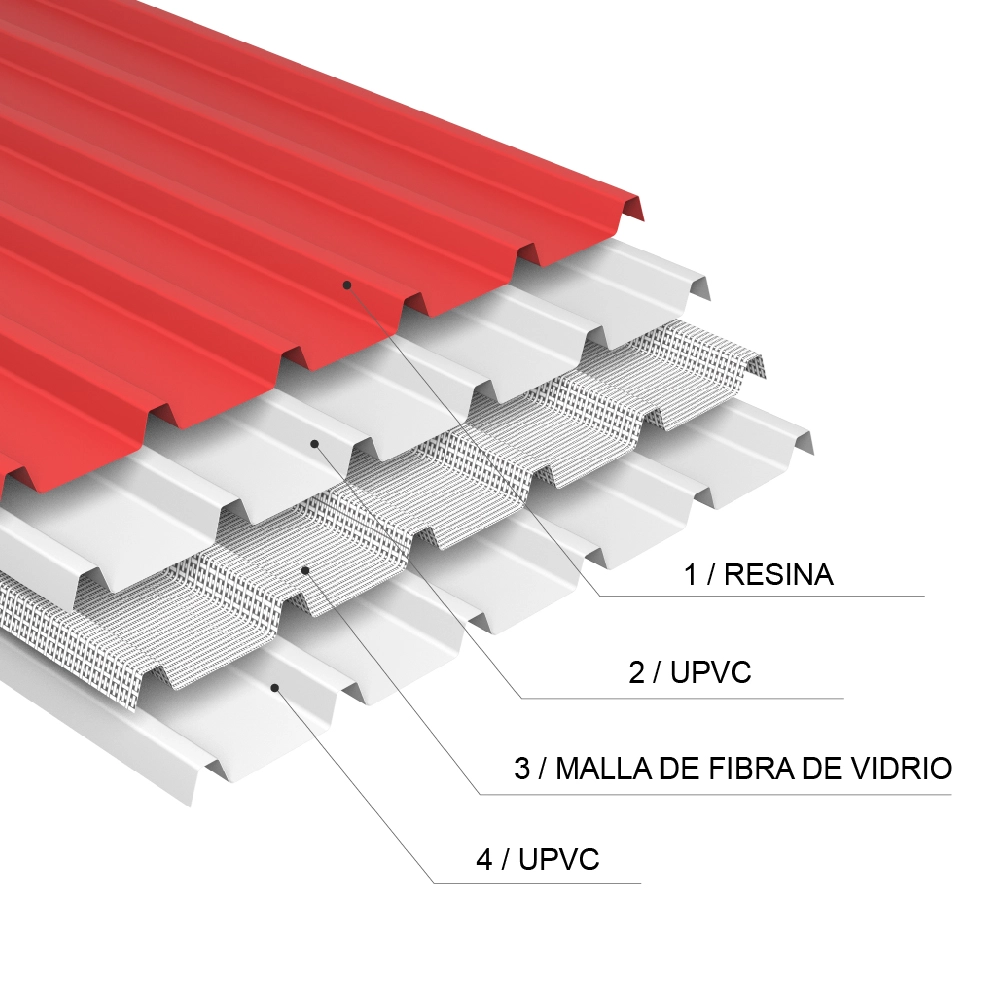
To achieve this exceptional level of performance, we utilize a highly sophisticated manufacturing process. Our Wholesale UPVC roof panels feature a specialized Structural Composition: Triple-Layer Co-extrusion Technology combined with a Fiberglass Layer. These sheets have four useful layers built in:
The top layer gets treated with highly effective ASA to fight UV harm and keep bright colors, ensuring the roof looks new for years by resisting the fading that plagues standard materials.
The second layer is UPVC, which offers outstanding strength, impact resistance, heat insulation, and sound insulation performance, serving as the core body that provides the bulk of the material’s durability.
The third layer is a Fiberglass reinforcing layer, which enhances high-temperature resistance, strength, impact resistance, tensile resistance, and load-bearing performance, creating a grid that prevents the sheet from expanding or contracting excessively.
The bottom layer is UPVC, which is corrosion-resistant, moisture-proof, and enhances structural stability.
This intricate, multi-layered approach results in a lifespan that can reach up to 3~5 times that of traditional color steel tiles. It is a comprehensive, engineered system designed to be anti-corrosion, heat-resistant, anti-aging, rust-proof, and fire-retardant.
When running a big job, material price is just one piece of the hard math, since setup ease and build needs play a huge part in the end cost.
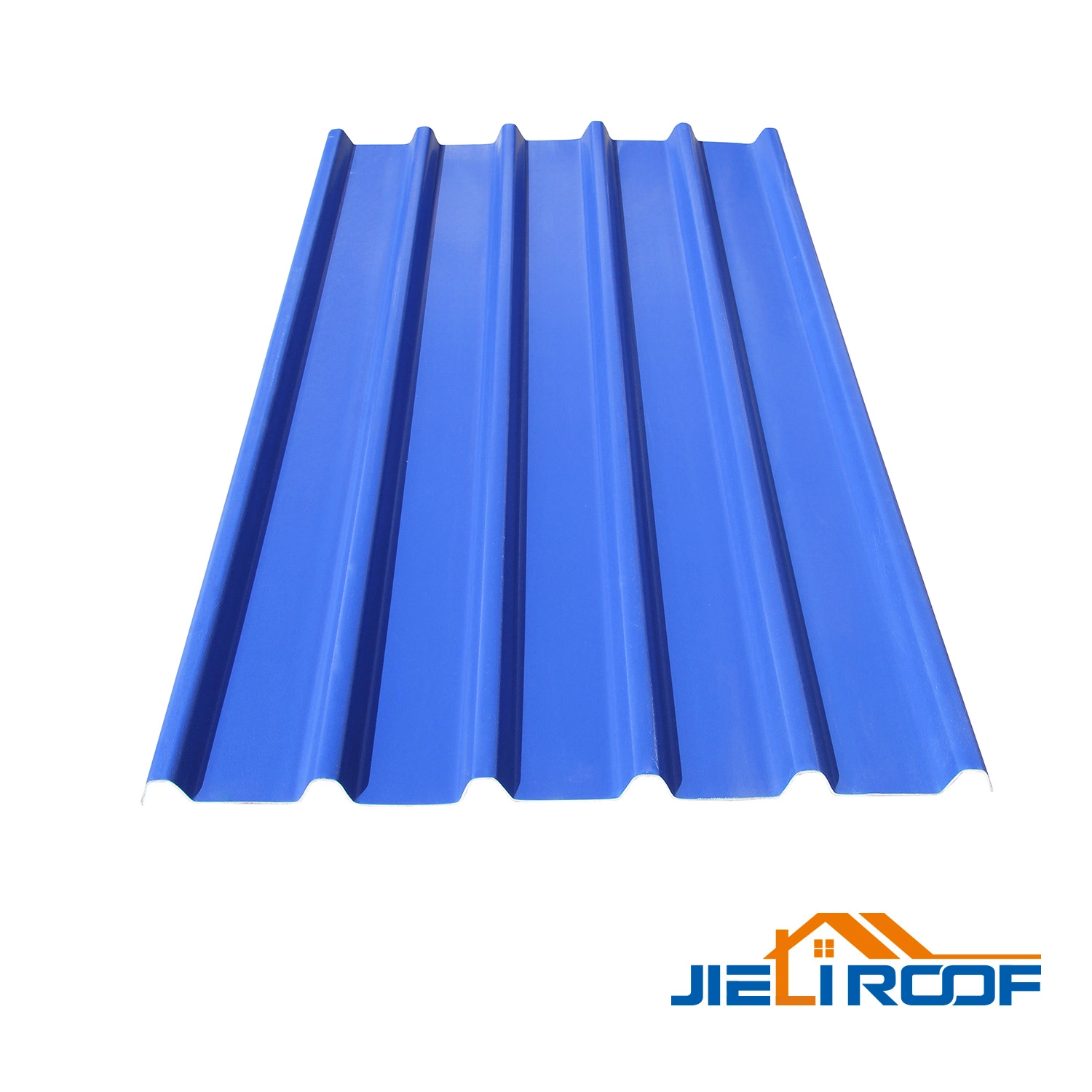
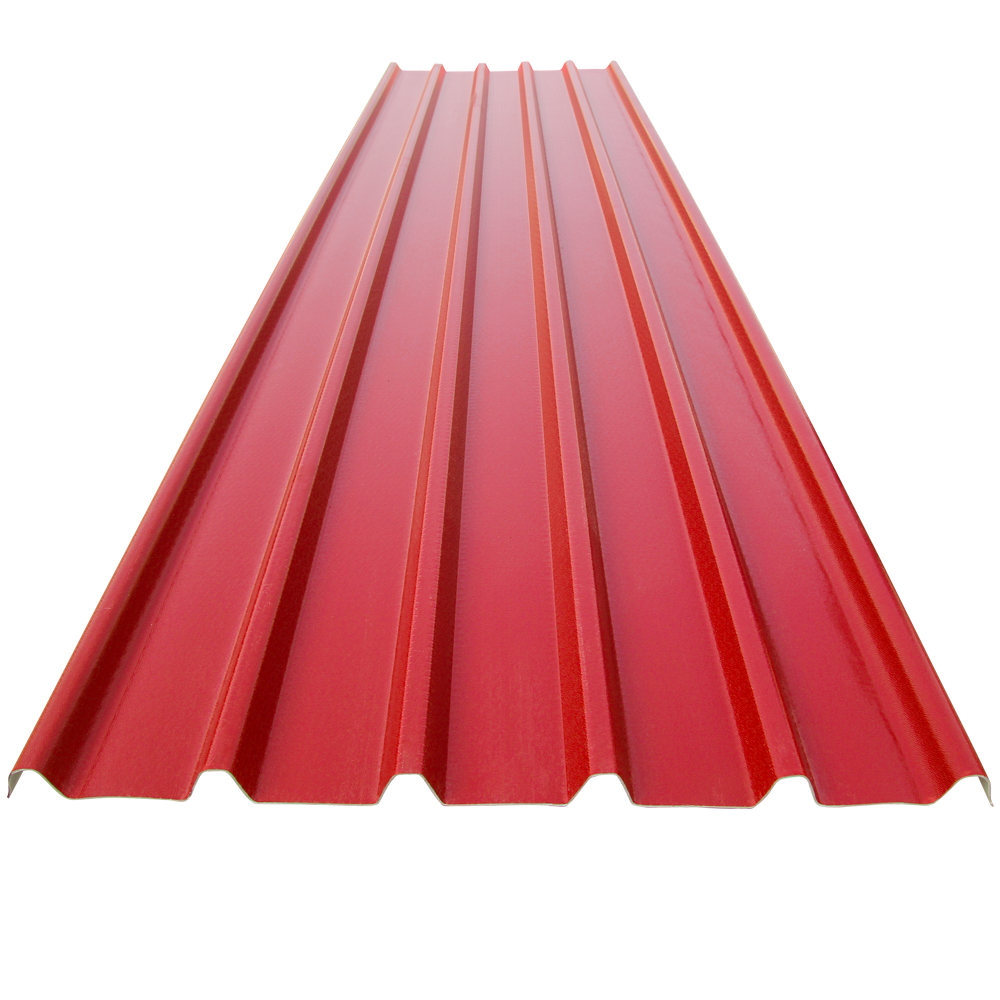
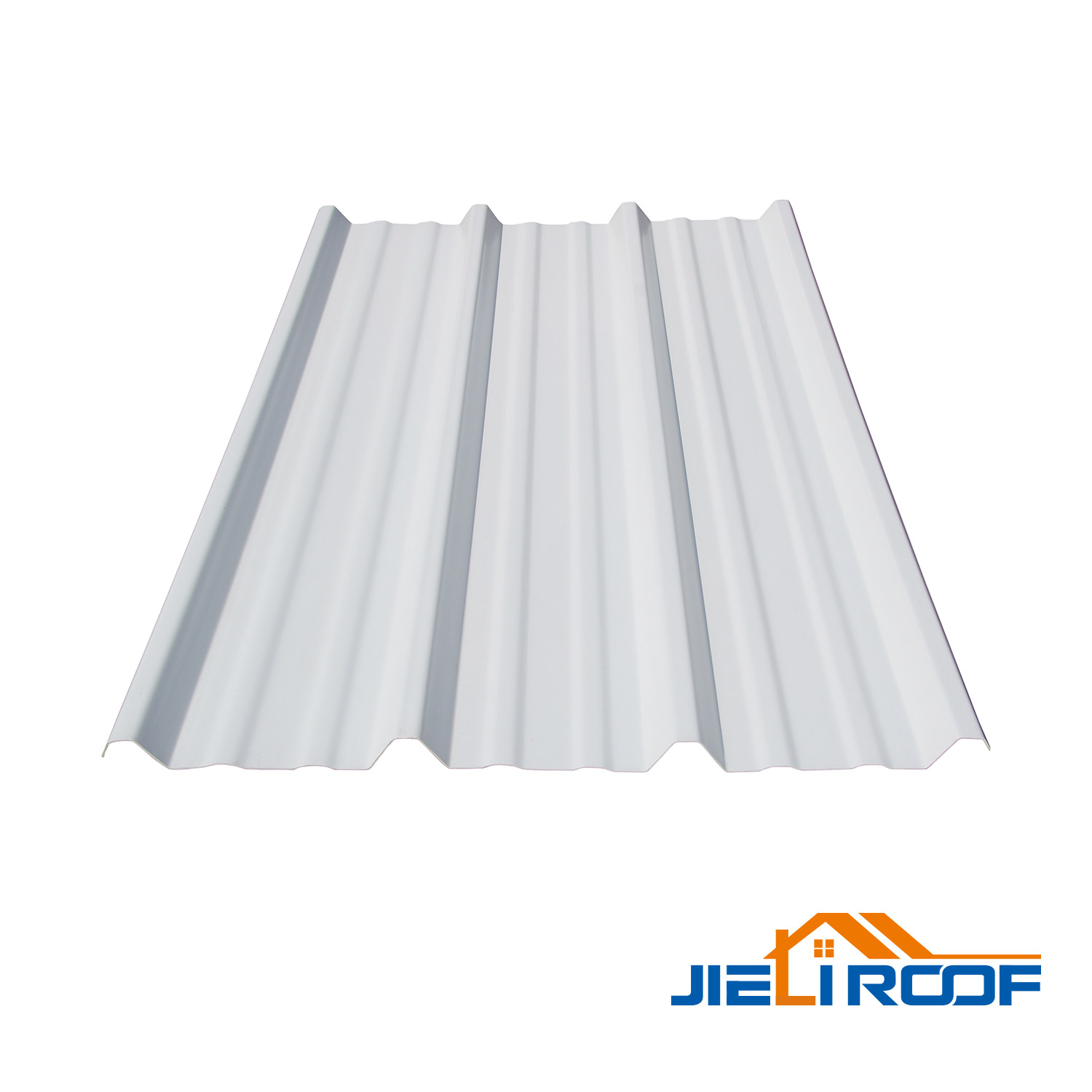
We specifically recommend the UPVC Roofing Sheet T940 for demanding industrial applications. This profile is meticulously engineered for efficiency; with a total width of 940mm and an effective coverage width of 880mm, it maximizes the area covered per sheet.
The true cost advantage, however, lies in the supporting structure. Thanks to the integrated fiberglass reinforcement and the robust T940 profile design, the strength of the sheet allows for a significantly wider purlin spacing. You can install these sheets with a purlin distance of up to 1500mm. For Wholesale UPVC roof panels buyers, this represents a game-changer, as a wider purlin spacing means you need fewer steel purlins across the entire roof. This directly reduces the steel material cost and the labor required to install the framework, offering a significant reduction in the total project expenditure.
Contractors greatly appreciate materials that are easy to handle and install. The T940 profile is thoughtfully designed to be installation-friendly, helping to drastically cut down construction time. Moreover, safety and stability are built directly into our installation guidelines. In regions that are prone to high winds, we recommend specific overlap strategies—two corrugations for horizontal overlaps and 20-25cm for lengthwise overlaps—to ensure the roof remains secure during severe storms. The fiberglass mesh embedded inside the tile distributes tension evenly, making the sheet incredibly resistant to impact and wind load; whether it is hail or heavy snow, the reinforced structure holds firm.
In a world market full of different choices, checking the start of your UPVC roof sheet supply counts more than before. The gap between a basic item and a strong fix often comes from the strict rules used.
We work as a real UPVC roofing sheets manufacturer, not just a middle seller, and that split is key for quality watch. With a government okay test lab (CNAS certified), we do full checks from start stuff in to end. Each group gets tested carefully for age hold, pull strength, and hit fight. This strict inside rule makes sure every sheet from us hits the set tech marks, so we do not just say it lasts; we show it with facts and papers.
Steady work shows best in past jobs, and we have sent big projects around the world, like roofs for the 2008 and 2022 Olympic Games and long supplies for big stores like Sodimac. These lasting teams show our skill to hit hard quality rules and send needs. When you pick us, you use years of know-how in giving top work to key build jobs everywhere.
As you plan smart for 2026 jobs, keep in mind that the top pick balances now’s cost with long-term worth. Our fixes give a special mix of heat block, full rust fight, and build power, all with a full 10-year promise. We feel sure in how good our items are, so we give free tests for you to feel the quality yourself.
We stand by helping teammates at every step. From figuring the right amount for your job to giving full check reports, with pics of making and loading, we make sure things stay open and easy. Past just sending stuff, we work to give Contractors the full knowledge they need for a perfect setup, with clear books and full help.
If you seek a roof teammate for steady quality and big amounts, we are set to help; let us aid you in making a roof that holds up.
Q: What fundamentally distinguishes your UPVC roof sheets from standard plastic roofing options available on the market?
A: Our sheets utilize a unique, advanced triple-layer co-extrusion technology combined with a fiberglass reinforcing layer, featuring a top ASA layer for superior weather resistance and a fiberglass mesh that significantly increases tensile strength and heat resistance, thereby preventing the expansion issues common in standard plastic roofs.
Q: Can these sheets truly withstand the heavy snow loads typically experienced in Central Asia?
A: Yes, the strategic inclusion of the fiberglass layer and the specific trapezoidal design (like the T940) allows for excellent load-bearing capacity, and they are tested to withstand heavy loads and resist cracking in freezing temperatures down to -40°C, making them ideal for snowy regions.
Q: Do you provide on-site installation services for international projects?
A: We focus primarily on manufacturing and supply, so we do not provide on-site installation services; however, we offer comprehensive installation manuals and remote support to guide your Contractors, ensuring the installation process is smooth and correct
What Should You Look for in a UPVC Roof Sheet Supply for Harsh Climates in 2026?



 +86 0535 6278701 / +86 15653505862