HOME>NEWS>Why Are More Industrial Buyers Switching to TSP Roof Sheets in 2026?
Why Are More Industrial Buyers Switching to TSP Roof Sheets in 2026?
2026-05-07 10:15:58
SHARE TO:
Industrial roofing decisions are changing in 2026 because buyers are facing a harder question than cost alone. A roof may look acceptable at installation, but that does not mean it will remain reliable in coastal air, chemical vapor, high humidity, or polluted industrial zones. In many projects, the real loss comes later. Corrosion shortens service life, increases maintenance, and pushes facilities into repeated repair cycles that disrupt operations and weaken long-term project margins.
That is why more buyers are rethinking the role of a tsp roof in industrial buildings. The shift is not driven by fashion or by a new preference for complex materials. It is driven by a very practical problem. Conventional painted or coated metal roofs can lose performance once corrosion starts at weak points in the protective layer. When rust appears, the roof stops being a simple construction component and becomes an operating risk.
A tsp roofing sheet is gaining attention because it stays within the logic of metal roofing while targeting the part that often fails first: corrosion resistance. Instead of asking buyers to abandon the structural confidence of steel, it offers a way to keep a steel-based roof and improve resistance to acids, alkalis, salt spray, and aggressive industrial exposure. That is why industrial buyers are not merely comparing prices anymore. They are comparing how long a roof stays usable in real conditions.
Why corrosion has become the main roofing issue in many industrial projects
In ordinary environments, many metal roofing systems can deliver acceptable service. Industrial projects are different. Moisture, airborne pollutants, coastal salinity, cleaning chemicals, and temperature fluctuation create a harsher working environment for any roof surface. Once corrosion starts, the problem rarely stays local. It spreads into maintenance costs, replacement planning, and operational disruption. High humidity and precipitation accelerate oxidation. Salt exposure promotes pitting and crevice corrosion. Industrial pollutants can combine with moisture and form corrosive compounds that attack roof surfaces over time.
This is why a roof sheet for high corrosion environment use cannot be judged by the same standard as a roof for mild exposure. Warehouses near the coast, chemical processing buildings, food factories, water treatment plants, mining sites, livestock facilities, and paper mills all put pressure on conventional roofing systems. In those cases, buyers are not asking for a decorative surface. They are asking for a roofing system that resists chemical corrosion and avoids rust-related failure. That demand is one of the main reasons a tsp roof is being discussed more often in industrial procurement.
Another change is that buyers now think in lifecycle terms. If a roof must be repaired too often or replaced far earlier than planned, the cheaper option stops being economical. Industrial roofing has become a performance decision, not only a purchasing decision.
Why traditional metal roofing is losing ground in harsh environments
The weakness in many painted steel systems is not the steel base itself. The weakness is the protective layer. A conventional color-coated roof may perform well at first, but once the coating develops defects, the steel below becomes vulnerable. That is why many buyers now search for a color coated steel roof alternative instead of repeating the same material choice project after project.
This problem becomes more serious in facilities where corrosion is continuous rather than occasional. Acidic vapor, alkaline residue, salt-laden air, and industrial pollution do not wait for a dramatic weather event. They work slowly, then visibly. By the time rust appears, the roof has already started losing the reliability that buyers expected at the start.
This is also why industrial buyers are looking more carefully at the difference between ordinary coated steel and a film coated steel sheet. The key issue is whether the protective layer simply covers the metal or seals it more effectively. That is a material-design question, and it has direct consequences for maintenance cycles and roof life.
What makes TSP roof sheets different from other metal roofs
A tsp roofing sheet is still a metal roofing product. That matters. Buyers who need long truss spans, structural stability, and stronger load-bearing performance often still want steel in the system. The goal is not to move away from metal. The goal is to solve the corrosion problem that many metal roofs struggle with in aggressive environments.
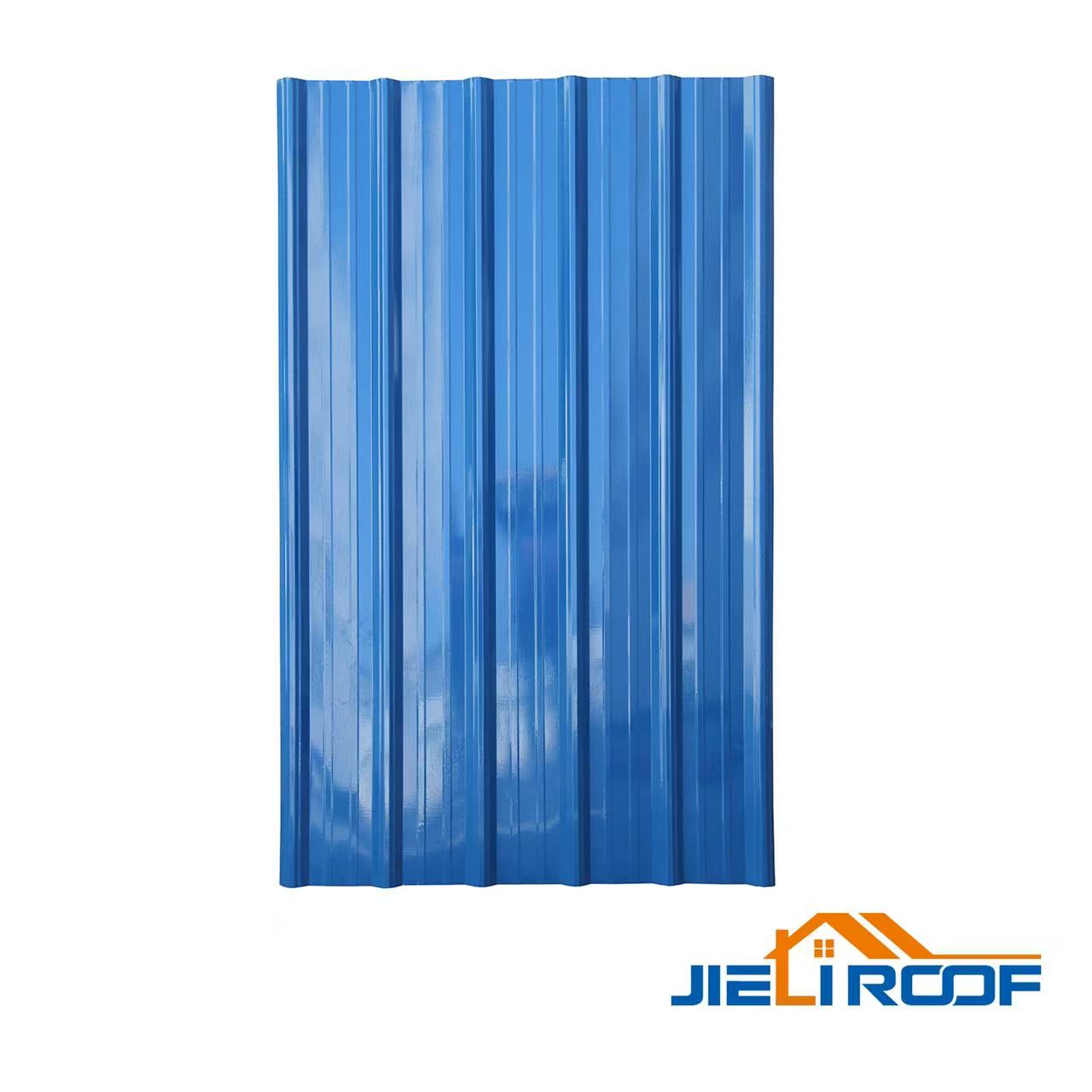
TSP takes this direction through a film-coated structure. The product uses galvanized steel with TSP film on both the surface and the bottom, and the film itself is a modified polyester layer designed to seal the steel more effectively against corrosive media. On the product page, the structure is described as TSP film plus galvanized sheet plus TSP film, with the sheet positioned for corrosion resistance, rust resistance, and chemical attack resistance in industrial and coastal environments. Quality assurance is listed as 15 years, and service life is listed as 25–30 years.
The buying logic is straightforward. Industrial buyers do not switch to TSP because it stops being metal. They switch because it remains a metal roof while addressing the failure mode that often causes the most loss. In projects exposed to acids, alkalis, salts, and industrial pollutants, corrosion resistance matters more than a marketing-heavy list of generic advantages.
Published test data strengthens that case. The TSP material set includes a 1000-hour salt spray test with no rusting, chemical resistance tests covering acids, alkalis, ammonia, chlorine, and other corrosive media, plus bending and boiling-water tests showing no cracking, peeling, shrinkage, or delamination. Those points make TSP relevant for buyers who need corrosion resistant roofing sheets rather than standard painted metal.
Where TSP fits best in industrial roofing decisions
TSP is most relevant where corrosion pressure and structural demand exist together. Coastal warehouses are a clear example. Salt exposure attacks conventional roof surfaces over time, and large roof areas make maintenance costly. Chemical factories are another strong fit because acidic and alkaline conditions can accelerate failure in ordinary coated metal roofs. The same applies to food factories, water treatment plants, mining facilities, and other sites where moisture and aggressive chemicals are part of daily operation.
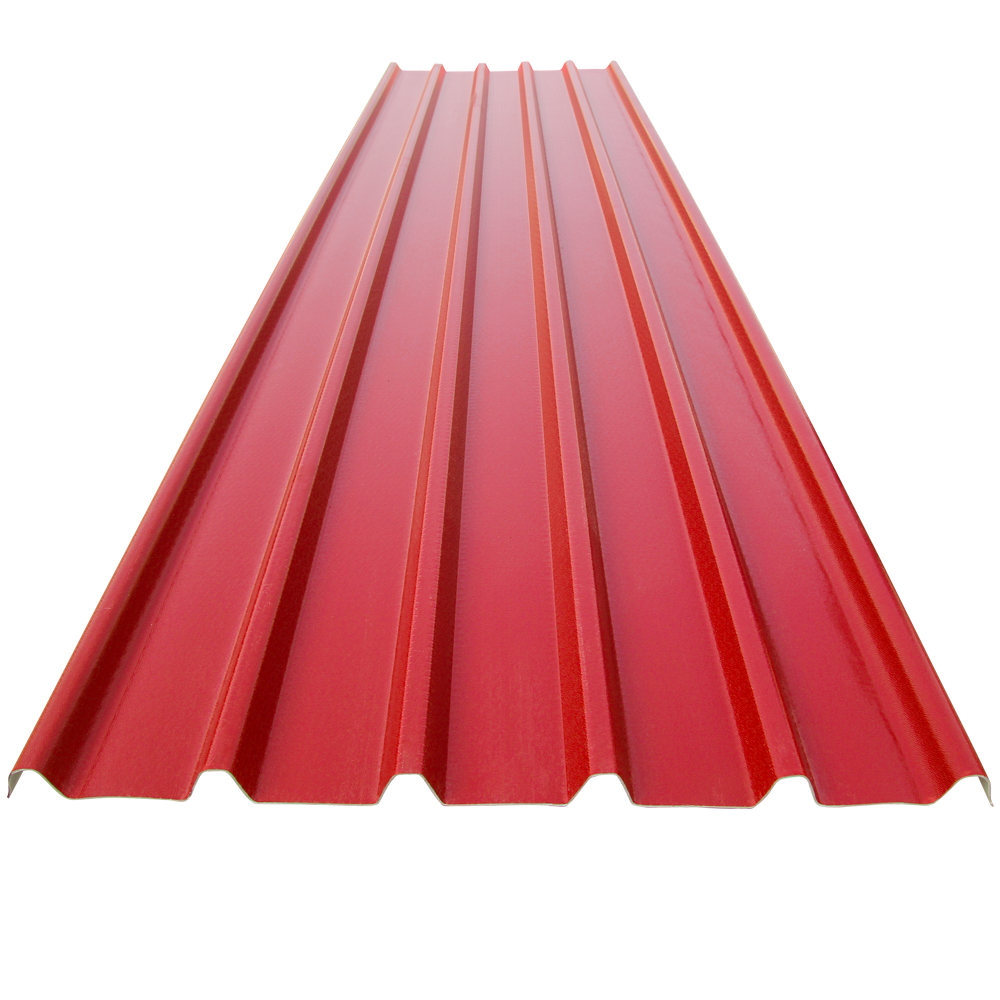
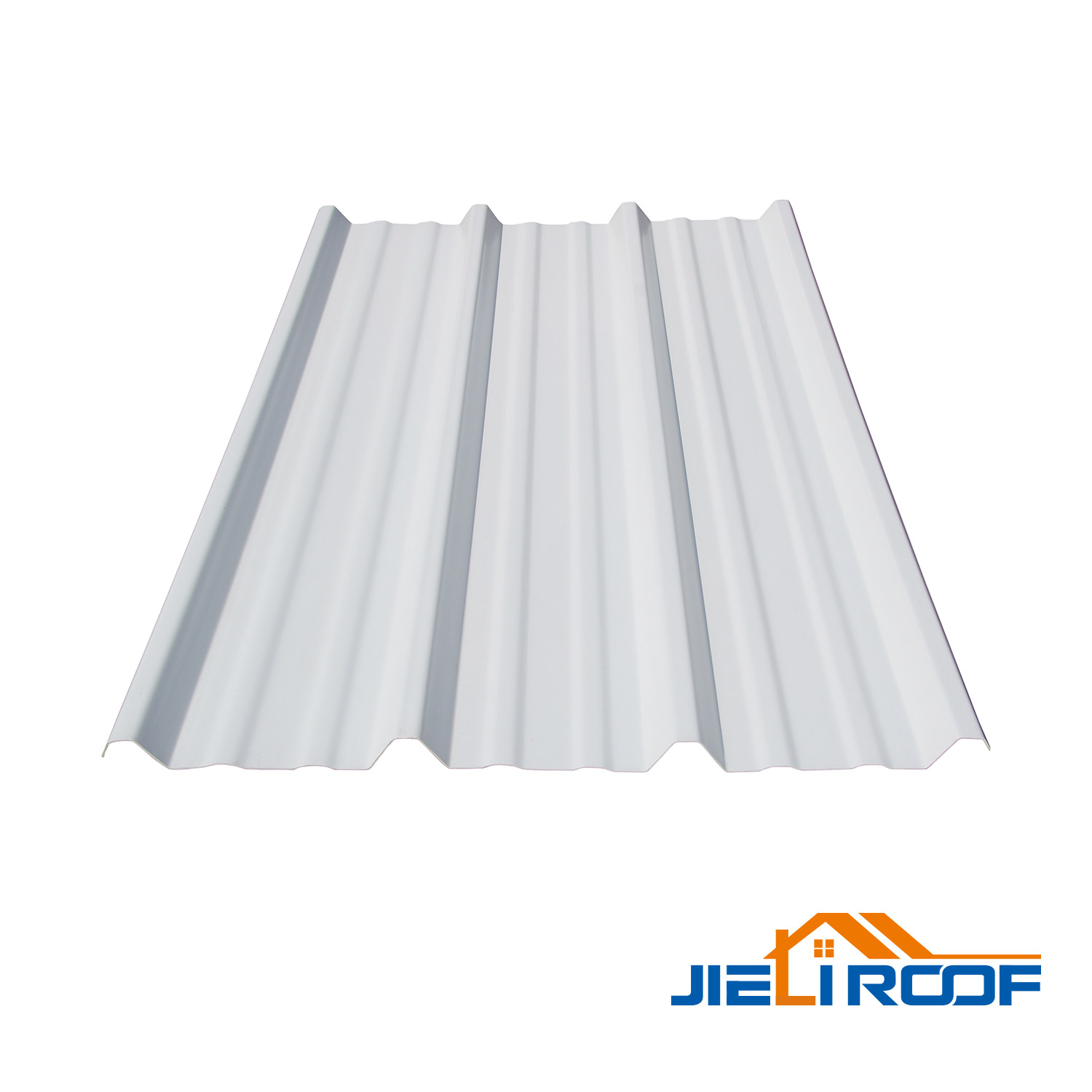
This is where product specification also starts to matter. TSP Steel Sheet Trapezoidal 1050 uses a trapezoidal profile with a width of 1130 mm, a 1050 mm cover width, customized length, thickness options of 0.4 mm to 0.8 mm, and a recommended purlin distance of 1.2 m to 1.5 m, depending on project conditions. Those details make it a practical trapezoidal steel roofing sheet for industrial and commercial roofing rather than a niche specialty panel.
Its application value is strongest where buyers want three things at once: metal-based strength, longer service life, and stronger resistance to chemical corrosion. That combination explains why the material is not best framed as a general-purpose roofing sheet. It is better framed as an industrial solution for corrosive settings.
Why supplier capability matters in this category
Choosing the right material is only part of the decision. The supplier also matters because TSP projects often need more than a standard panel shipment. Buyers may need help matching profile, thickness, and sheet length to the operating environment and roof structure. That is one reason the choice of a tsp roofing sheets manufacturer matters more than it does in routine roofing supply.
At Jieli, that work starts before shipment. The company has its own testing lab, handles checks from raw materials through finished product and order batches, and supports project-side decisions such as profile, thickness, color, quantity calculation, and installation guidance. Those details matter because industrial buyers rarely fail at roofing because they lacked a brochure. They fail because a material was poorly matched to the actual conditions on site.
A capable tsp roofing sheets manufacturer should also be able to support delivery planning for larger projects. For bulk supply, stable production and reliable shipment timing matter almost as much as product performance, especially when roofing supply is tied to project milestones and container scheduling.
Why more buyers are switching in 2026
The reason is not complicated. Industrial buyers are no longer satisfied with a roof that performs well only in low-risk settings. They want a roof that fits the environment they actually have. When a project operates near salt, chemicals, humidity, or industrial pollutants, corrosion becomes the central issue. In those conditions, a tsp roof offers a stronger answer than many ordinary painted steel products because its value is tied directly to corrosion control.
That is also why a tsp roofing sheet should be presented carefully. It is not a magic material and it should not be sold as if every benefit matters equally in every project. Its strongest commercial case is clear: it is a metal roof designed to resist chemical corrosion and avoid rust in places where conventional metal roofing often struggles. That is the core reason more industrial buyers are switching.
For project teams planning a warehouse roof replacement, a factory expansion, or a new build in a corrosive setting, the next step should be a technical review of environment, profile, thickness, and loading needs. That conversation usually produces a better decision than comparing quotations alone. For project support or product selection, contact us through the website service page.
FAQ
Q: Is TSP mainly a replacement for color steel in corrosive environments? A: In many projects, yes. TSP is especially suitable where conventional painted or coated metal roofs face a higher risk of chemical corrosion, rust, and early maintenance.
Q: Is the main value of TSP heat insulation? A: No. TSP is fundamentally a metal roofing product. Its strongest advantage against other metal roofs is resistance to chemical corrosion and rust, especially in coastal and industrial environments.
Q: What should buyers check before choosing a TSP roof sheet? A: The key points are corrosion conditions, project type, profile selection, thickness range, purlin distance, warranty, and whether the supplier can support project-based technical matching and delivery.






 +86 0535 6278701 / +86 15653505862

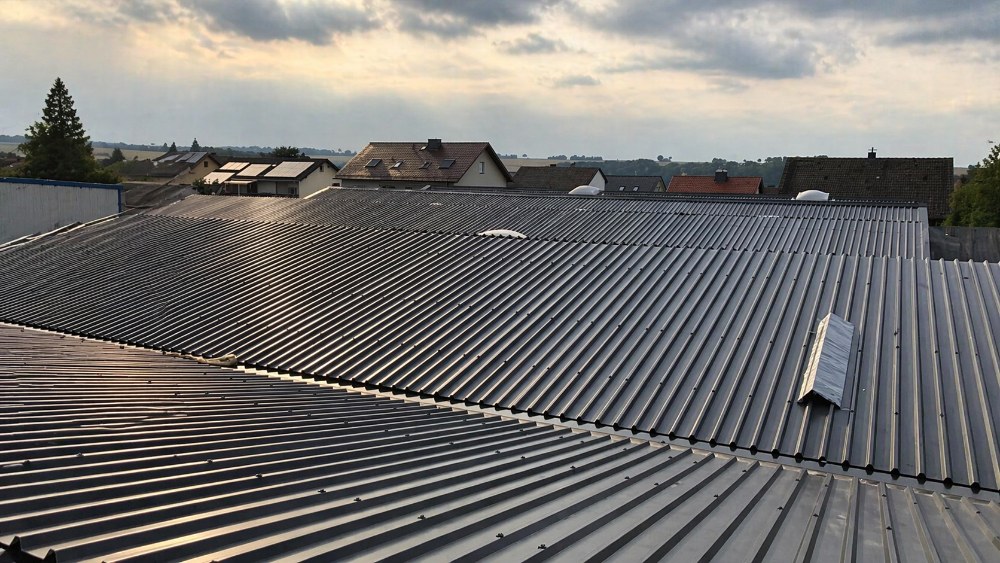 Industrial roofing decisions are changing in 2026 because buyers are facing a harder question than cost alone. A roof may look acceptable at installation, but that does not mean it will remain reliable in coastal air, chemical vapor, high humidity, or polluted industrial zones. In many projects, the real loss comes later. Corrosion shortens service life, increases maintenance, and pushes facilities into repeated repair cycles that disrupt operations and weaken long-term project margins.