HOME>NEWS>Standard UPVC Roof VS Glass Fiber Reinforced UPVC Roofing Sheet Which Is Better In 2026
Standard UPVC Roof VS Glass Fiber Reinforced UPVC Roofing Sheet Which Is Better In 2026
2026-04-21 13:56:30
SHARE TO:
Global climate patterns are shifting rapidly, placing unprecedented stress on commercial buildings. Facility managers now face a stark reality: traditional roofing materials simply cannot withstand the increasingly severe hail, intense coastal storms, and aggressive temperature fluctuations we see today. Finding a solution that prevents costly, repetitive maintenance cycles is an engineering necessity. Since 1992, JieLihas focused intensely on polymer roofing innovations. By investigating exactly why conventional structures fail under environmental duress, we engineered specific countermeasures. Today, procurement teams face a critical choice. They must evaluate the standard UPVC roof against new, technologically reinforced alternatives.
Evaluating the Baseline: The Standard UPVC Roof
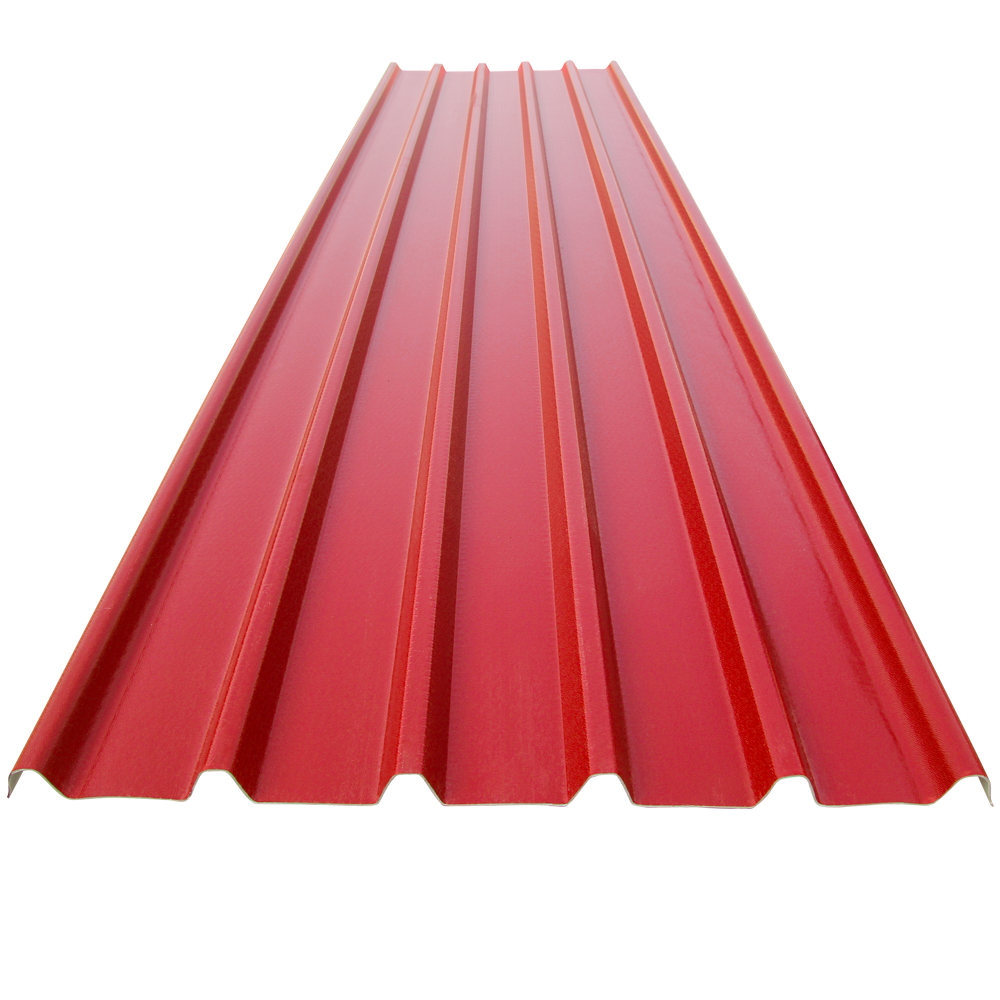
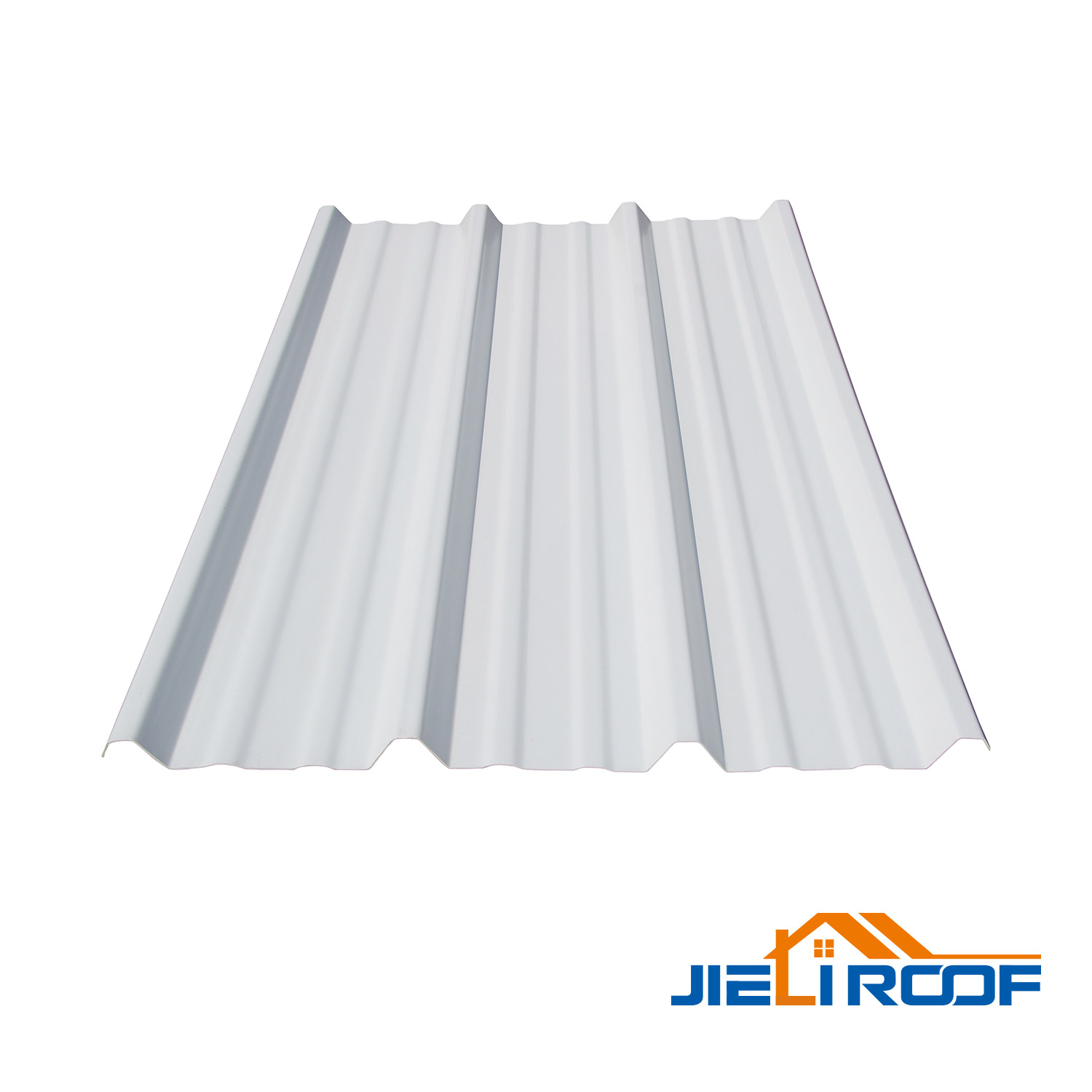
Conventional UPVC roofing sheet materials offer a dependable baseline. Their inherent chemical resistance performs admirably in standard industrial zones exposed to general atmospheric moisture or mild emissions. Unplasticized polyvinyl chloride also delivers respectable thermal efficiency and noise reduction, easily outperforming thin metal panels during summer heat waves or heavy rain.
Yet, extreme weather roofing materials 2026 standards require significantly more. Standard profiles exhibit certain mechanical limits. When subjected to violent typhoons, heavy snow loads, or sudden thermal drops, unreinforced plastic faces structural fatigue. Basic polymers possess a natural thermal expansion coefficient, leading to slight but inevitable dimensional shifts. Furthermore, if architectural plans dictate expansive purlin distances to cut steel costs, standard sheets may deflect under pressure. This precise limitation drove the construction industry to develop a much stronger composite.
The Upgrade: Fiberglass Reinforced Roof Panels
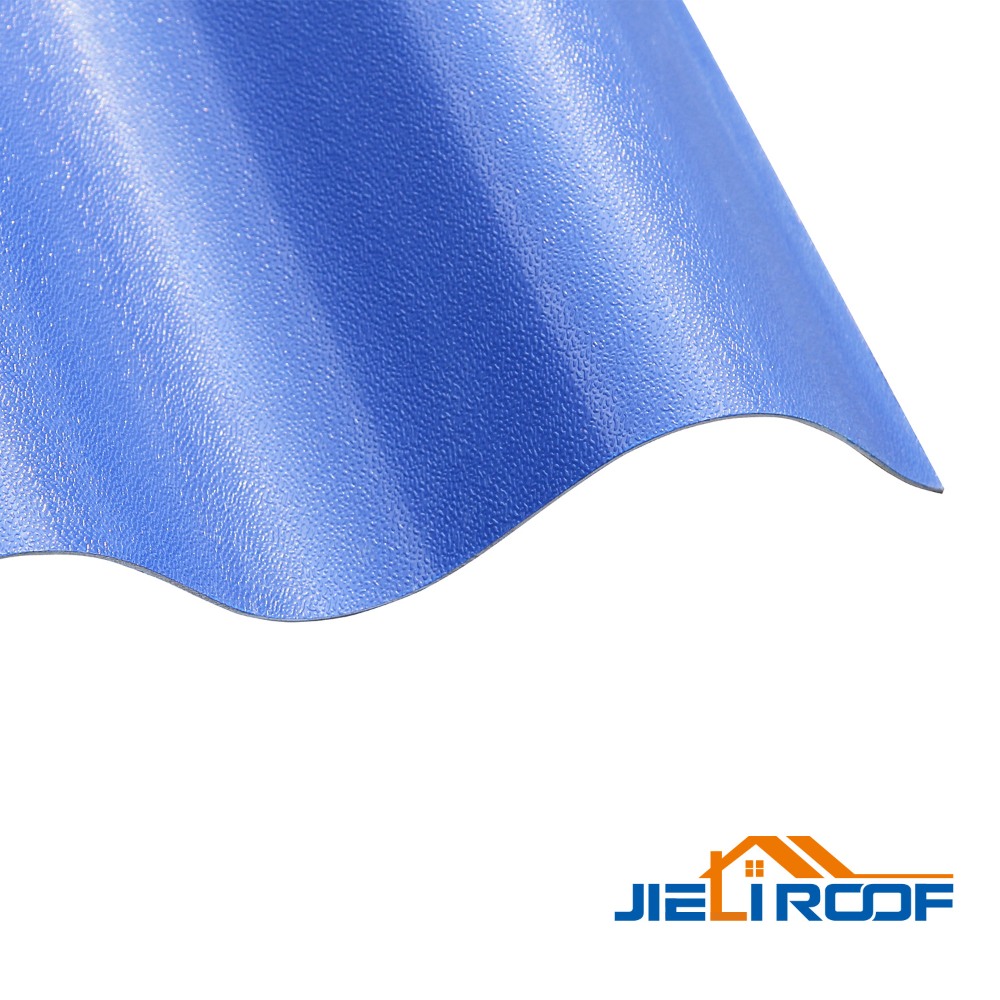
To achieve the exceptional performance of our reinforced series, we maintain absolute control over the foundational building blocks of the material. The structural integrity of the BW920 begins with our high-grade PVC Compound, which acts as the high-purity resin matrix. By engineering the weather-resistant PVC granules specifically to bond with the internal fiberglass grid, we ensure that the finished upvc roofing sheet operates as a single, unified composite rather than separate layers. This seamless integration of premium raw material and patented reinforcement technology is what allows the product to survive the most demanding industrial environments.
To overcome the mechanical boundaries of conventional polymers, material scientists integrated advanced composite reinforcement techniques. This specific innovation resulted in the fiberglass reinforced roof vs standard upvc debate that dominates current industrial procurement discussions.
The structural foundation relies on an advanced Triple-Layer Co-extrusion Technology+Fiberglass Layer. These sheets have four useful layers built in to maximize durability and performance.
The top layer gets treated with ASA to fight UV harm and keep bright colors lasting for years without fading.
The second layer is UPVC, which offers outstanding strength, impact resistance, heat insulation, and sound insulation performance.
The third layer is a Fiberglass reinforcing layer, which enhances high-temperature resistance, strength, impact resistance, tensile resistance, and load-bearing performance.
The bottom layer is UPVC, which is corrosion-resistant, moisture-proof, and enhances overall structural stability
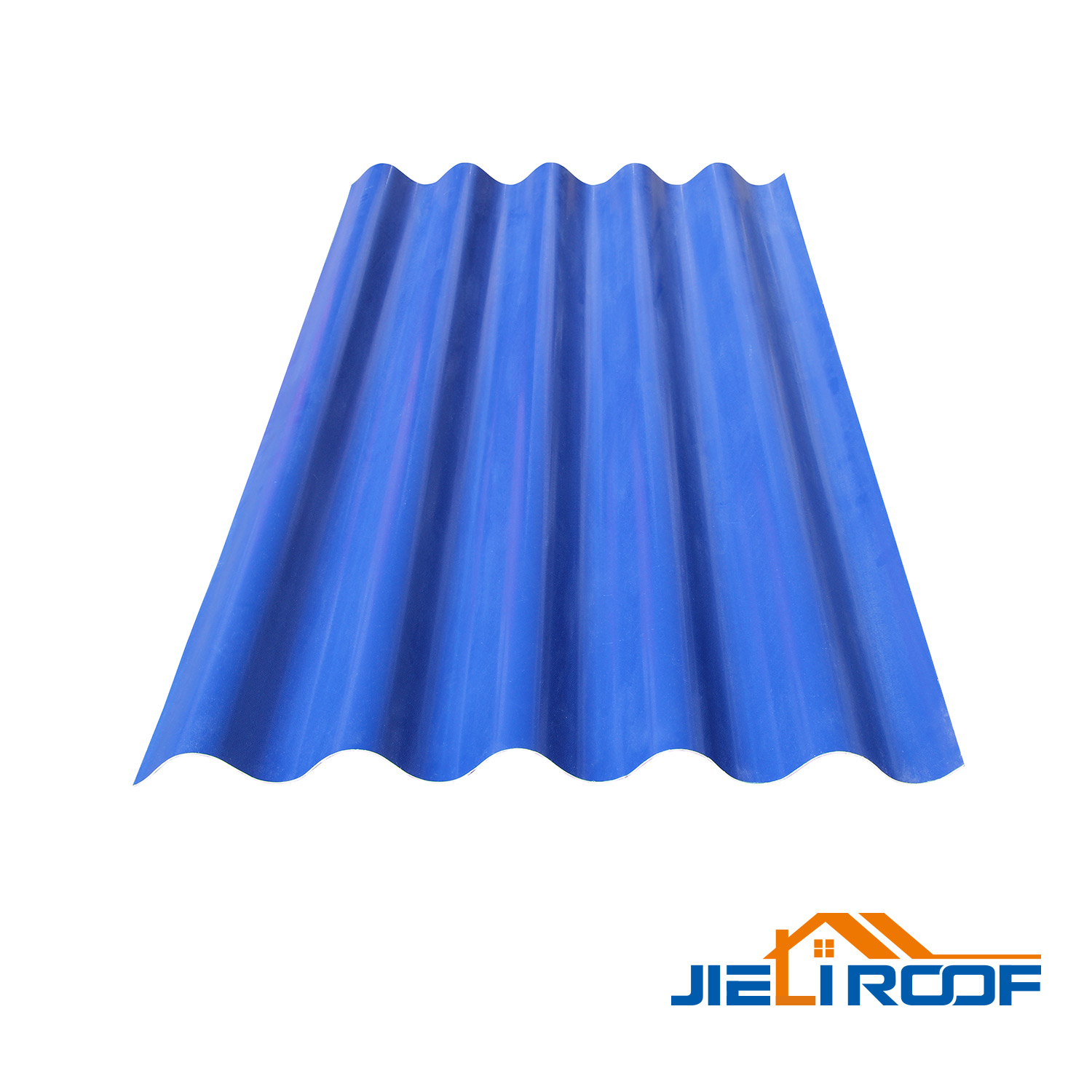
This unique composite configuration holds a national invention patent. The fiberglass mesh distributes evenly throughout the polymer matrix, acting much like a built-in soft steel rebar. For engineers specifying high-capacity materials, the Glass Fiber Reinforced UPVC Roof Sheet BW920 represents this exact technological leap, formulated specifically to endure the harshest industrial conditions imaginable.
Head-to-Head Comparison for Extreme Weather
Analyzing Tensile Strength and Impact Resilience
Classified precisely as high-impact-resistance roof panels, the reinforced composite shows distinct statistical dominance over basic models. The embedded fiberglass grid boosts overall tensile strength by exactly 30%. Dynamic impact resistance sees an even sharper 50% increase. In rigorous laboratory environments, these panels survive a 1kg steel ball dropped from a 2-meter height. The result is zero cracking, no bubbling, and no splintering. Such hail-proof characteristics protect facilities during violent storms that easily shatter standard plastics or permanently deform metal.
Loading Capacity and Structural Spans
Building efficiency relies heavily on the underlying steel framework. The composite structure dramatically improves load-bearing metrics under sustained stress. Consequently, engineers can safely extend the allowable purlin distance by 20%. Expanding this span means developers purchase and install significantly less structural steel per factory roof, driving down total capital expenditure without sacrificing safety.
Simultaneously, the internal fiberglass locks the material dimensionally. It operates flawlessly across a punishing temperature range of -40°C to 80°C. Contractors report that panel dimensions remain entirely static. Fasteners do not loosen, and panels do not warp or shrink during drastic seasonal temperature swings.
The Best Alternative to Color Steel Sheet in 2026
Many industrial planners still specify metal roofing by default out of habit. However, changing climates quickly expose the critical vulnerabilities of metal. Today, a premium UPVC roofing sheet fortified with fiberglass ranks as the best alternative to color steel sheet available on the global market.
Color steel oxidizes rapidly. Once the thin protective paint scratches, rust spreads almost immediately, often mandating a complete roof replacement shortly after. The resin-based fiberglass composite, conversely, ignores acid, alkali, and salt corrosion entirely. It never rusts. This inherent resistance makes it an absolute requirement for coastal infrastructure, heavy agriculture, and chemical processing plants.
Field lifespan for this reinforced resin reaches 3 to 5 times that of standard color steel. It also mitigates dangerous interior moisture problems. The UPVC base conducts temperature very slowly, preventing condensation drops from forming on the interior ceiling—a crucial factor for warehouses housing sensitive electronics or food supplies. Finally, the thick polymer completely deadens the deafening noise of rain striking the building, creating a quieter operational floor.
How a Top UPVC Roofing Sheets Manufacturer Ensures Quality
Scaling production while maintaining strict batch consistency separates standard vendors from elite UPVC roofing sheets manufacturers. Supplying premium materials globally requires unyielding quality control and massive physical infrastructure.
We enforce strict laboratory oversight for every single batch produced. Inside a CMA-certified testing center, production runs undergo continuous loading, artificial aging, and tensile evaluations. We guarantee that laboratory specifications perfectly match the actual physical panels delivered to your construction site.
Global logistics demand immense capacity. JIELI has 22 production lines, ensuring stable production and on-time delivery. Even for large orders requiring multiple containers, they can guarantee timely shipment. Such operational scale eliminates project delays, giving international construction firms absolute schedule certainty.
Comprehensive Project Service and Support
Procurement should always include strong engineering backing. We deliver comprehensive technical assistance across the entire project lifecycle. Our engineering team reviews precise architectural drawings, calculates exact material volumes, and specifies cutting lengths to minimize expensive on-site waste.
We do not supply on-site installation personnel. However, the engineered profile makes roofing operations highly efficient. Contractors execute a straightforward overlapping process defined in the installation manual, securing panels with specified anti-corrosion fasteners. This logical, intuitive design drastically reduces labor hours.
A comprehensive 10-year warranty backs this premium reinforced material. We advise procurement directors to request physical samples to test the density and impact resistance firsthand before finalizing any architectural specifications. Connect with our technical service division today to secure the most durable industrial roofing system for your upcoming 2026 projects.
FAQ
Q: Why is the fiberglass-reinforced UPVC roof sheet mechanically superior to standard baseline options?
A: The reinforced panel relies on an advanced Triple-Layer Co-extrusion Technology+Fiberglass Layer. The internal fiberglass mesh acts exactly like soft steel rebar. This specialized structural grid increases overall tensile strength by 30% and impact resistance by 50%, while allowing for a 20% longer purlin distance to maximize structural stability.
Q: Can this reinforced material truly replace color steel sheets in heavy industrial applications?
A: It acts as the premier replacement. The reinforced UPVC material completely resists chemical and salt corrosion, guaranteeing it will never rust. Its functional lifespan outlasts traditional color steel by 3 to 5 times, eliminates interior ceiling condensation, and effectively deadens acoustic noise during severe weather.
Q: What temperature extremes can the fiberglass reinforced panels handle without physical deformation?
A: The advanced composite remains dimensionally rigid in harsh environments ranging from -40°C to 80°C. The internal fiberglass grid locks the polymer matrix firmly in place, preventing thermal expansion or shrinkage even under drastic daily or seasonal temperature fluctuations.






 +86 0535 6278701 / +86 15653505862

 Global climate patterns are shifting rapidly, placing unprecedented stress on commercial buildings. Facility managers now face a stark reality: traditional roofing materials simply cannot withstand the increasingly severe hail, intense coastal storms, and aggressive temperature fluctuations we see today. Finding a solution that prevents costly, repetitive maintenance cycles is an engineering necessity. Since 1992,