HOME>NEWS>What to Check Before Installing TSP Steel Roofing on Livestock Farms
What to Check Before Installing TSP Steel Roofing on Livestock Farms
2026-10-19 00:00:00
SHARE TO:
Two TSP steel panels may look identical in a bundle, then refuse to overlap on the roof because one edge is bent or the profiles differ. Correcting the mix-up after lifting materials delays installation. Damage to a protective face is also harder to address once the panel is fixed above an occupied pig or poultry house.
Delivery inspection can establish dimensions and visible condition. Film adhesion and chemical resistance require a different kind of evidence.
The Order Must Specify a Finished Roofing Sheet
TSP film-coated steel uses a steel substrate protected on both faces. For the range discussed here, the standard finished total sheet thickness is 0.4–0.8 mm. The purchase order, packing identification and acceptance record should refer to that finished thickness, together with the selected profile, length, color and quantity.
Thickness alone does not establish an allowable purlin span. Corrugation geometry, wind uplift, roof slope, fastener layout and the structure determine the approved support arrangement.
The effective cover width is smaller than the formed overall width because adjacent roofing panels overlap. The roof schedule should show both dimensions, the lap arrangement and the locations where the panel ends meet supports. Tolerances and a consistent measurement method should be agreed before production.
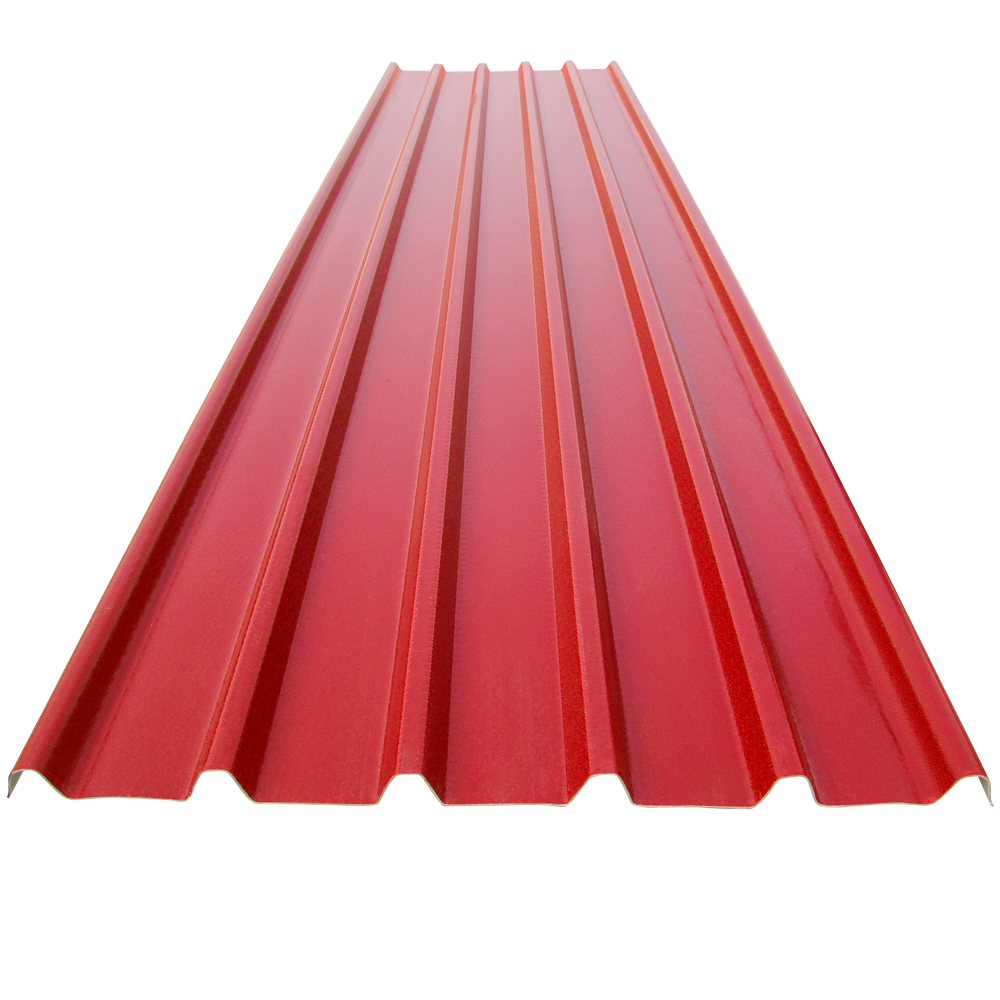
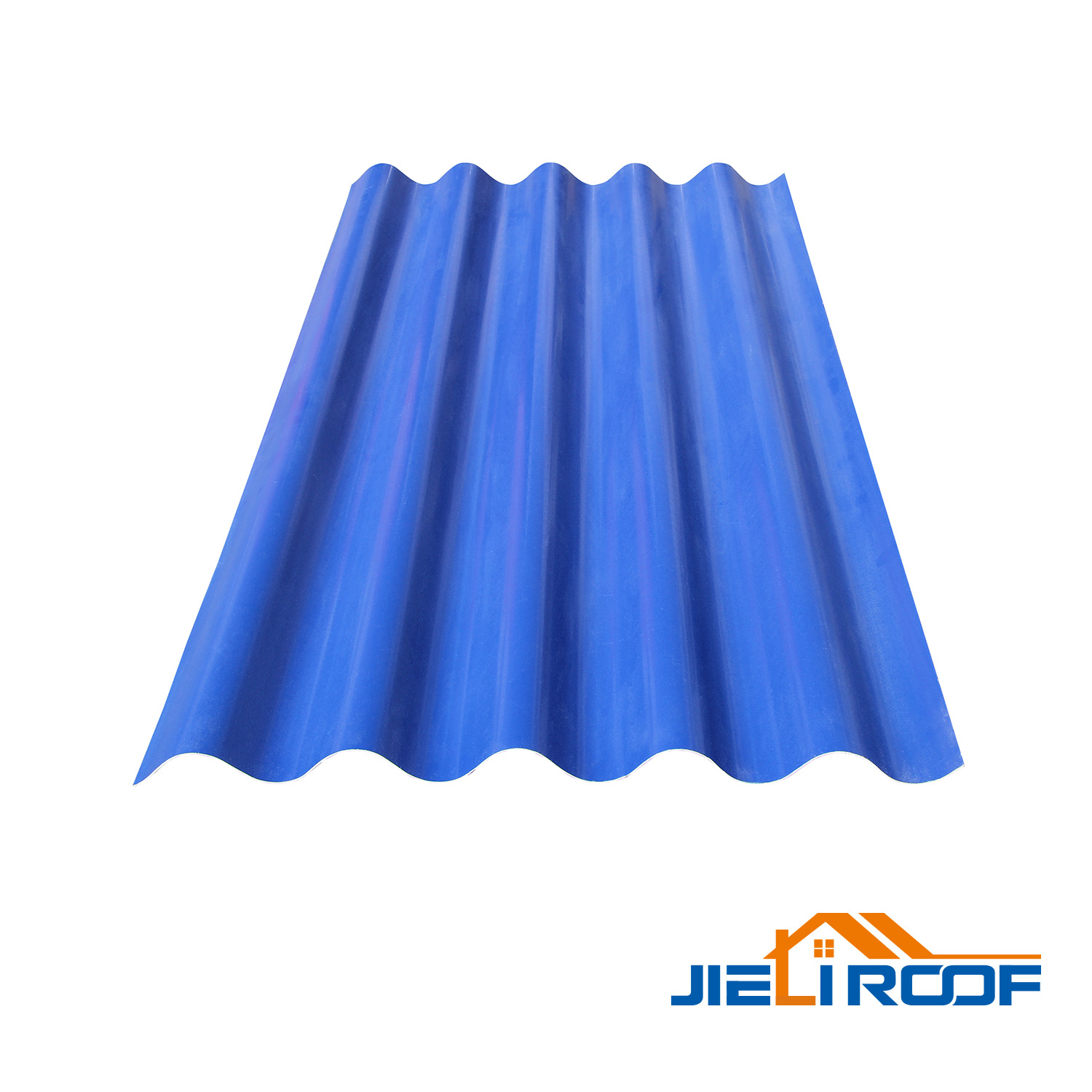
A profile name needs a corresponding dimensioned drawing. Two trapezoidal panels may have different corrugation depths, pitches and fixing positions even when their nominal widths appear similar. A bundle label showing the correct material does not prove that a sheet will fit the approved laps and support points.
Open the Bundles Where Damage Can Be Recorded
Crushed supports, torn wrapping and shifted stacks can explain scratches discovered during unpacking. Keep bundle IDs visible while checking representative sheets.
The top face takes the weather; the underside faces humid air, ammonia and cleaning mist. Check both for deep scratches, peeling, blisters, damaged corners and packing rub marks.
A clean face can hide a crushed corrugation at the lap. Such damage may reduce effective cover or shift the planned fixing line; trimming a panel on site is not an automatic fix.
Delivery finding
Immediate concern
Useful record
Bent profile edge
Side lap may not seat correctly
Photos of the edge and a trial fit
Deep scratch or peeled area
Protective surface may be interrupted
Location, bundle ID and close-up image
Wrong sheet length
End laps or roof quantities may change
Measured length and order reference
Missing ridge or flashing pieces
Open roof details at installation
Accessory count against the approved schedule
Inconsistent color or finish
Possible mixed batches or handling issue
Bundle IDs and daylight comparison
Set visibly damaged sheets aside for supplier assessment; an improvised patch may not withstand repeated chemical cleaning.
For a profile-and-length check, select panels from more than one bundle and measure from the same reference edge. Compare each result with the approved schedule rather than with another delivered panel alone: a batch of equally incorrect sheets can look consistent. A length error becomes particularly disruptive if it moves an end lap away from its support.
Two Protected Faces Do Not Protect Every Cut
Corrosion exposure can reach both faces of a livestock roof. Rain and deposited contaminants affect the weather face; humid air, ammonia and cleaning spray may reach the underside. The TSP sheet has bonded protective film on both faces, but its cut edges and drilled openings need separate detailing.
Cut edges, drilled holes and fan penetrations expose details different from the intact sheet face. Cut-edge treatment, compatible fasteners, shaped flashings and drainage at ridge and eave connections should be specified for the installation system.
A corrosion-resistant panel cannot compensate for corroded purlins or unsuitable fasteners. Check the existing structure carefully on farm roof retrofits.
At a roof-to-wall junction, the sheet may meet concrete, cladding, sealants and metal trims. Water trapped behind the trim can remain in contact with an exposed edge for longer than rainwater on the open roof surface. The junction detail should allow drainage and use materials compatible with the protective sheet system.
What the TSP Test Results Actually Establish
Laboratory evidence helps distinguish protective performance from appearance. JIELI TSP sheet achieved 1,000 hours without rusting in a salt‑spray test with a 5% sodium chloride solution.
Chemical-resistance testing also includes 168-hour exposures to selected chemical solutions. Examples include 15% hydrochloric acid, 5% sodium hydroxide, and specified ammonia-related exposure. The test record reports no fading, swelling or separation under its stated conditions. These are laboratory concentrations, not cleaning instructions.
A different set of tests examines what happens when the material is formed or exposed to heat and moisture. A 90-degree bend assessment recorded no cracking, peeling or delamination. The documented adhesion classification is A5, and six hours in boiling water produced no shrinkage or delamination. These assess adhesion and forming behaviour under defined conditions.
Test reports should match the ordered product. Delivery teams can document visible condition and sheet identity, while salt-spray and adhesion performance require laboratory records.
Chemical-resistance and forming tests address different failure modes. A panel could pass an exposure test but still need separate evidence of film adhesion after bending. Compare the recorded conditions and results for each test instead of treating the salt-spray result as a single measure of overall roofing quality.
The Roof Must Be Ready for the Material
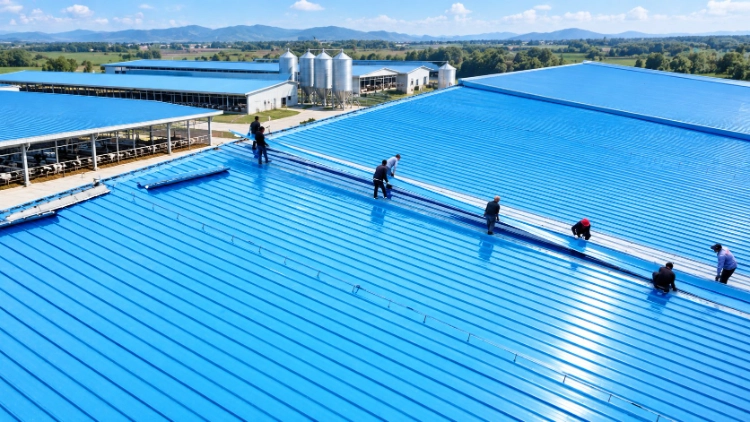
Misaligned purlins can force sheets to twist into place. Incorrect fixing pressure damages washers; debris trapped under a lap may create a water path. The roof drawing must resolve support and fixing details before lifting panels.
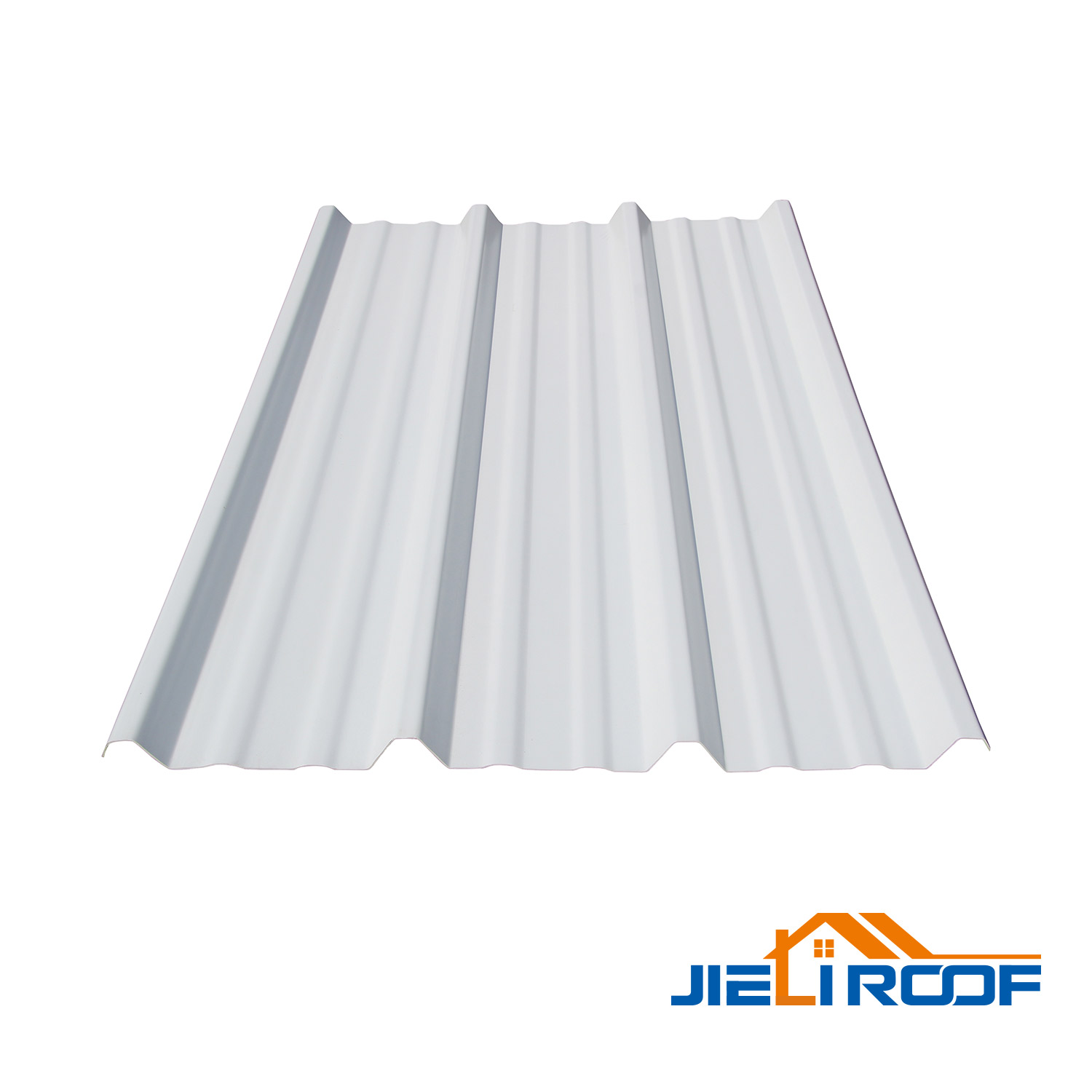
Once the support layout has been checked, the specified profile can be matched to the roof drawing. JIELI’s TSP Steel Sheet Trapezoidal 1050 has a 1,050 mm effective cover from a 1,130 mm overall width. Those figures determine the number of sheets across each roof slope and the position of the final side lap. Agree on dimensional tolerances and the measuring method for the formed sheet before production.
Fan and exhaust flashings must follow the corrugation. Moisture beneath an insulated assembly can also come from indoor condensation rather than rain through the sheet.
Where TSP is used as part of a rock-wool or other insulated sandwich assembly, the insulation core, moisture control and joint sealing need their own specifications. The thermal performance of the entire assembly should not be attributed to the thin steel facing alone.
The contractor can also check whether panels are being delivered in the installation sequence shown on the roof plan. Repeatedly moving bundles across a work area increases handling and the chance of corner damage. The inspection log should record any changes made because a support, flashing or opening differs from the drawing.
Keep bundles supported and lifting tools clear of protective faces. Roof work needs appropriate fall protection; OSHA’s fall-prevention guidance applies to US work sites.
Keep the Inspection Close to Farm Conditions
Pig houses with persistent humidity and poultry sheds cleaned between flocks present different exposures. Record likely ammonia levels, wash-down frequency, disinfectants, ventilation and roof openings when specifying protective details.
JIELI checks raw materials and production stages through finished-product inspection and can provide order-related photographs. Its TSP roofing product range shows available sheet families, but the delivery file must identify the exact profile and finished thickness supplied. Buyers should retain relevant test records, packing information, arrival measurements and any damaged-sheet decisions.
TSP roof sheets carry a 15-year warranty from JIELI. The written letter should identify the supplied product and applicable terms. Keep it separate from the contractor’s installation acceptance record.
Before accepting the installation kit, match ridge caps, closure pieces and flashings to the chosen corrugation and the actual exhaust openings. A correct panel count can still leave the roof unfinished when a fitting belongs to a different profile. Fastener length and washer type should follow the approved support and connection details; substitutions need agreement before use.
The JIELI product pages can help identify available profile families and accessories. Keep the approved dimensioned drawing in the handover file so future maintenance does not rely on visual matching alone.
For a new livestock barn or renovation, send JIELI ROOF the roof drawing and operating conditions along with the chosen TSP profile, required finished thickness and exposure details. These define the order more clearly than a request for a corrosion-resistant steel sheet alone.
Conclusion
The best time to hold a damaged or mismatched TSP panel is before it reaches the roof. Finished-sheet dimensions, protective surface condition, laboratory records and the treatment of cuts and fixings each answer a different quality question. Together they make the material acceptance decision traceable.
FAQs
Q1: What thickness should be used for a JIELI TSP farm roofing order?
A1: Specify the finished total TSP film-coated steel sheet thickness. JIELI’s standard range is 0.4–0.8 mm. The order should also identify the profile, effective cover, length and agreed dimensional tolerances, because thickness alone does not determine roof support requirements.
Q2: Is a scratch on a TSP steel sheet only a cosmetic problem?
A2: Not necessarily. A deep scratch may interrupt the protective surface, especially where humid air and cleaning chemicals are common. Record its position and bundle number, separate the affected panel, and obtain the supplier’s acceptance or repair instruction before installation.
Q3: Which documents should accompany a TSP livestock roofing delivery?
A3: Keep the purchase specification, packing list, relevant test records, approved roof drawing, available inspection photographs and the written 15-year warranty. Site handover records should identify any panels held back or replaced.






 +86 0535 6278701 / +86 15653505862