HOME>NEWS>What Should Poultry Houses Check Before Upgrading Rusted Sandwich Panels
What Should Poultry Houses Check Before Upgrading Rusted Sandwich Panels
2026-09-14 00:00:03
SHARE TO:
Rusted sandwich panels can make a poultry house look like it needs a simple roof replacement. Often the decision is less simple. The visible steel face may be stained, but the more serious questions sit behind it: has moisture reached the insulation, are cut edges still sound, and is the corrosion driven by outdoor weather or by the cleaning environment inside the house?
Begin With The Condition Behind The Steel Face
A panel that has lost its finish is not always beyond use, while a panel that looks acceptable can already be losing performance beneath the face sheet. Poultry buildings make this difficult because they combine warm air, litter dust, cleaning chemicals, and tight production schedules.
Check For Wet Or Compressed Insulation
Poultry house sandwich panels rely on their core material to manage indoor temperature. If water reaches that core through corroded laps, cut edges, or failed seals, the panel can lose part of its thermal role. Dark edges, sagging surfaces, damp interior marks, and a change in room temperature after washdown all deserve attention.
This is where roof insulation failure becomes more than a heating or cooling issue. A wet core can add weight, hold contamination, and make the roof harder to dry between cycles. Replacing a face sheet without checking the core may only move the problem out of sight.
Map Rust By Location Instead Of Guessing
Rust around every fastener suggests a different cause from corrosion concentrated above drinker lines or near the ridge. Mark the locations before ordering new material. Look at lap joints, flashing interfaces, roof penetrations, gutter edges, and places where wash mist can collect. That map helps separate an isolated defect from a wider material problem. It also gives the buyer a clearer brief when discussing a poultry farm roof replacement with Contractors and suppliers.
Identify What Is Driving The Corrosion
Rusted steel is usually the result of several conditions working together. In poultry facilities, the indoor atmosphere matters as much as rainfall. A good assessment follows the source of moisture and chemicals rather than blaming the panel alone.
Cleaning Chemicals Reach More Than The Floor
During cleanout, fine disinfectant mist can rise into the roof space. It settles on lower panel faces, laps, screw lines, and wall-to-roof junctions. Add humid air and ammonia, and the protective paint on ordinary steel has to withstand far more than it would on a dry warehouse.
A supplier should be asked about chemical resistance in the same terms the farm uses: cleaning frequency, product type, concentration, contact areas, and whether the roof dries quickly after treatment. General claims about being ‘farm grade’ are not enough.
Edges And Repairs Often Start The Next Failure
Old repairs can leave exposed edges, mismatched sealants, and scratches in the protective layer. When the roof is already patched in several bays, one more repair can become harder to justify than a planned upgrade. The decision should be based on the spread of corrosion and panel condition, not on the number of leaks seen during one rainstorm. This is particularly important with poultry house sandwich panels, where external appearance may not show whether moisture has traveled into the panel core.
Where TSP Fits A Corrosion-Led Upgrade
TSP is a metal roofing material, not an insulation substitute. Its main contribution is to keep chemical corrosion away from the steel substrate. When thermal performance is needed, it belongs to the sandwich-panel system and its selected core, not to a claim that TSP single sheets are insulation-first products.
Film Protection Is Different From Painted Steel
A TSP steel roof sheet uses thermoplastic film on both sides of a galvanized steel substrate. The film acts as a continuous barrier rather than a conventional paint surface, helping reduce the risk that chemical media reach the metal through coating defects.
This is the point of a TSP steel sheet in a poultry environment: corrosion resistance, resistance to ammonia and chemical exposure, and fewer rust-related maintenance cycles. It should not be sold as a shortcut for repairing insulation that has already become wet or damaged.
Keep Thickness Terms Clear
Buyers should separate the steel thickness from the finished panel thickness. The thickness of a TSP film coated steel sheet is 0.4-0.8 mm. Quotation comparisons become unreliable when those two dimensions are mixed together. TSP chemical-resistance records include 15% hydrochloric acid exposure, with a 168-hour test record. It has a 1000-hour salt spray result. Warranty language for TSP is 15 years.
Decide How Much Of The Roof Needs Work
An upgrade can be limited to the damaged area or broadened to the roof zone that shares the same exposure. The right scope comes from the inspection record, not from an assumption that every panel must be removed at once.
Retain Only What Is Still Sound
If the substrate, purlins, panel core, and edge details remain stable, some roofs may be assessed for a retrofit approach instead of a full tear-off. When the insulation is wet, the structure is weakened, or corrosion has spread across the fixing line, partial work may create a difficult interface with the old roof.
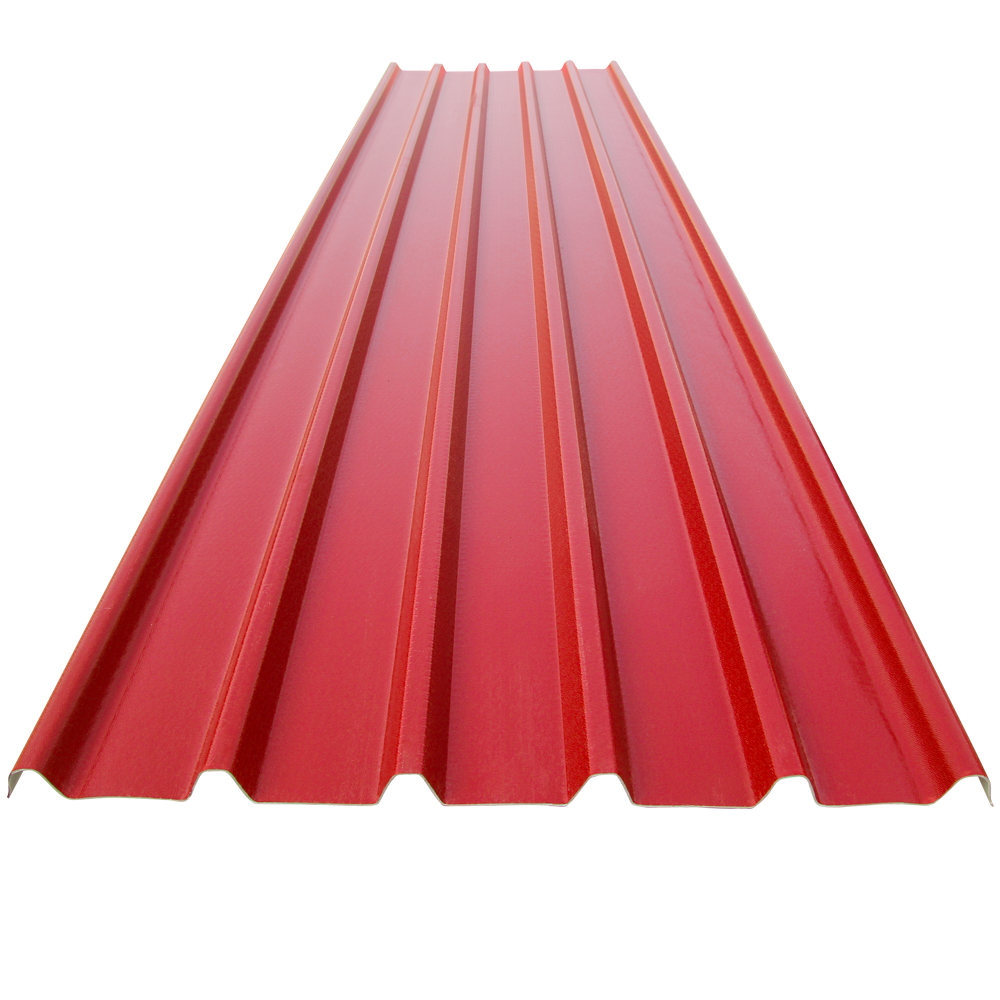
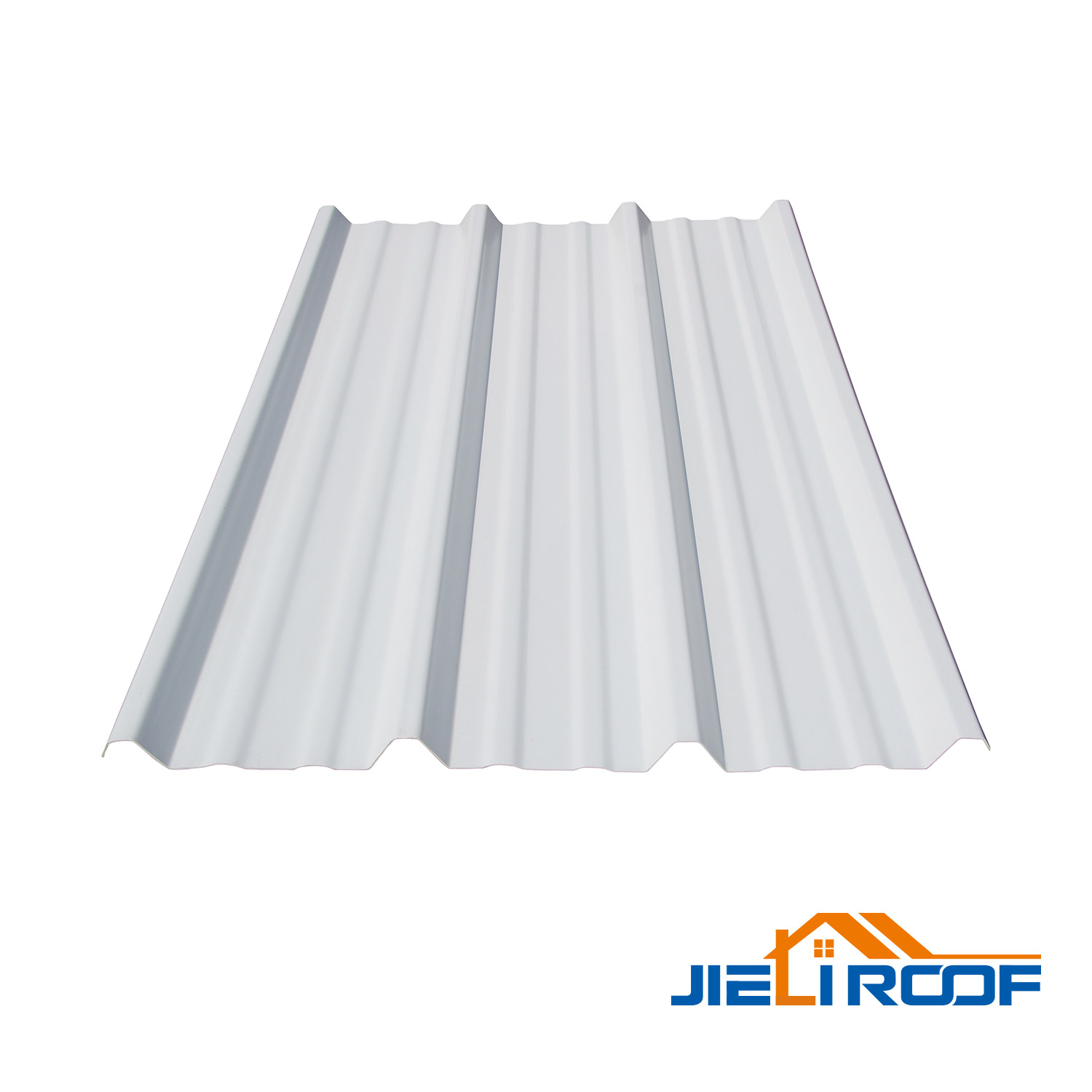
A TSP steel sheet trapezoidal 1050 can be reviewed when profile coverage and corrosion protection are the priority. The roof system itself still needs a project-specific decision by qualified contractors.
Plan Around The Poultry Cycle
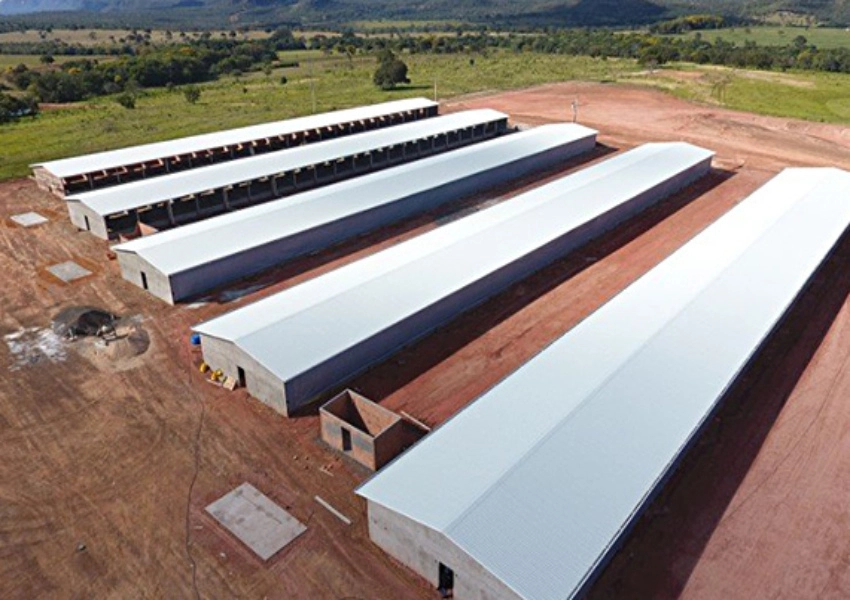
Poultry farm roof replacement should be planned around clean-out windows, flock timing, access routes, and the time needed to inspect the existing insulation. A rushed decision between flocks can overlook damp cores or corroded support points that are much easier to see when the house is empty.
The material decision should also leave room for future cleaning. If disinfectant mist, ammonia pockets, and condensation are still present after the upgrade, the new roof must be chosen for that same indoor reality.
Ask For A Specific, Not Generic, Product Review
The last stage is not a sales pitch. It is a check that the proposed material, panel build-up, and corrosion evidence match the building that was inspected.
Use Samples And Test Details
Ask to see the film structure, profile information, thickness range, chemical test points, and 15-year warranty wording. A sample can be useful for confirming surface finish and profile fit, while test information gives a more relevant basis for a corrosive poultry environment. The Jieli roofing product includes both roofing and related panel choices, and the Jieli has 22 production lines plus product testing capability.
Avoid Treating Every Panel As The Same
Roof insulation failure, edge corrosion, and face-sheet rust can appear together, but they do not call for the same answer. A dry, stable core with corroded steel calls for a different solution from a panel that has taken in water. A corrosion-resistant metal surface cannot restore a compromised core by itself. A careful upgrade leaves the poultry house with a clearer maintenance path: fewer exposed steel surfaces in chemical zones, fewer surprise leaks, and fewer repairs that only cover the last symptom.
FAQ
Q1: How can buyers spot roof insulation failure in a poultry house?
A1: Look for damp edges, dark staining, sagging, temperature changes, leaking laps, and insulation that stays wet after washdown.
Q2: Is a TSP steel roof sheet an insulation product?
A2: No. TSP is a corrosion-resistant metal sheet. Insulation performance comes from the selected sandwich-panel core and the condition of the full roof system.
Q3: What should be checked before poultry farm roof replacement?
A3: Check corrosion mapping, wet insulation, fasteners, laps, supporting structure, chemical exposure, TSP thickness terms, test data, and warranty language.






 +86 0535 6278701 / +86 15653505862