HOME>NEWS>Why are more contractors switching to lightweight UPVC roofing for industrial projects in 2026?
Why are more contractors switching to lightweight UPVC roofing for industrial projects in 2026?
2026-04-28 11:43:35
SHARE TO:
As of 2026, it is basically a common sense in industrial sectors that to find an efficient, economical and durable construction material. Most construction companies and contracting companies tend not to use old products such as iron roofs that have to be replaced all the time because of rust and corrosion. In fact, construction materials with high technological level and long duration will be inevitable for industrial constructions in the future.
JieLi is one of the pioneers in the development of PVC and UPVC roofing technologies. Since 1994, Jieli Roof Tile has become the largest UPVC Roof Sheets, Composite Roof Tiles, Glass Fiber Reinforced Roof Sheets manufacture in China. By having an authorized roof sheet test lab from the Government, which is also accredited by CMA, our materials are tested and checked throughly from the primary materials to the final products. Instead of looking at the first low cost of materials, our customers enjoy durable structures, which would safeguard their industrial buildings in the toughest conditions.
The Challenge of Industrial Durability in 2026
Corrosion is a chronic problem at many industrial plants – petroleum refineries, chemical plants and warehouses located near the ocean. Often made of common metal substances, their roofs last only two to three years in highly-corrosive, highly-polluted or highly-salt-laden atmospheres. In an industrial environment, sulfur and nitrogen compounds are dissolved in the ambient air together with water vapor to form acid rain, a highly-corrosive compound, which eats its way into all metals, causing pitting corrosion that renders the structure inoperative and which requires large replacement costs.
This year 2026 has also experienced the extremity of temperature changes which are very hard on building materials. Metal sheets, for example, tend to spread heat very rapidly, which means that, in order to avoid thermal expansions and thus big consumptions, a permanent watch has to be kept. In general, the building contractors are searching for new products, able to bear the natural weathering, without requiring a permanent application of protective treatments. It has come then the lightweight UPVC roofing as the answer to the “do it once and last” building idea which has to resist to many years of chemical and weathering attacks.
The Engineering Advantage of UPVC over Traditional Metal
When evaluating materials for a 2026 industrial project, the longevity of the roof is the most critical metric. We have engineered our roofing solutions to offer a service life that reaches three to five times that of traditional color steel tiles. Unlike steel, which relies on a thin layer of paint for protection, our materials are inherently anti-corrosion and rust-free throughout their entire structure. This fundamental difference eliminates the risk of hidden oxidation and delamination.
One major pain point for Contractors is the weight of traditional clay or heavy metal sheets. Our lightweight UPVC roofing allows for faster installation and reduces the structural load on the building frame. Despite being lighter, these sheets provide superior performance in several key areas:
Thermal Insulation: The thermal conductivity of our PVC material is only 0.325w/m.k, which is approximately 1/2000 of that found in color steel sheets.
Acoustic Comfort: These sheets reduce noise by 25 to 30 Db, ensuring a quieter environment during heavy rain or wind—a stark contrast to the loud “drumming” effect of metal roofs.
No Condensation: The insulating properties ensure that moisture does not collect as condensation on the underside of the tiles, protecting sensitive equipment and products from “internal rain”.
A Closer Look at High-Performance Layered Architecture
The success of our specialized roofing lies in its sophisticated structural composition. We utilize Triple-Layer Co-extrusion Technology combined with a specialized Fiberglass Layer to create a cohesive, multi-functional product. These sheets have four useful layers built in, each designed to tackle a specific environmental threat.
The top layer is treated with ASA (Acrylonitrile Styrene Acrylate) to fight UV harm and keep bright colors. This acrylic resin layer protects the roof from color fading for 8 to 10 years, whereas traditional painted steel often fades within a few months. The second layer is UPVC, which offers outstanding strength, impact resistance, heat insulation, and sound insulation performance. The third layer is a Fiberglass reinforcing layer, which enhances high-temperature resistance, strength, impact resistance, tensile resistance, and load-bearing performance. Finally, the bottom layer is UPVC, which is corrosion-resistant, moisture-proof, and enhances structural stability. This four-layer approach ensures that every sheet acts as a complete protective system for the building.
Patented Strength: The Impact of Integrated Fiberglass Mesh
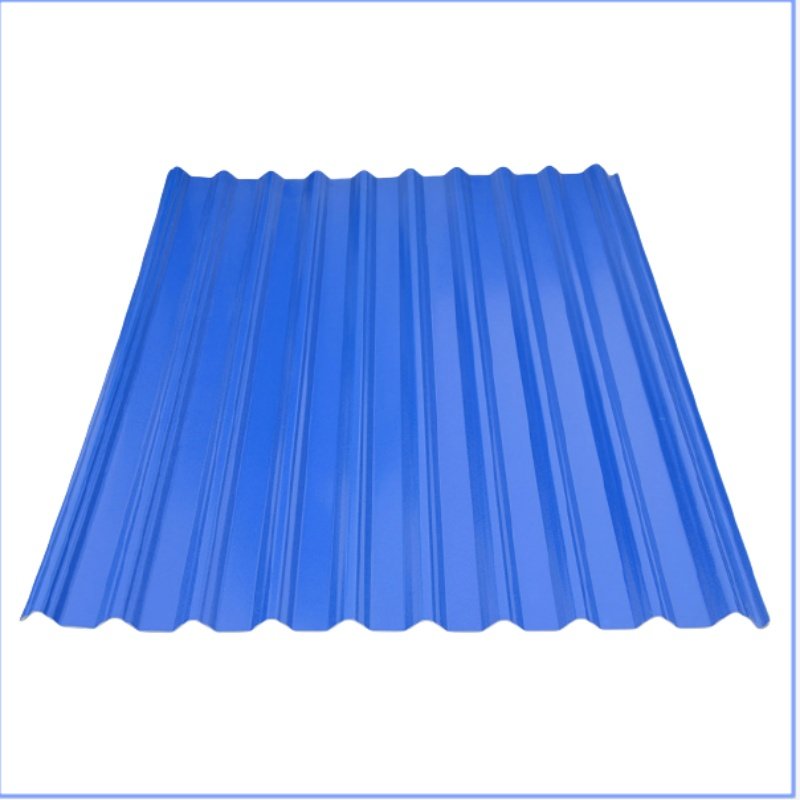
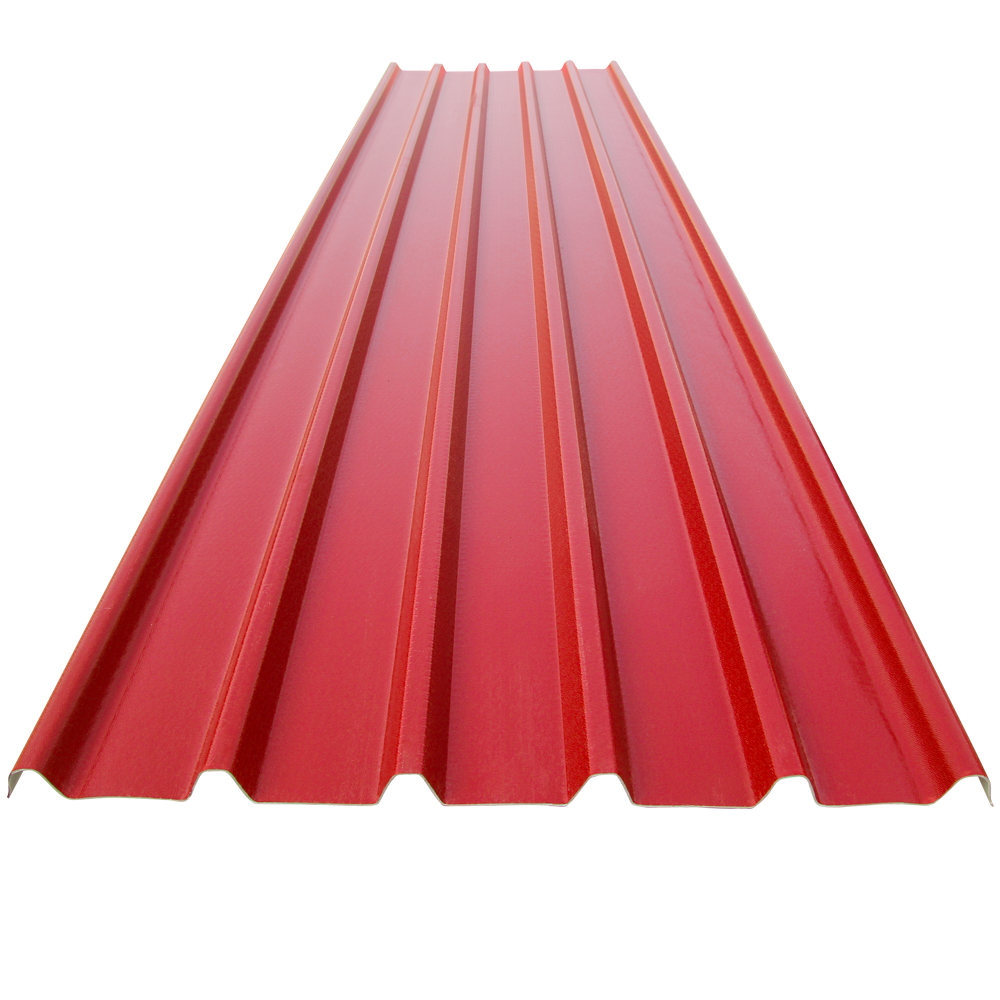
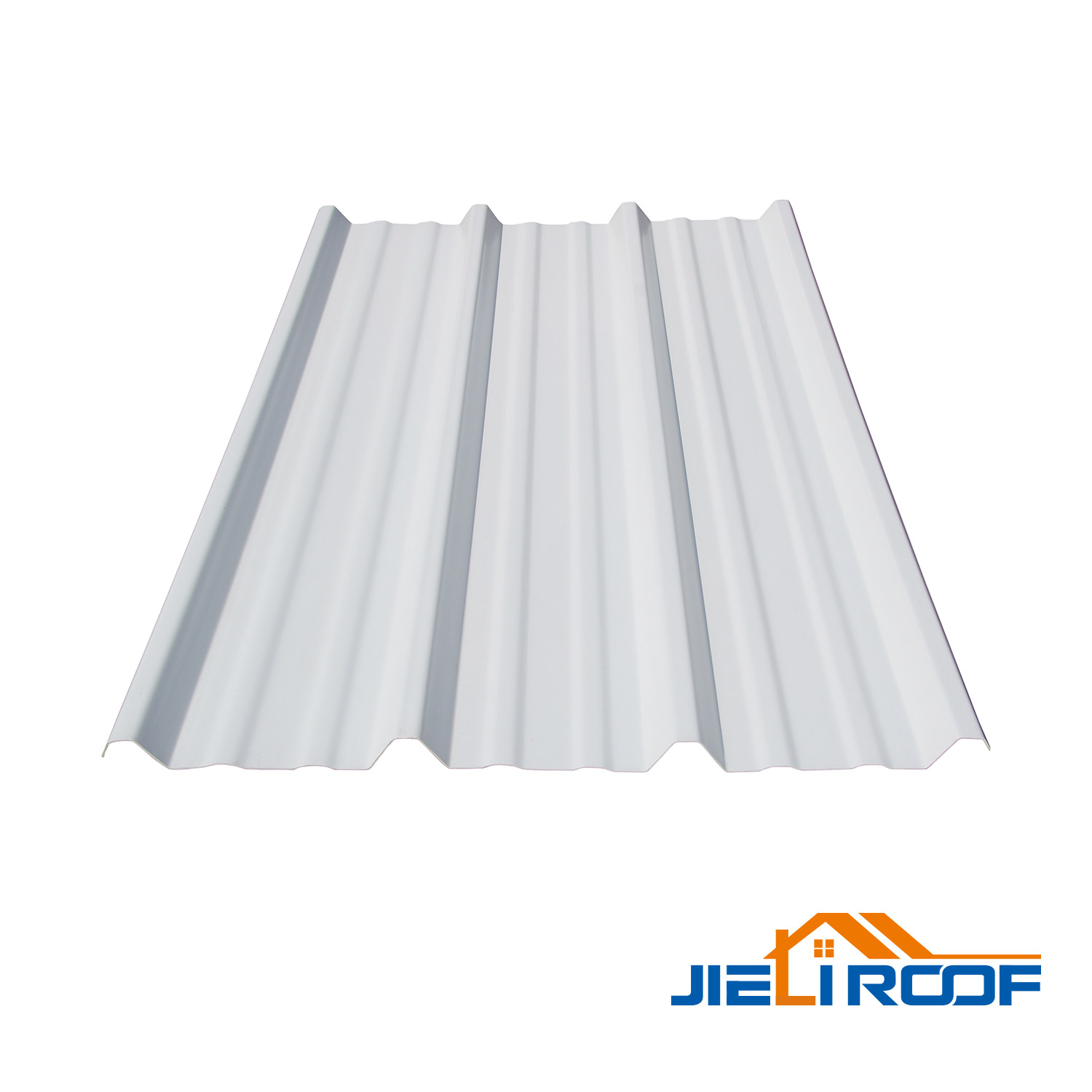
A standout feature in our industrial catalog is theUPVC Roofing Sheet T1088. This product integrates our national invention patent technology, which incorporates a glass fiber reinforcing layer inside the UPVC structure. Contractors often refer to this as “soft steel reinforcement” because it provides a structural skeleton that significantly enhances the physical capabilities of the tile.
The glass fiber meshis uniformly distributed throughout every corner of the sheet, providing 50% better impact resistance compared to standard plastic roofing. This reinforcement is crucial for 2026 industrial projects that require high-strength solutions to handle snow loads, big wind areas, or accidental impacts during maintenance. This technology allows the sheets to operate reliably in a temperature range from -40°C to 80°C.
Furthermore, this patented reinforcement allows for a 20% longer purlin distance during installation. For a large-scale warehouse, this translates to fewer support beams and reduced steel consumption, leading to significant savings on total project costs. The added tensile strength ensures that the sheets remain stable under weather changes, preventing the warping often seen in lower-quality plastic alternatives.
Operational Benefits: Safety and Energy Efficiency
In 2026, safety compliance and energy efficiency are top priorities for any industrial facility. Our UPVC and resin tiles are designed to exceed these rigorous standards. They are fireproof with a B1 rating, meaning they are hard to burn and self-extinguishing. This fire-protection rating provides essential peace of mind for facilities handling flammable materials or chemicals.
The durability of these sheets extends to extreme weather events. They are effectively waterproof and hail-resistant, protecting the factory interior from damage during severe storms. Because the material does not rust or age rapidly, it maintains its structural integrity against high-impact forces throughout its lifespan. This makes it an ideal choice for acid-picking workshops, smelting plants, and agricultural buildings where the environment is naturally aggressive.
From an energy perspective, the excellent heat insulation of the UPVC layers keeps interiors significantly cooler in the summer. This reduces the reliance on heavy-duty air conditioning systems, leading to lower operational costs. By addressing thermal management at the roof level, we provide a passive cooling solution that lasts for the life of the building.
Professional Solutions and Technical Support
We believe that providing the right product is only half of the equation; providing the right solution is what builds long-term partnerships. Our technical team is available to help work out project drawings and calculate the exact quantities and lengths required for your specific build. While we do not provide on-site installation guidance, our installation manuals are comprehensive and designed for ease of use by professional Contractors.
To ensure that every batch of roofing meets our high standards, our laboratory conducts a whole set of tests on raw materials, formulas, and finished products. These tests cover aging, tensile strength, impact resistance, and loading capacity. We stand by the quality of our engineering with a 10-year warranty, ensuring that your investment is protected.
For those interested in experiencing the quality of our patented “soft steel reinforcement” and layered UPVC technology firsthand, we offer a free sample experience. This allows you to test the acid and alkali resistance, feel the strength of the fiberglass mesh, and verify the aesthetic quality before committing to a large-scale purchase.
Partner with a Proven Industry Leader
Selecting a suitable material for the roof of an industrial plant that will be in operation for generations to come is a decision that will have to be lived for decades. By choosing our range of lightweight, anti-corrosion and patented reinforced UPVC materials, you will avoid the inevitable cycle of rust and replacements. We offer the technical knowledge and manufacturing capacity to supply the world with premium roofing materials. As of 2026, it is time to rethink roofing.
We have many years of experience on large projects, having supplied, for example, renovation of surrounding buildings for the Beijing Olympic Game and large government housing projects in South America. Quality is our focus in order to avoid service and maintenance issues for the customer and to secure a high level of performance and thereby give our customers competitive advantages in their markets. If you are now looking to develop your industrial premises with new roof solutions of the latest technology, we invite you to contact us.
FAQ
Q: How does the T1088 perform against high winds and physical impacts like hail?
A: The T1088 features our patented fiberglass mesh layer, which acts as “soft steel reinforcement.” This technology increases impact resistance by 50% and provides superior structural stability, making it highly effective against big wind areas and large hail.
Q: Can these UPVC sheets be used in extremely hot or cold climates?
A: Yes, our specialized resin tiles and UPVC sheets are designed to withstand a wide temperature range from -40°C to 80°C. The internal fiberglass layer specifically enhances high-temperature resistance and prevents deformation under extreme thermal stress.
Q: Is it true that these roofs help with energy bills compared to metal sheets?
A: Absolutely. Because PVC has a thermal conductivity that is 1/2000 of color steel, it provides excellent heat insulation. This keeps the factory interior cooler in hot weather and significantly reduces the energy required for climate control.






 +86 0535 6278701 / +86 15653505862

 As of 2026, it is basically a common sense in industrial sectors that to find an efficient, economical and durable construction material. Most construction companies and contracting companies tend not to use old products such as iron roofs that have to be replaced all the time because of rust and corrosion. In fact, construction materials with high technological level and long duration will be inevitable for industrial constructions in the future.