HOME>NEWS>Why is UPVC the Top Choice for Industrial Roofing in 2026?
Why is UPVC the Top Choice for Industrial Roofing in 2026?
2026-03-12 15:19:47
SHARE TO:
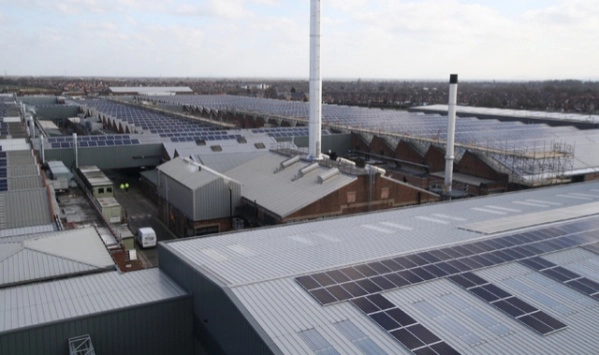
As we face the industrial challenges of 2026, the criteria for choosing building materials have changed from the mere cost-effectiveness of the material. The modern factory owner and project manager now look for materials that can withstand harsh atmospheric conditions and, at the same time, help make the building more energy-efficient. The trend away from the traditional metal roof has gained momentum, thanks to the need for materials that can last longer in conditions where rust and thermal expansion were once major concerns.
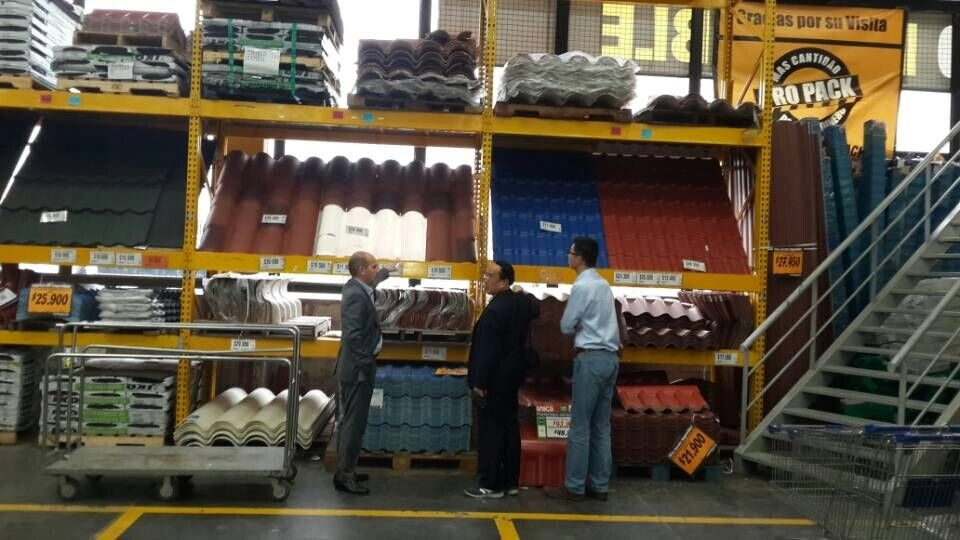
As experts in this field, we at Jieli have dedicated our efforts since 1992 to providing high-performance building materials that bridge the gap between durability and innovation. With 34 years of experience, we operate 22 advanced automatic production lines, ensuring stable production and on-time delivery for even the most massive global infrastructure projects. Our capacity to manage high-volume logistical requirements is proven by our long-standing partnership since 2012 with Sodimac, the largest building material chain store in Latin America and the 7th largest globally. We maintain a government-authorized, CMA-certified testing lab to verify every batch, ensuring that our output meets the rigorous technical demands of the 2026 industrial sector.
The Global Shift Toward Anti-Corrosive Industrial Roofing
The primary reason for the move toward advanced polymers in 2026 is the increasing severity of industrial corrosion. In sectors like chemical processing, acid-picking workshops, and coastal logistics, traditional metal sheets often fail within just a few years. High humidity and precipitation accelerate electrochemical reactions, leading to metal oxidation, while salinity in coastal regions allows chloride ions to destroy the metal’s passivation film, causing pitting and crevice corrosion.
We have observed that standard color-painted or powder-coated steel sheets, regardless of their thickness, often possess micro-holes and chain scissions from the spraying process. These imperfections inevitably lead to premature failure. In contrast, our advanced UPVC solutions provide a completely airtight seal. By utilizing materials that are naturally inert to acids, alkalis, and salts, we provide a roofing environment where rust simply cannot exist. This longevity is essential for modern facilities that aim to avoid the significant economic losses associated with replacing roof panels every 2 to 3 years.
Advanced Engineering: The T940 UPVC Profile Solution
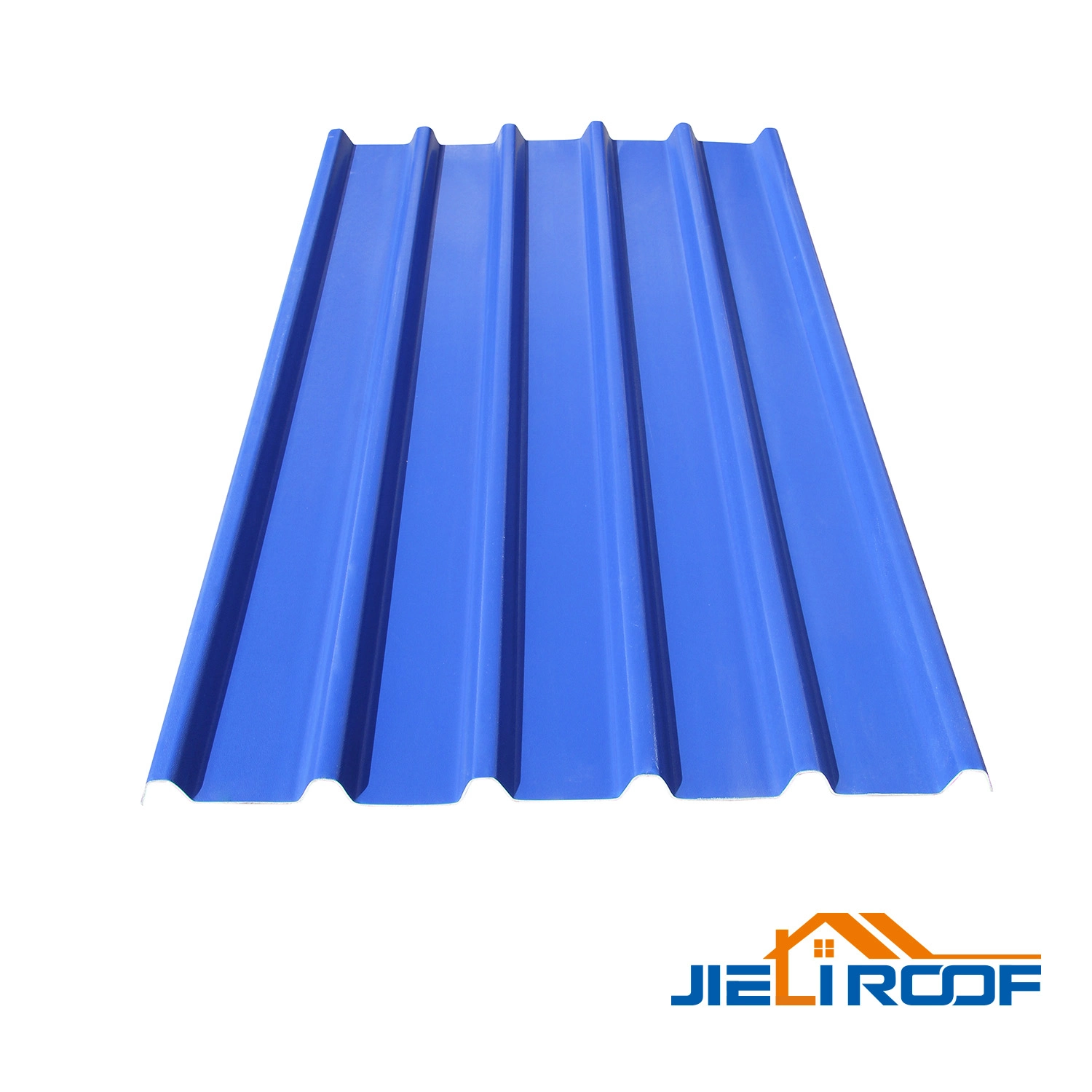
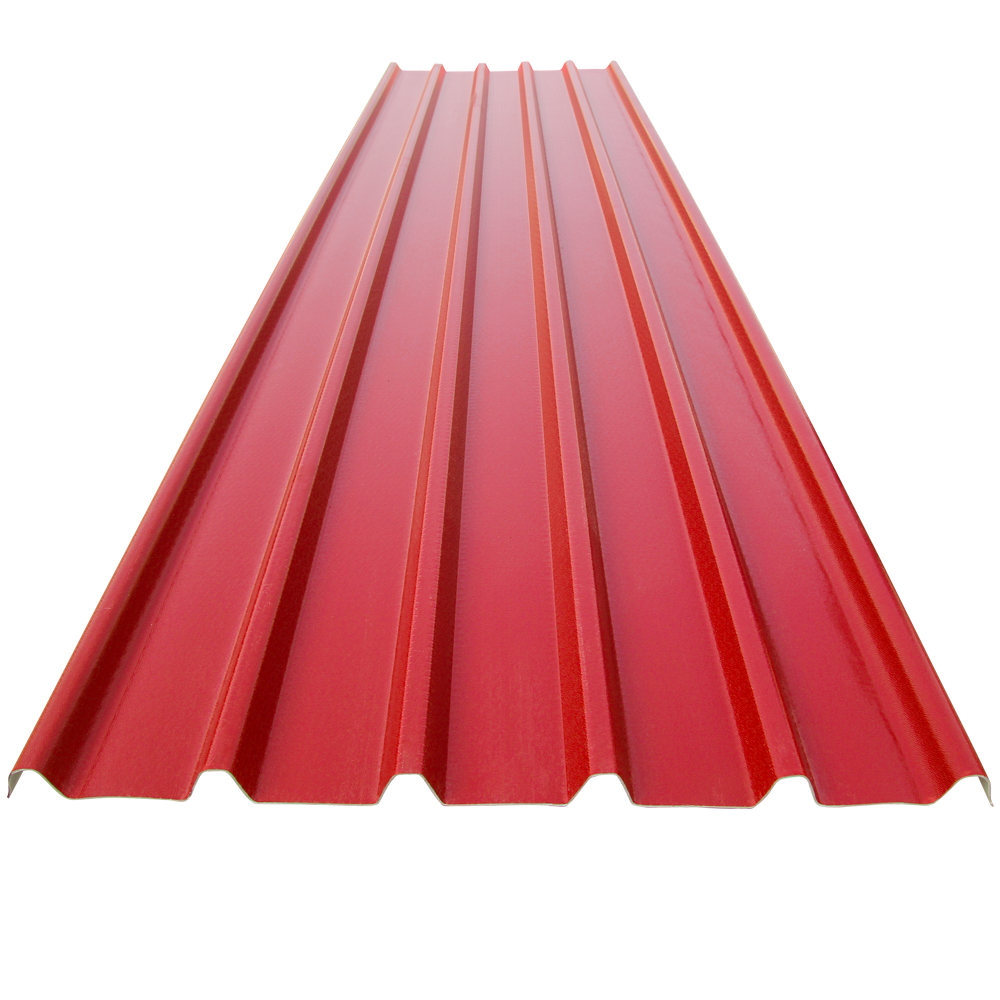
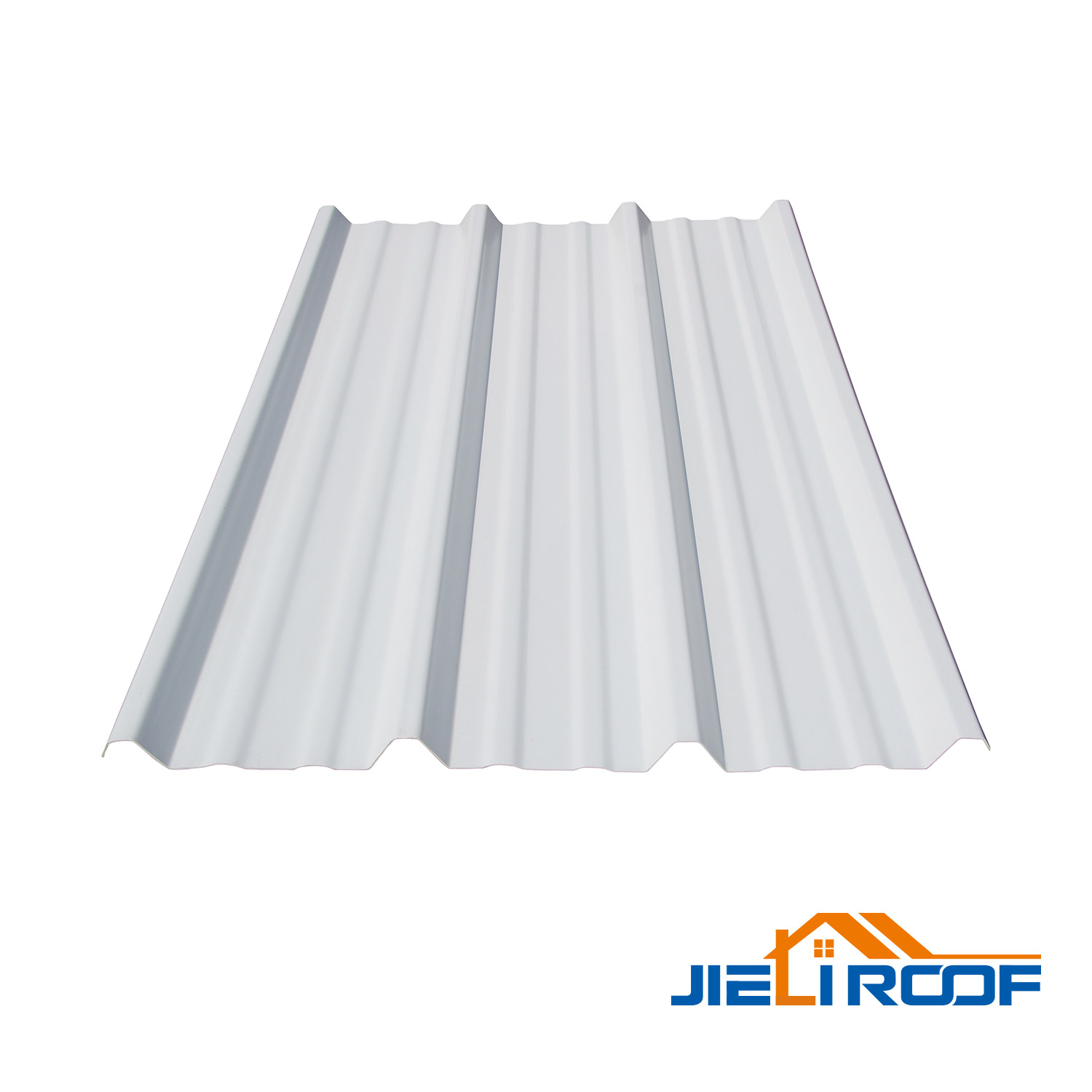
For hot-temp shops and wide factory zones, the build plan of the top plate matters as much as the part itself. The UPVC Roofing Sheet T940 stands as the top fix in our list. Its “high wave” trap shape gets built to give strong hit hold and weight-carry power, setting it as a must for big factory top uses.
Structural Composition and the Fiberglass Advantage
The strength of this profile lies in its unique architecture. These sheets have four useful layers built in, developed through our proprietary Triple-Layer Co-extrusion Technology, plus an integrated Fiberglass Layer. This structure ensures that the material performs consistently across a wide variety of stressors.
ASA Top Layer: This surface is treated with ASA (Acrylonitrile Styrene Acrylate) to fight UV harm and keep bright colors stable for 8 to 10 years, even in regions with extreme solar radiation.
UPVC Structural Layer: The second layer offers outstanding strength, impact resistance, and sound insulation performance, acting as the primary shield for the building.
Fiberglass Reinforcing Layer: This is our national patent technology. Often referred to as “soft steel reinforcement,” this fiberglass mesh is uniformly distributed throughout every corner of the tile. It enhances high-temperature resistance, tensile strength, and impact resistance, ensuring the sheet does not warp or crack under stress.
UPVC Bottom Layer: The final layer is completely corrosion-resistant and moisture-proof, enhancing the overall structural stability and protecting the interior from condensation issues.
Optimizing Purlin Spacing and Construction Efficiency
In the 2026 build trade, smooth work holds the key to money gain. Thanks to the fiberglass net back-up, our plates can span a beam gap of up to 1200mm. This lets builders cut the steel amount needed for the hold setup, cutting part costs a lot and quickening the build steps. The setup stays simple, with one-by-one overlaps and screw fixes, much like old steel but without the heavy lift or edge rust risk.
Thermal Insulation and Energy Efficiency Benchmarks
Factory sites often fight with inside temp control. Metal tops work well as heat movers, making plants into hot boxes in summer. Our UPVC part has a heat move rate of about 0.325 w/m.k, which comes to around 1/2000th of a color steel plate. This sets our top as a built-in heat block, keeping the insides much cooler and cutting the need for strong air cool setups.
Besides temp hold, sound block has grown into a big issue for work output. Usual metal plates make a “drum sound” in hard rain, often hitting loud levels that break focus. Our shapes can cut noise by 25 to 30 dB, making a far quieter work spot. Plus, our goods do not help water drops form, guarding kept items and key machines from damp harm.
Patent Technology and the 3~5Times Lifespan Advantage
Our commitment to research and development has led to a roofing solution that far outlasts traditional materials. In high-corrosion environments, the service life of our fiberglass reinforced UPVC tiles can reach up to 3~5 times that of traditional color steel. This is supported by our national invention patent technology that ensures our tiles remain stable in temperatures ranging from -40°C to 80°C.
We provide a 10-year warranty on these products, backed by rigorous quality checks. Our lab conducts batch testing for aging, tensile strength (showing a 30% increase with fiberglass), and impact resistance (50% increase).
Professional Service and Global Project Support
We see that each factory job brings its own hurdles. Our help goes beyond the making line. Our tech pros stand ready to aid in checking job draws, figuring the exact amount of parts, and giving custom length picks up to 11.8m for 40ft boxes.
While we skip on-place setup tips, we give full guides and papers to make sure builders can do the setup with care. To keep things clear, we share full check reports and clear photos of the box loading way for each order. This makes sure our world links get just what got promised, each time.
If you seek a top part that mixes the power of steel with the chem hold of better plastics, we ask you to try our clean first-hand. We gladly give free samples so you can check the hit, hold, and face of our patent goods before you lock in.
FAQ
Q: Is the T940 profile suitable for high-humidity coastal warehouses?
A: Absolutely. The UPVC and ASA layers are naturally resistant to salt spray and humidity. Our products pass 1000-hour salt spray tests with no rusting, making them ideal for coastal environments where metal roofs fail.
Q: How does the fiberglass layer prevent the roof from “sagging” in high temperatures?
A: The fiberglass mesh acts as an internal skeleton with a very low coefficient of expansion. This ensures that even when temperatures fluctuate, the sheet maintains its shape and structural integrity, supporting longer truss spans than standard UPVC.
Q: Can these sheets be used in food processing plants?
A: Yes. Our materials are non-toxic, moisture-proof, and do not rust or flake. They have passed 168-hour chemical resistance tests in various acid and alkaline solutions without fading or swelling, meeting the high hygiene standards of food production.






 +86 0535 6278701 / +86 15653505862