HOME>NEWS>Why Are Traditional Roofs Failing So Fast, and Is Glass Fiber Reinforced UPVC the 2026 Solution?
Why Are Traditional Roofs Failing So Fast, and Is Glass Fiber Reinforced UPVC the 2026 Solution?
2026-04-03 17:38:41
SHARE TO:
The roofing industry is hitting a wall. For decades, industrial facility managers and residential developers relied on a narrow set of materials that are now struggling to keep pace with changing environmental demands. Whether it is the premature rusting of metal sheets in coastal zones or the warping of standard plastics under intense solar heat, the “hidden costs” of frequent replacements are draining maintenance budgets. As we move through 2026, the focus has shifted from finding the lowest initial price to securing the lowest long-term cost of ownership.
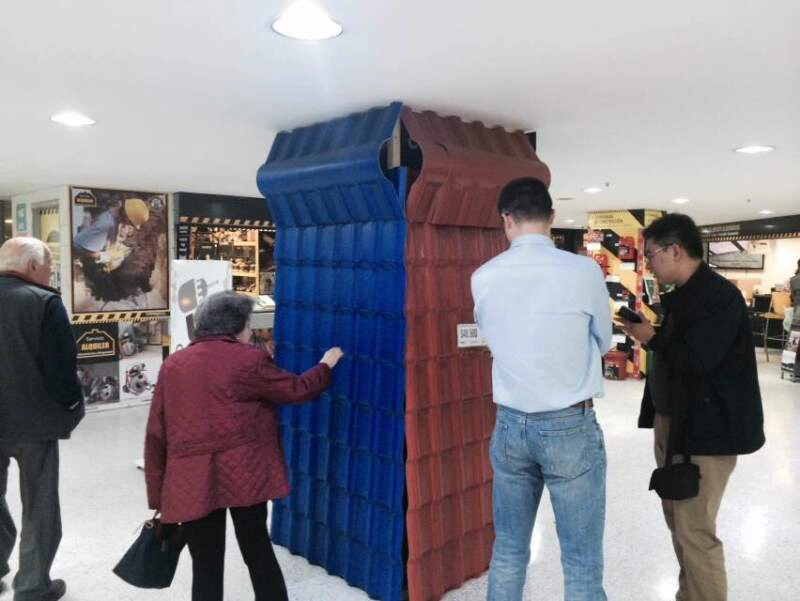
It is imperative that, prior to exploring the technical developments that are expected for the year 2026, we identify the key stakeholders who are at the helm of these developments. At Jieli, the organization has established 22 production lines that ensure that projects of various magnitudes are completed within the stipulated timelines. Our ability to meet the demands of large-scale requirements is evident from our long-standing partnership with Sodimac, the largest building materials retailer in Latin America and the seventh largest worldwide, for whom we have been in supply since 2012.
The Hidden Crisis in Modern Roofing: Why 2026 Demands a Change
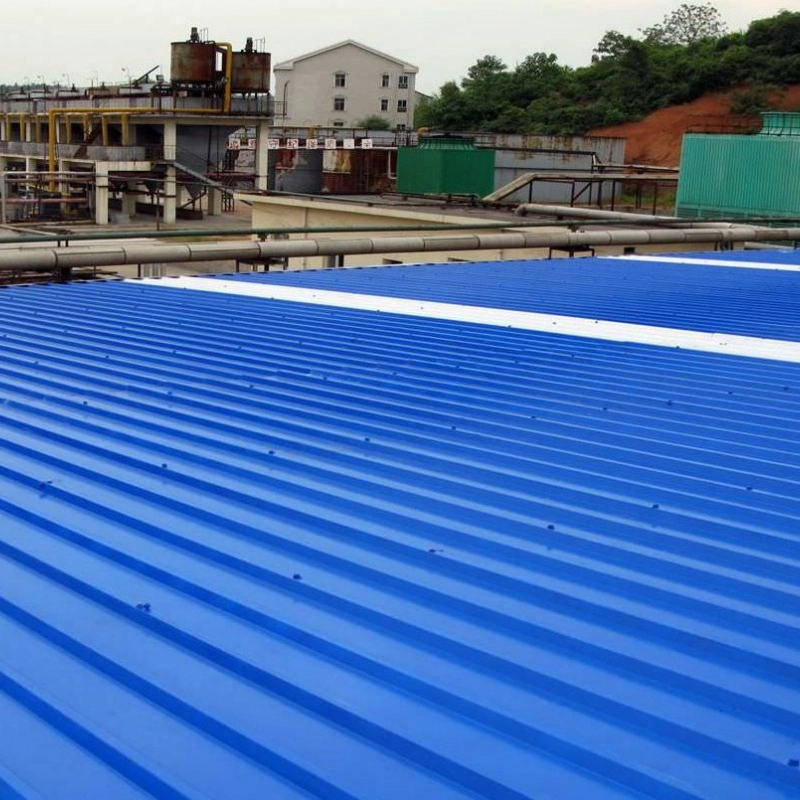
The degradation rate of traditional roofing materials has increased significantly because of the worsening environmental conditions. In the case of industries, the increased humidity level and chemical contaminants form a “corrosion cocktail” that attacks the coatings on metal sheets within a matter of years. As such, the roofing and wall claddings require replacement every 2-3 years, resulting in economic losses.
Standard PVC options, while rust-free, have historically struggled with thermal expansion. In extreme heat, these sheets can lose their shape or sag if the truss distance is too large. This structural instability is a hidden cost that many do not realize until the roof begins to leak or deform under load. In 2026, the market requires a material that bridges the gap: the corrosion resistance of polymers with the structural “bone” of reinforced engineering.
The Anatomy of the Upgrade: Patent Fiberglass Layer Technology
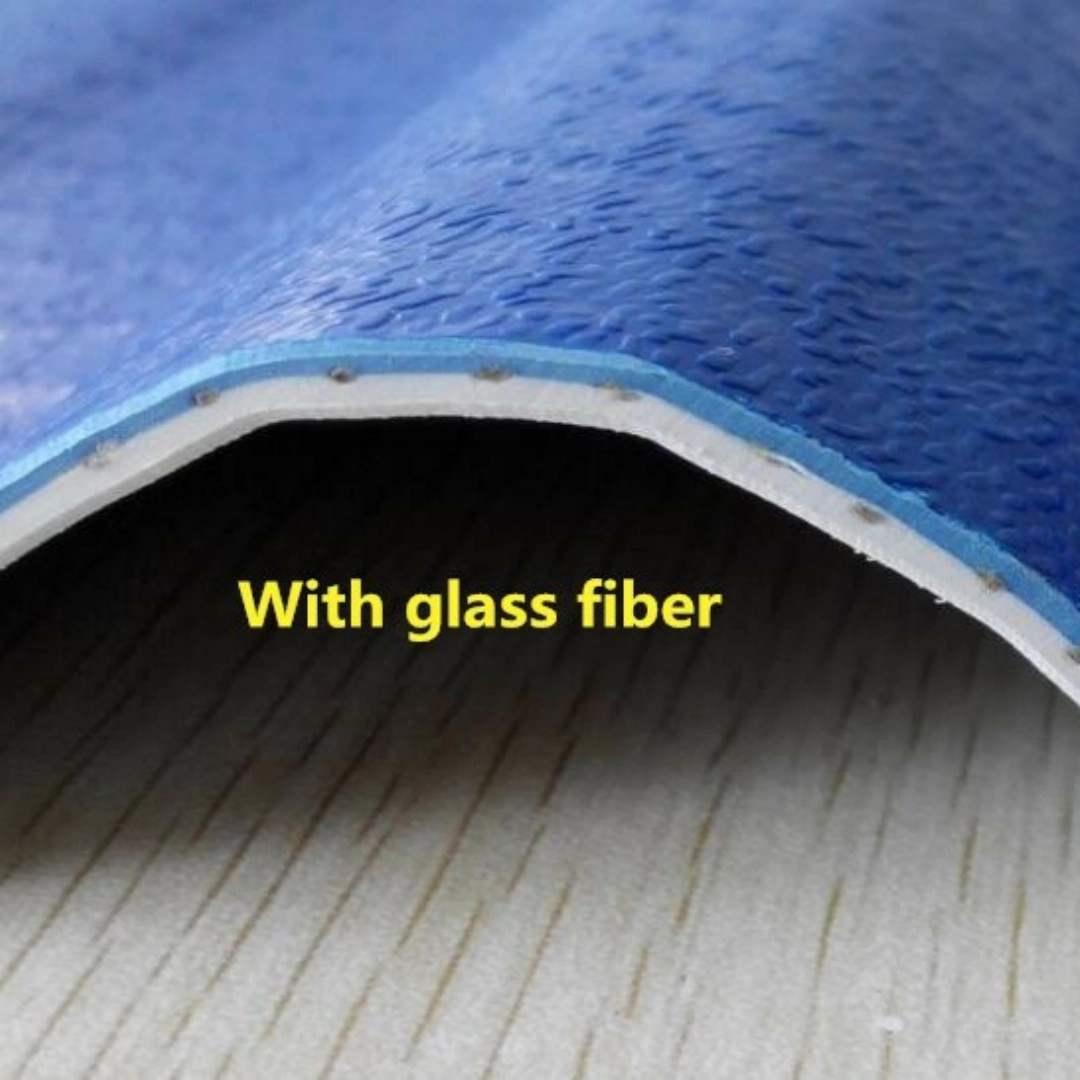
The primary reason traditional roofs fail is a lack of internal structural support. We solved this by developing a national patent technology that incorporates a fiberglass mesh directly into the sheet. This is not a simple coating; it is a fundamental change to the material’s DNA. This “soft reinforcement” is distributed across every corner of the sheet, acting like the rebar in concrete to provide a skeleton that holds the shape regardless of temperature fluctuations.
The Triple-Layer Co-extrusion + Fiberglass Structure
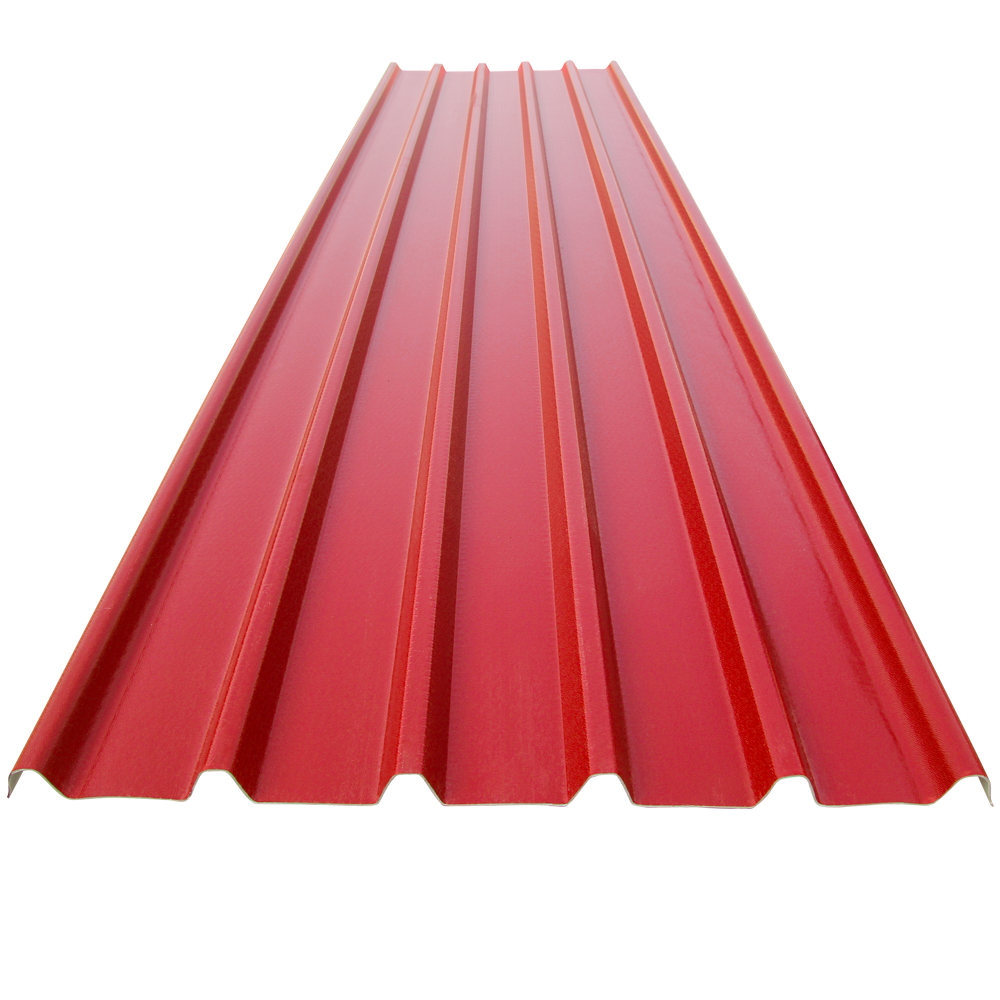
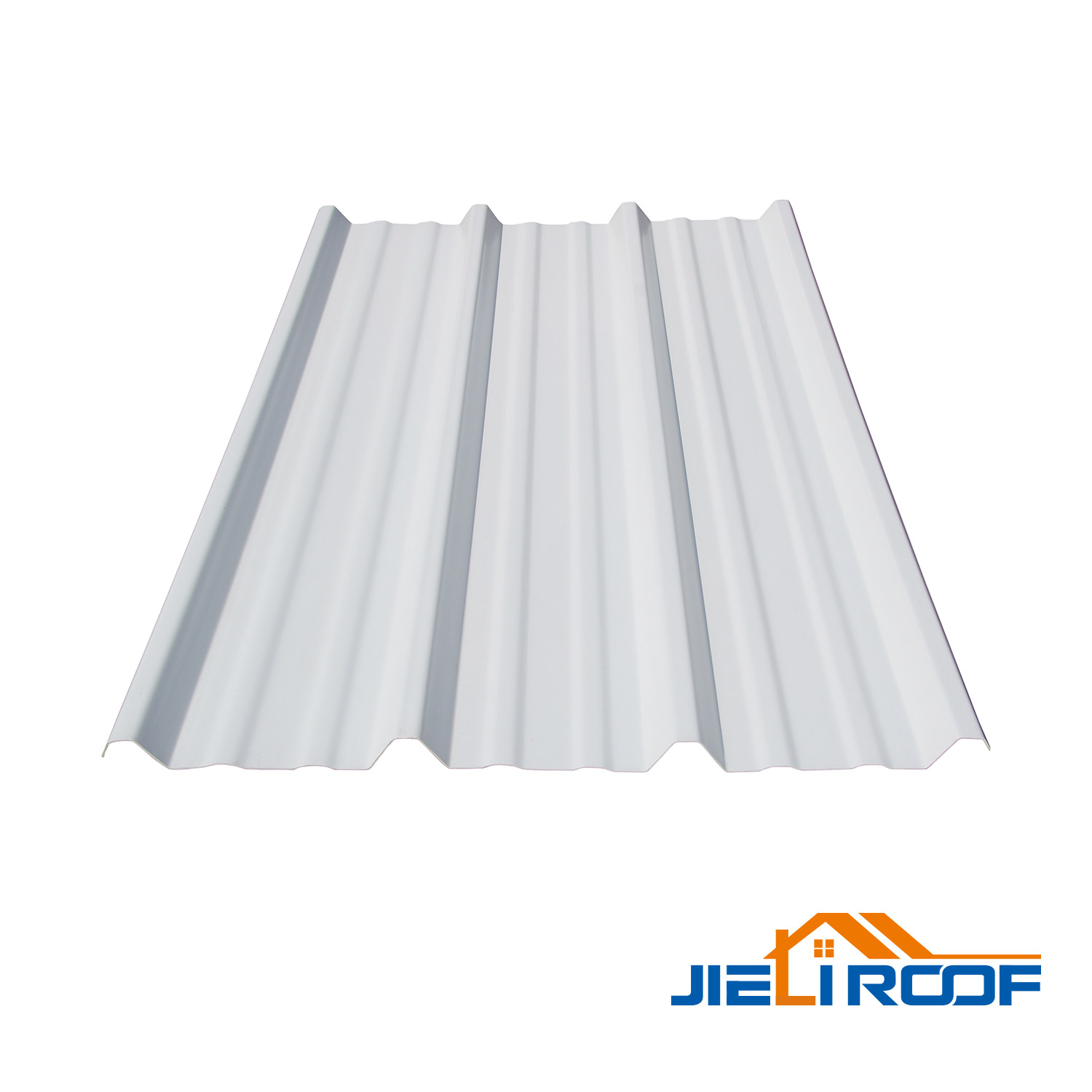
This advanced Glass Fiber Reinforced UPVC Roof Sheet T940 utilizes a triple-layer co-extrusion process integrated with a dedicated fiberglass reinforcing layer. These sheets have four useful layers built in to maximize durability:
The Top Layer: This layer is treated with ASA to fight UV harm and keep bright colors. This protective shield ensures the roof remains vibrant and structurally sound against intense sunshine for 8 to 10 years.
The Second Layer: A high-grade UPVC material that offers outstanding strength, impact resistance, heat insulation, and sound insulation performance.
The Third Layer: This is the core Fiberglass reinforcing layer, which enhances high-temperature resistance, strength, impact resistance, tensile resistance, and load-bearing performance.
The Bottom Layer: A final layer of UPVC that is corrosion-resistant, moisture-proof, and enhances overall structural stability.
Performance Breakthroughs: 3~5 Times the Lifespan of Metal
When we compare this technology to traditional color steel sheets, the results are stark. The lifespan of our reinforced resin tiles can reach up to 3~5 times that of traditional metal roofing in corrosive environments. Metal sheets transfer heat rapidly and become extremely noisy during rain or wind. In contrast, the UPVC material we use has a thermal conductivity of only 0.325 W/m.k, which is about 1/2000 that of steel. This means the interior of your building stays cooler in the summer and quieter during storms, reducing noise by 25 to 30 dB.
Built for Extreme Environments
Our fiberglass-reinforced sheets are designed to operate perfectly in temperatures ranging from -40°C to 80°C. They are effectively “anti-corrosion tiles” that resist acids, alkalis, and salts without rusting or fading. This resilience makes them the top choice for the Agrosuper pig farming projects in Chile—the largest of their kind—where chemical resistance and animal waste are constant challenges. Whether facing heavy snow, hail, or high winds, the 50% increase in impact resistance provided by the fiberglass mesh ensures the roof stays intact. Furthermore, the material is fire-rated at Class B1, meaning it is hard to burn and self-extinguishes.
Engineering for Large-Scale Projects
One of the biggest concerns for Contractors is the limitation on truss span. Traditional plastics often require very close purlin spacing to prevent sagging, which increases the cost of the steel substructure. Because of the “skeleton” effect of our fiberglass layer, these sheets can handle larger loading capacities and wider distances between supports. This makes the installation process much more efficient and cost-effective for large industrial warehouses and chemical plants.
While we do not provide on-site installation guidance, we offer comprehensive installation manuals that make the process straightforward for any professional team. The sheets are installed similarly to traditional metal roofing—overlapped and fixed with screws—making the transition to this superior material seamless for your crew.
Stop Paying for “Hidden Costs”: Start Your 2026 Roofing Upgrade
If you are tired of dealing with the maintenance nightmares of rusted, deformed, and leaking roofs every two or three years, now is the time to make a change. In 2026, “cheap” has become a synonym for expensive, while true competitiveness comes from the long-term protection of patented technology.
Our professional testing lab, authorized by the government, handles every step of the quality check—from raw materials to the finished product. We Batch-test every order for aging, tensile strength, and impact resistance. We provide a 10-year warranty on our fiberglass-reinforced products, which is a reflection of our confidence in our patent technology.
We are happy to send out free samples for your experience, allowing you to feel the difference between a “boned” tile and a common product yourself. Whether your project is on a high-salinity coastline or in an industrial park with complex acid-alkali environments, we will provide a customized roofing solution based on professional data analysis.Contact us to optimize your construction costs and secure your building with the 2026 standard.
FAQ
Q: Is the fiberglass layer visible, or does it affect the smoothness of the roof surface?
A: Fiberglass mesh is uniformly distributed within the core of the triple-layer structure during co-extrusion. This ensures that it is completely encapsulated within the UPVC, creating a structural skeleton that adds to the overall strength of the roof while maintaining the smooth, colorful ASA finish.
Q: How does this material handle condensation in comparison with metal roofing?
A: In comparison with metal sheets, which often experience condensation or “roof sweating” due to temperature changes, the insulation ability of the material and the moisture-proof quality of the bottom layer of the UPVC roofing material ensure that condensed water is not formed. Thus, the material is appropriate for use in animal husbandry or food processing establishments.
Q: Can these sheets be used in highly acidic environments, like chemical picking workshops?
A: Yes. Because the surface and bottom layers are made of high-quality UPVC and protected by ASA, the sheets are completely resistant to chemical corrosion. They have been tested to withstand 168 hours in various acid and alkaline solutions without any signs of rusting, swelling, or fading.






 +86 0535 6278701 / +86 15653505862