HOME>NEWS>What to Check Before Buying Corrugated UPVC Roofing Sheets for Factory Projects
What to Check Before Buying Corrugated UPVC Roofing Sheets for Factory Projects
2026-06-01 15:56:57
SHARE TO:
Factory roofing projects can face costly problems before the first sheet reaches the site. Wrong profile selection, unclear coverage calculation, unsuitable thickness, weak material structure, or mismatched purlin distance can all affect the final roof. For industrial buildings, a roof sheet is not only a covering material. It influences waterproofing, corrosion resistance, heat control, noise comfort, and long-term project value.
That is why buyers should check corrugated UPVC roofing sheets from a specification and application view, not only from a price view. A practical selection process should answer clear questions. What is the real usable width after overlap? Is the sheet thick enough for the building type? Can the material handle moisture, sun exposure, impact, and corrosive air? Does the sheet match the roof frame? These checks help factory owners, contractors, and distributors reduce mistakes.
Start with the Factory Application
Before comparing models, thickness, or color, buyers should define the project environment. A warehouse, chemical workshop, livestock facility, coastal factory, and general production building may all need different roofing priorities.
Factory roofs need more than basic coverage
Residential roofing often focuses on appearance, slope, and basic weather protection. Factory roofing usually has wider roof areas, more joints, heavier use conditions, and higher maintenance costs. Some buildings also need resistance to humidity, acid or alkali air, rain, noise, and color fading.
For this reason, corrugated UPVC roofing sheets should be checked against site conditions. A factory in a humid area may care more about corrosion resistance and no-rust performance. A warehouse may focus on lightweight structure and clean roof planning. A production workshop may need stronger impact resistance, heat insulation, and sound insulation. If the sheet will also be used as a ceiling or wall panel, the buyer should confirm whether the same profile can support those applications.
Check UPVC Roofing Sheet Size and Real Coverage
Size selection is one of the most common areas where buyers make mistakes. A product may look attractive by total width, but real coverage depends on the effective width after overlap. On large factory roofs, even a small width difference can change the order quantity.
Total width and efficient width are different
When reviewing sheet size, buyers should separate the total sheet width from the efficient width. Total width describes the full sheet measurement. Efficient width is the usable coverage after side overlap. This difference affects material calculation, roof layout, and quotation accuracy.
For example, Glass Fiber Reinforced UPVC Roof Sheet T1130has a width of 1130mm and an efficient width of 1050mm. Its length can be customized, with 2.5mm, and 3.0mm thickness options. These details help buyers calculate roof coverage based on usable area.
A complete UPVC roofing sheet specification should include width, efficient width, thickness, length range, color options, purlin distance, and application. If any of these details are unclear, the buyer may face waste, cutting changes, or inaccurate order volume later.
Match Thickness with Roof Conditions
Thickness should not be selected by habit. A thinner sheet may work for some light-use areas, while a thicker option may suit factory roofing projects with stronger performance needs. The right choice depends on building use, roof frame, and climate.
Thickness affects strength and project suitability
For industrial roofing, buyers often compare 2.5mm, and 3.0mm options. A thicker sheet can improve physical performance, but it should still match the profile and support spacing. A sheet chosen only by thickness may not perform well if the purlin distance, roof slope, or fastening plan is unsuitable.
Factory buyers should avoid a simple “the thicker the better” decision. In some projects, a balanced thickness with the correct support design may work better than a costly option selected without technical matching. For humid or mildly corrosive environments, material structure matters as much as thickness. A reinforced sheet with stable layers can offer better resistance to impact, aging, and weather change than a basic single-structure sheet.
Review the Material Structure
Many buyers ask whether a sheet is UPVC, but that question is only the beginning. The structure inside the sheet determines how it behaves under heat, impact, sunlight, moisture, and roof load.
Triple-layer co-extrusion plus fiberglass reinforcement matters
A stronger industrial sheet should combine surface protection, core strength, and bottom stability. These sheets have four useful layers built in through Triple-Layer Co-extrusion Technology plus a Fiberglass Layer.
The top layer gets treated with ASA to fight UV harm and keep bright colors. The second layer is UPVC, which offers outstanding strength, impact resistance, heat insulation, and sound insulation performance. The third layer is a fiberglass reinforcing layer, which enhances high-temperature resistance, strength, impact resistance, tensile resistance, and load-bearing performance. The bottom layer is UPVC, which is corrosion-resistant, moisture-proof, and enhances structural stability.
This structure is valuable for factory roof sheets because industrial roofs often face mixed stress from sun, rain, wind, moisture, and temperature change. A fiberglass reinforced roofing sheet spreads reinforcement through the sheet instead of relying only on surface hardness, helping the material stay more stable during long-term use.
Confirm Purlin Distance Before Ordering
A roof sheet cannot be judged separately from the roof frame. Even a strong sheet needs proper structural matching. Purlin distance is one of the most important checks before purchase.
The sheet must match the support system
Purlin distance is a key part of the UPVC roofing sheets specification. If the spacing is too wide for the selected sheet, the roof may face unnecessary stress. If the spacing is too close, the project may spend more on the steel structure than needed. The goal is to match the sheet, thickness, profile, and support system.
T1130 supports a purlin distance of no more than 1200mm. This gives buyers a reference when checking whether the sheet fits the roof frame. For renovation projects, this check is especially important because the current frame may not match the new roof material.
Contractors should also confirm slope, fastener planning, overlap design, and local wind exposure before purchase. This article does not provide field installation guidance, but suppliers should discuss technical requirements before production.
Evaluate Resistance to Factory Roofing Stress
Industrial roofing may need to handle more than normal rain and sun. Moisture, acid or alkali exposure, coastal air, temperature shifts, dust, and mechanical impact can all reduce roof service life.
Corrosion, impact, heat, and sound should be checked together
UPVC has natural advantages in no-rust performance because it is not a metal roofing material. This makes it useful in projects where traditional color steel sheets may face corrosion, coating damage, or rain noise. A quality reinforced sheet can also help with heat insulation and sound absorption, which matters for workshops and warehouses where indoor comfort and operational noise are concerns.
The fiberglass reinforced structure adds another layer of value. The fiberglass mesh is distributed through the reinforced layer, helping the sheet improve impact resistance, tensile strength, aging resistance, acid resistance, alkali resistance, and corrosion resistance. This is why reinforced UPVC can be considered for factory roofing, where basic plastic sheets may not be enough.
The temperature range should also be checked carefully. Fiberglass reinforced resin roofing based on UPVC is suitable for -40°C to 80°C conditions. It is also used as an anti-corrosion roof sheet with resistance to aging, rust, fading, condensation, water, fire, and hail impact.
Check Customization and Supply Details
Factory projects rarely use one standard roof size. Length, color, packaging, and order quantity all affect the final project experience. A supplier that can discuss these details early can help buyers avoid waste and delivery problems. Jieli supports project-based roof sheet discussions, including profile selection, thickness choice, color options, and order planning for industrial roofing needs.
Custom length and color can reduce project waste
A customized length can reduce unnecessary joints and cutting work. Fewer joints support cleaner roof planning and more efficient material use. Color customization also matters for factory parks, warehouses, and industrial buildings that need a consistent exterior design.
Transport should be checked early. Long sheets may reduce joints, but they also affect container loading and site handling. T1130 supports customized length, with a maximum of 5.8m in a 20ft container and 11.8m in a 40ft container. Buyers should balance roof layout needs with shipping limits before confirming the final order.
Packaging also matters for export delivery. PE bags or pallets can be selected based on sheet length and shipping needs to reduce handling problems.
When T1130 Makes Sense for Factory Projects
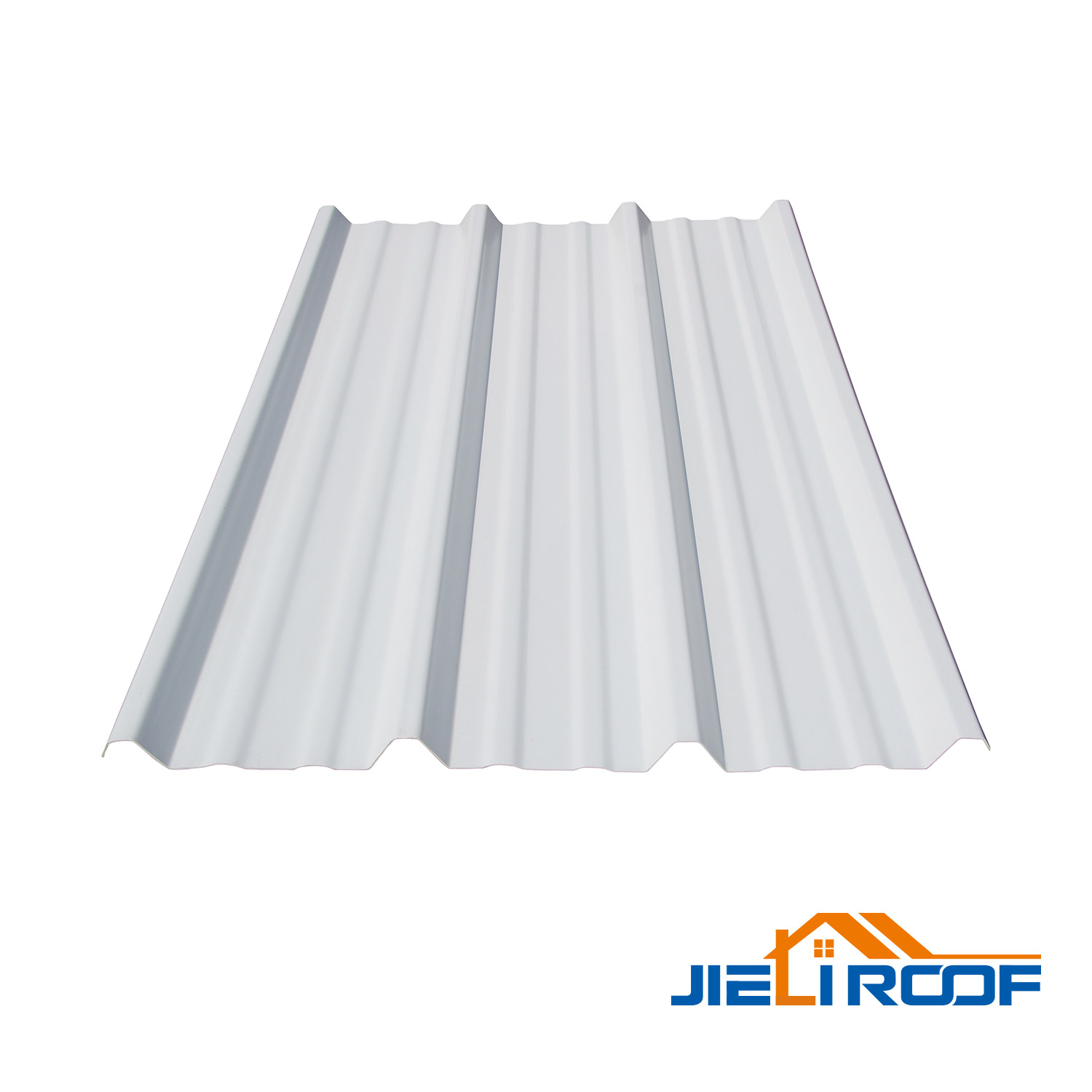
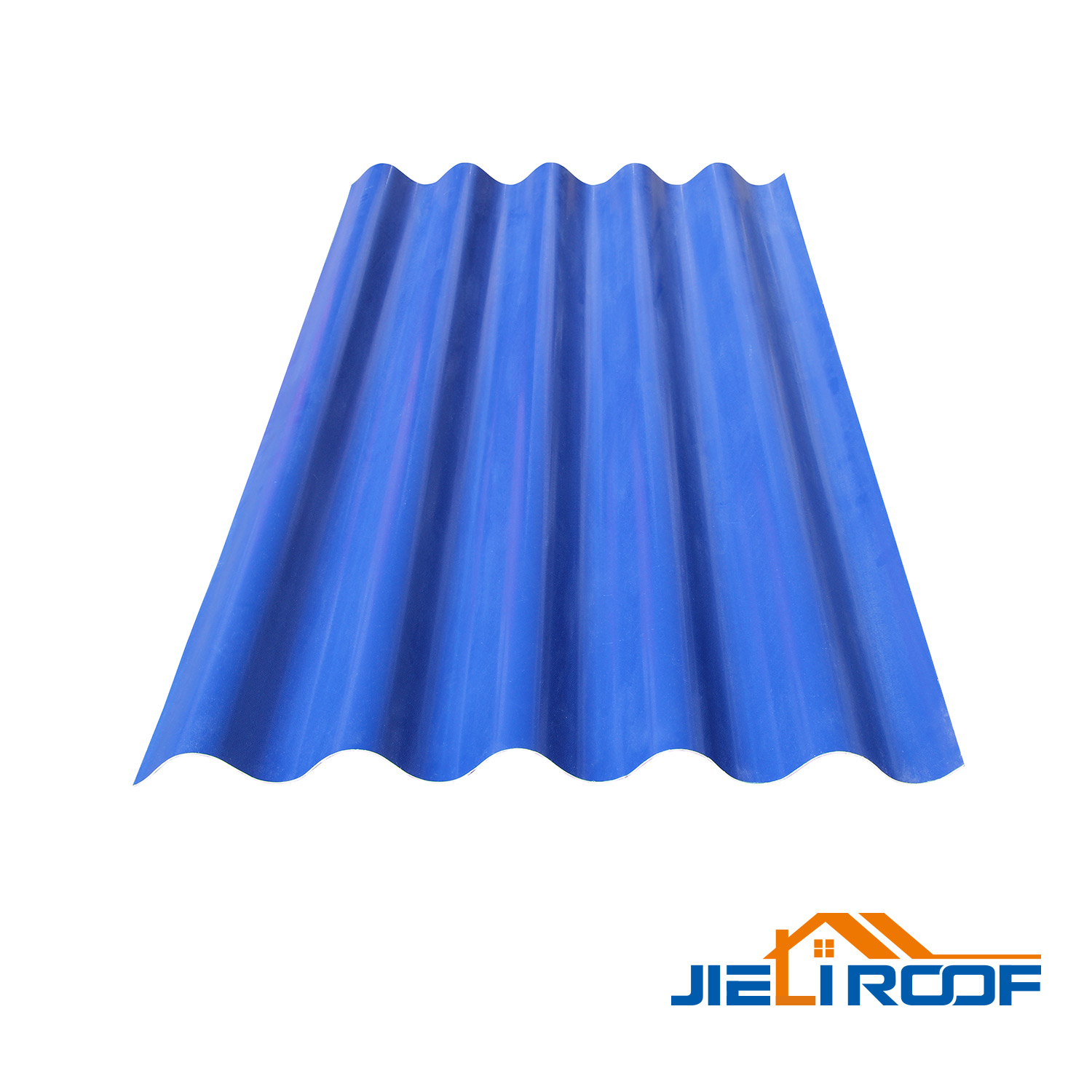
For buyers who need an industrial profile with a reinforced structure, T1130 is a practical option to review. It is a trapezoidal fiberglass reinforced UPVC roofing sheet, with 1130mm width, 1050mm efficient width, customized length, 2.5mm, and 3.0mm thickness options, and a purlin distance no more than 1200mm.
A useful option for reinforced industrial roofing
T1130 can be used for factory industrial roofs, ceilings, and wall panels. Its ASA surface, UPVC body, fiberglass reinforcing layer, and UPVC bottom layer give it a stronger structure than a basic roof sheet. For projects that need corrosion resistance, lightweight roofing, sound absorption, heat insulation, water resistance, fire resistance, impact resistance, and no-rust performance, this type of reinforced sheet is worth checking during specification comparison.
The product is also based on Jieli’s patented fiberglass reinforced roofing technology and comes with a 10-year warranty. For buyers comparing a fiberglass reinforced UPVC roofing sheetfor factory roofs, T1130 is a practical option to review.
Conclusion
Buying roof sheets for factory projects should never start and end with price. A better decision comes from checking the application, UPVC roofing sheet size, efficient width, thickness, purlin distance, material structure, resistance needs, customization, and supplier support.
A reinforced UPVC sheet can be a practical option when the project needs no-rust performance, corrosion resistance, impact resistance, heat insulation, and stable use in industrial environments. Before placing a large order, buyers should review the full specification and confirm whether the sheet matches the roof frame and project climate.
For factory roofing, wall panel, or ceiling projects that need a reinforced roofing material, you can speak with Jieli about project specificationsand request a suitable recommendation based on your building needs.
FAQ
Q: What should buyers check first before buying factory roof sheets? A: Buyers should first check the application, efficient width, thickness, purlin distance, and material structure. These factors affect real coverage, roof stability, project cost, and long-term performance.
Q: Why is efficient width important when checking roof sheet size? A: Efficient width shows the usable coverage after overlap. It helps buyers calculate the real number of sheets needed for a factory roof and avoid inaccurate order quantities.
Q: Is a fiberglass reinforced UPVC roof sheet suitable for factory projects? A: Yes. It can be suitable when the project needs stronger impact resistance, corrosion resistance, weather stability, heat insulation, sound insulation, and no-rust performance for industrial roofing use.






 +86 0535 6278701 / +86 15653505862